New Logo: 1/5 The Historic Building of the Montpellier-Nîmes School of Medicine
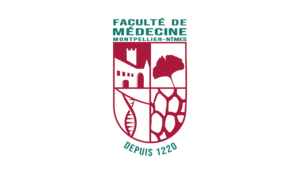
Our faculty's new logo consists of five main elements: its four campuses and its founding date.
Let's look at them one by one.
1/5: The Historic Building.
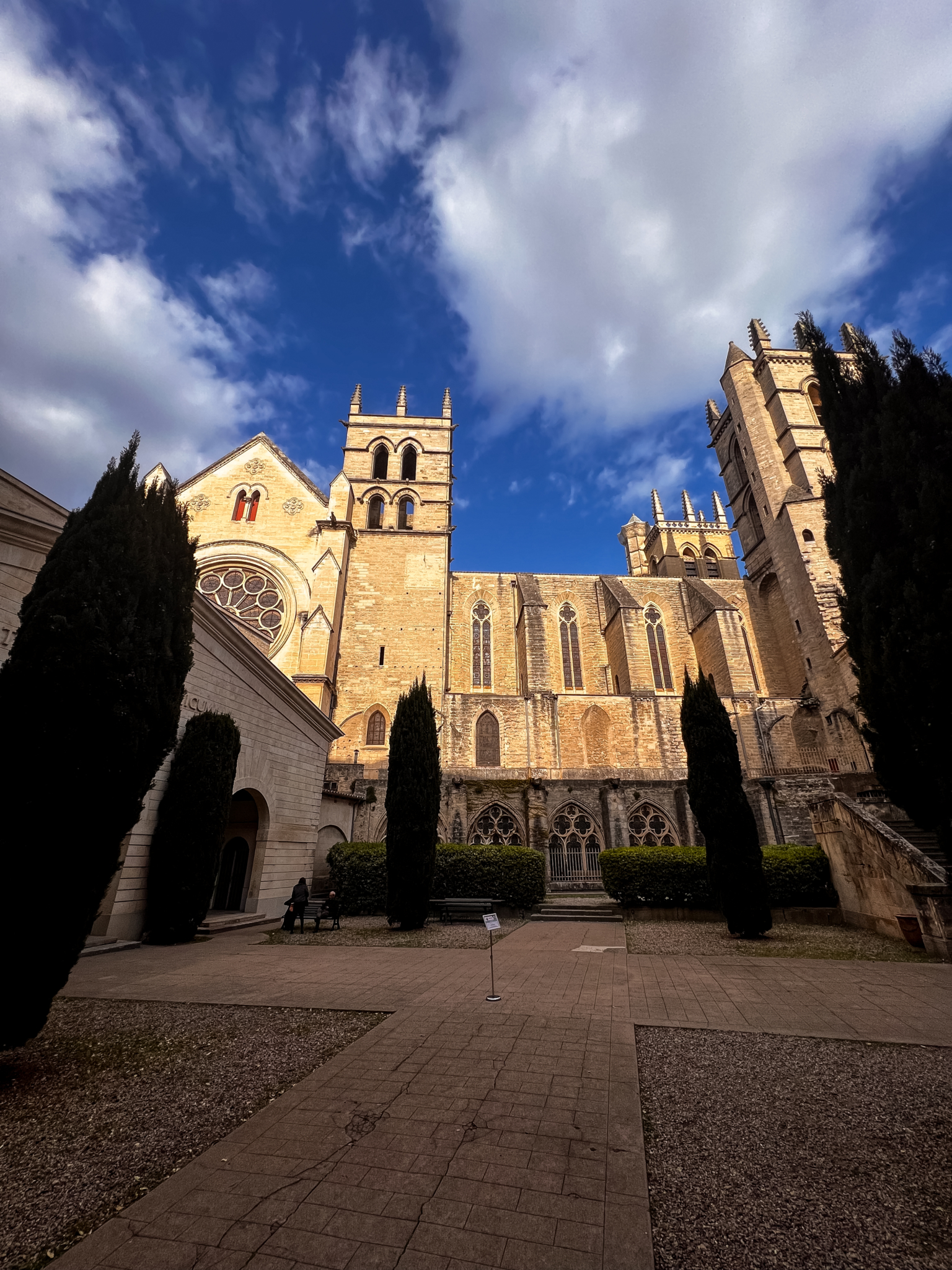
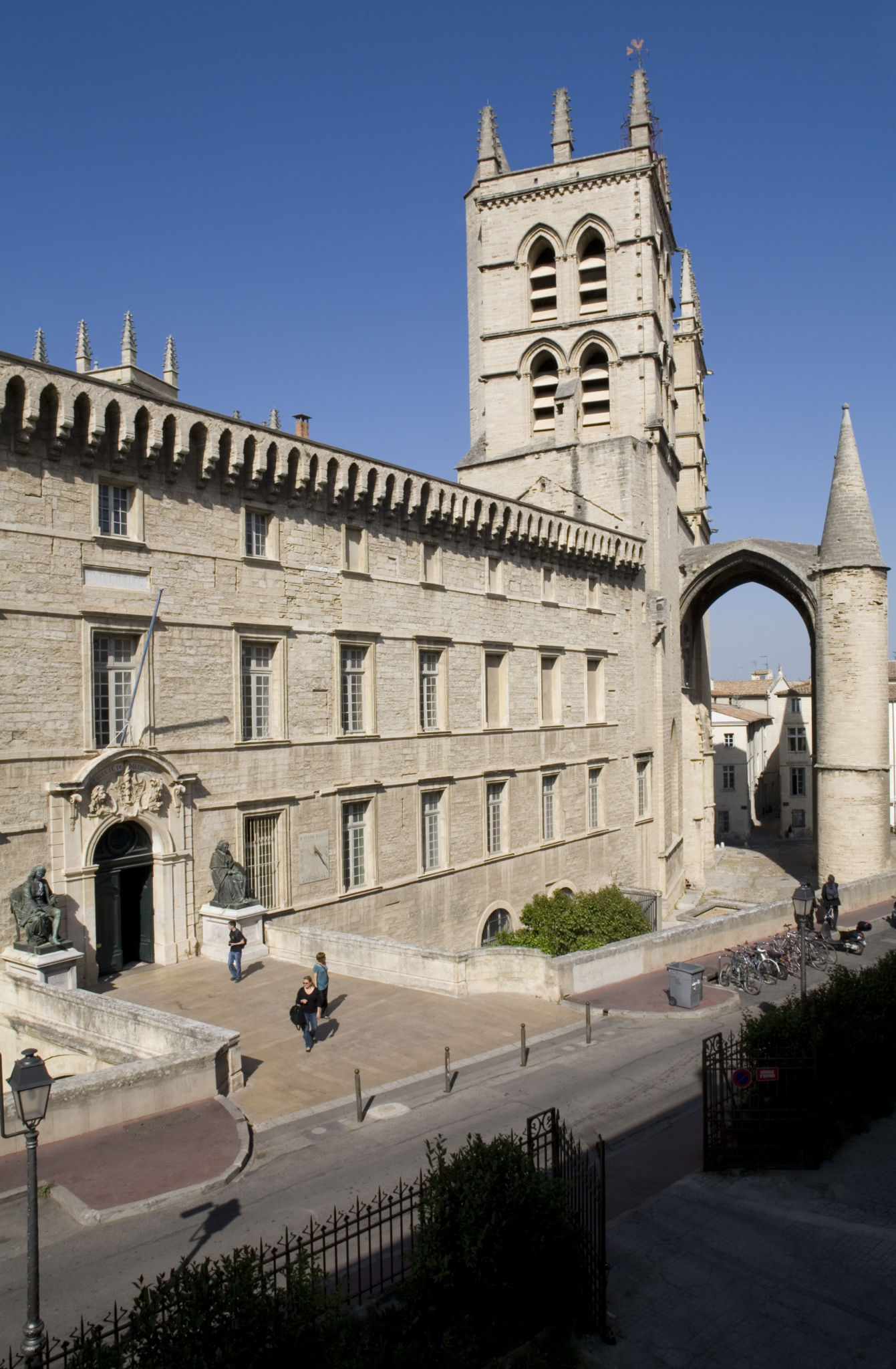
Built, expanded, and remodeled over the course of more than six centuries, the historic medical school building has had many lives, all directly or indirectly linked to the University of Montpellier.
Today, it is one of the oldest university buildings in Europe. Pope Urban V, a former student and professor at the University of Montpellier, commissioned the construction of the city’s first university buildings to improve study conditions in the wake of the Black Death and during the Hundred Years’ War.
He came to Montpellier to inaugurate the College of Saints Benedict and Germain in 1367, which is now the Faculty's historic building.
This fortress-like “monastic college” was built against the city walls, and the locals even called it “Fort.” But its primary purpose was education; it housed students (mainly studying canon law) in the wing running along what is now Rue de l’École de Médecine—where the remains of the students’ rooms are still visible—and Benedictine monks in the opposite wing.
A two-level cloister, featuring pointed-arch windows—traces of which are still visible on all the facades of the main courtyard—connected the various wings to the adjacent abbey church.
Urbans V wanted this abbey church to be worthy of his legacy. The architects of the City of the Popes endowed it with a portico featuring monumental pillars that give it a unique silhouette. It would become the “university church,” the church for the city’s students.
Located two blocks away in a nearly straight line, the College of the 12 Physicians, or College of Mende, was inaugurated two years later to accommodate medical students. The “colleges” were the first university buildings in Europe. Dedicated to the students’ lives and studies, these were residences that foreshadowed today’s university housing complexes. Gradually, instruction also began to be provided there, and in 1498, with the king’s support, the Faculty erected its first building dedicated to theoretical and practical instruction: the Royal College of Medicine, now known as the Panacée.
Located nearby in the doctors' quarter, the College of the 12 Doctors was then renamed the "College of the Pope" to distinguish it from the "College of the King."
In 1536, the Bishop of Maguelone secured the transfer of the bishopric to Montpellier, moving into the Saint Benoît College. Thus, the simple abbey church became a cathedral. The Wars of Religion took a heavy toll on the complex in the years that followed, necessitating restoration work in the 17th and18th centuries, which transformed the original college into a sumptuous episcopal palace. Faculty and students then began to frequent this building regularly; it can be considered the University’s administrative headquarters.
The bishop, the supreme head of the universities, received them there regularly and in a very official capacity until the Revolution, a pivotal period when the Church’s property was confiscated by the state.
The Saint Benoît College was assigned to the School of Health, which moved there beginning in 1795, leaving the Royal College and moving closer to its botanical garden. The ceremony for new doctors—including the thesis defense and the recitation of the Hippocratic Oath as we know it today in the Salle des Actes—was established in 1804.
The Theatrum Anatomicum was inaugurated in 1806, and the building was expanded along Boulevard Henri IV to house first the anatomy conservatory in 1850, and then, in 1870, the anatomy pavilion with its first modern dissection room. This pavilion was rebuilt in 1957, nearly 600 years after the building’s official inauguration by “Pope Urban V, the founder of this site,” as noted on the plaque in the atrium featuring the mask of the papal recumbent statue.
This historic building, with its striking silhouette, is one of the city’s most iconic landmarks and was designated a Historic Monument in 2004. Steeped in a history of higher education that is inextricably linked to the city’s own history—dating back to the late Middle Ages and the founding of the modern university system— the Faculty building and its entrance, flanked by statues of Lapeyronie and Barthez, was chosen in 1985 to feature on the commemorative postage stamp marking the millennium of Montpellier’s founding, as well as in 2020 for the stamp commemorating the8th centennial of the founding of the University of Medicine.