PASS – registered students
Teaching, exams, MMOPKI admissions, etc.
Studies in Montpellier & Nîmes
Initial training
Studies in Montpellier & Nîmes
Initial training
SPECIFIC HEALTHCARE ACCESS PATHWAY

On this page, you will find general information about courses, exams, the MMOP-K-I application process, etc.
This page is therefore dedicated to students currently in training.
Please carefully read all the information and documents available on this website before contacting the registrar's office.
Any questions that can be answered on the website will not be responded to.
Are you an applicant or prospective student? For information on accessing PASS and health studies, visit this page.
We remind you that, in accordance with the Public Health Code, students who wish to pursue their studies in Medicine, Midwifery, Dentistry, Pharmacy, Physical Therapy, and IFSI (MMOPKI) must meet certain vaccination requirements.
In the context of admission to the second year of an MMOPKI program:any delay in obtaining the required vaccination certificate will suspend your participation in your second-year internships, which will result in you having to repeat the year (warning: hepatitis B vaccination takes seven months).
It is your responsibility to contact your doctor or another physician at the beginning of the academic year, without waiting for your exam results, to check that you are up to date with these mandatory vaccinations or to get them done if necessary.
You will find all the necessary and useful information concerning the procedures to be followed and the services to contact in the document below:
https://facmedecine.umontpellier.fr/wp-content/uploads/2025/07/evenement-tuto-parents.png
763
1526
communication
https://facmedecine.umontpellier.fr/wp-content/uploads/2024/06/LOGO-CLASSIQUE-H-300x135.png
communication2025-07-22 11:32:59September 2, 2025, 2:40 p.m.Parent Tutorial Event – Friday, August 22, 2025
ORGANIZATION AND PROGRAM OF PASS COURSES

It consists ofTeachingUnits(UE) in the field of health representing 49 ECTS, to which are added, outside the field of health, a 1 ECTS English UE and disciplinary UEs known as minor disciplinary UEs counting for 10 ECTS. This amounts to a total of 60 ECTS to validate the year.
The purpose of these minor subject courses is to enable students who have successfully completed their PASS year (earning 60 ECTS credits) but have not been admitted to MMOPKI to continue their studies in the second year of a bachelor's degree program. After completing the PASS program, these students will be able to enter the second year of the bachelor's degree program corresponding to the minor subjects taught in the PASS program.
Classes are organized in two formats: lectures (CM) and tutorials (ED), to which tutoring hours may be added. (find out more about tutoring).
Coming to study at the University of Montpellier means choosing between three campuses. The courses taught on the three campuses are exactly the same and are broadcast live in the lecture halls of the three sites. (Find out more about the different teaching sites)
Lectures (CM) are held in person in lecture halls in the morning at each of the alternating teaching sites (1 broadcasting site and 2 live receiving sites) and are systematically recorded. Lectures are rebroadcast in the afternoon for the second group of students. They are made available on MOODLE in the afternoon. PASS lectures begin in early September.
Tutorials (ED) are taught in small groups and follow on from lectures, providing more in-depth study and exam preparation through multiple-choice questions.
During the second semester, students must apply for MMOP and K (find out more + about admission and application procedures for MMOPK).
EXAM SCHEDULE, ASSESSMENT METHODS

On this page, you will find all the regulations, schedules, jury information, and other essential details you need to prepare for your exams.
Please carefully read all the information and documents available on this website before contacting the registrar's office.
Any questions that can be answered on the website will not be responded to.
Composition of the PASS jury
Decision appointing the PASS examination jury
Exam schedule, examination boards, and PASS-LAS oral exams
This calendar provides you with the key dates you need to know to ensure your year runs smoothly.
These are the dates for the PASS exams and juries, the LAS Common Health EU, the dates for the MMOP admission juries, oral exams, and lecture hall assignments.
The actions you will need to take, depending on your situation, or for which you will receive direct information by email, are listed in red with the students concerned in the left-hand column.
For example, you will need to plan to register with Parcoursup in January in anticipation of a possible change of course, submit applications for health programs in March, and (for PASS students only) complete the questionnaire for future assignments in LAS2 in May, etc.
Each step requiring action on your part will be accompanied by an informational email. It is therefore necessary to remind you once again to check yourUniversity of Montpellier email account regularly!
Practical information about exam organization
You must carefully read the information provided below regarding the organization of the exams.
Regulations Governing Teaching, Studies, and Examinations
Regulations governing teaching, studies, and examinations (R3E) voted on by the institution's University Life Training Committee (CFVU) on June 17, 2025.
UE10 (English), UE Common Health (SHS, PHG, and MAPS), UE1, UE2, and UE3
EU5 (editorial question)
Minor subject course units
REACT – REBOUND – SUCCEED

FOR PASS STUDENTS

FOR PASS STUDENTS

On this page, you will find all the regulatory information, schedules, jury details, and essential information concerning MMOP-K-I admissions.
Please carefully read all the information and documents available on this website before contacting the registrar's office.
Any questions that can be answered on the website will not be responded to.
Vaccination Requirements
We remind you that, in accordance with the Public Health Code, students who wish to pursue their studies in Medicine, Midwifery, Dentistry, Pharmacy, Physical Therapy, and IFSI (MMOPKI) must meet certain vaccination requirements.
In the context of admission to the second year of an MMOPKI program:any delay in obtaining the required vaccination certificate will suspend your participation in your second-year internships, which will result in you having to repeat the year (warning: hepatitis B vaccination takes seven months).
It is your responsibility to contact your doctor or another physician at the beginning of the academic year, without waiting for your exam results, to check that you are up to date with these mandatory vaccinations or to get them done if necessary.
You will find all the necessary and useful information concerning the procedures to be followed and the services to contact in the document below:
Exam schedule, examination boards, and PASS-LAS oral exams
This calendar provides you with the key dates you need to know to ensure your year runs smoothly.
Composition of the MMOP-K-I jury
Decision appointing the MMOP jury
Decisions appointing IFMK juries
Decision appointing the IFSI jury
Admission Requirements for MMOP-K-I
The admission requirements forMMOP 25-26 were approved by the CFVU on September 23, 2025.
The admission requirements for massage therapy and physical therapy institutes are available here:
Admission requirements and enrollment capacity for IFSI nursing schools are available here:
Application Procedures for MMOP-K-I
All students enrolled in PASS must complete this procedure and indicate their application choice.
FromMarch1toMarch 31, 8:00 p.m. (Paris time) deadline, please follow the steps indicated in the support below.
Special features of the Physical Therapy program:
If you wish to apply for this program in LAS2, you must applyduring your PASS year,even if you do not meet the prerequisites.
Details: Applications for the Physical Therapy program are automatically submitted to both institutes, Montpellier and Perpignan.
The terms and conditions for admission to the second year of IFSI 24-25 were presented to you at the information meeting on January 29, 2025. The presentation materials from this meeting are available on Moodle (UM's digital workspace) under the "General Information" tab.
Special features of MMOP programs (Medicine, Midwifery, Dentistry, and Pharmacy):
Administrative enrollment in PASS automatically constitutes an application to the four MMOP programs; this application is therefore pre-selected for all PASS students. The application is made automatically for all MMOP programs and teaching sites.
Details: MMOP applications are automatically submitted for all MMOP programs and teaching locations.
The final choice of health program and teaching location/institute will be made during the assignment lecture, based on the MMOP-K ranking and the capacity of each program.
MMOP-K Assignment Lecture Halls
Following thesecondround of interviews, as part ofthe final selection process for admission to MMOP-K and the teaching location (where applicable), theAssignment Lectures will take place on July 9 and 10, 2025 in person at theMontpellier-Nîmes Faculty of Medicine, ADV health campus(641 avenue Doyen Gaston Giraud, 34090 Montpellier).
A personalized invitation specifying the exact date and time will be sent by email (to the student's University of Montpellier email address) to the students concerned (from July 2, 2025).
You must attend on the date and at the time specified in your summons; no changes to the group can be made.
Studentsmustattendtheir assigned lecture halls!
However, in cases of force majeure, students may be represented by a proxy.
To do so, students must follow the procedure below:
–Complete and sign the affidavitfor proxy, which can be downloaded below.
–attach the following documents to the certificate:
The representative must report to the Assignment Lecture Hall in accordance with the summons received by the student, bringing all these documents in paper format as well as the summons of the student concerned by the power of attorney.
In addition, students must email mmop-admissions@umontpellier.fr before the day of their appointment, the power of attorney certificate and the requested documents.
Reminder: The proxy may only represent one student (one proxy per proxy).
Students may, if they wish, appoint several proxies (authorize several people), but only one of these proxies will be allowed to enter the assigned lecture hall and make the admission choice. This proxy must have all of the documents listed above, as well as the invitation letter for the student covered by the proxy.
However, we would like to remind you of the importance of appointing someone you trust.
MMOP-K-I results
PREPARING FOR THE SECOND YEAR OF POST-BAC STUDIES

At the end of the PASS year, if you are not admitted to MMOPKI, the continuation of your academic career will depend on your PASS results and your personal plans.
If you are not admitted to MMOPKI, there are four possibilities, some of which should be anticipated as early as January of the current year:
No repeating a year possible in PASS
Change of course to a "traditional" first-year bachelor's degree via Parcoursup (no possibility of changing to LAS1!)
Takes place from January to March via Parcoursup, so you need to plan ahead!
Continuation of studies in LAS2 as part of the PASS option chosen in Parcoursup.
Place in LAS2 for your PASS option, Moodle questionnaire to be completed in May (no response to the questionnaire = no place in LAS2 for your option).
Geographical assignment carried out by the academic advisors for the minor subjects (based on capacity, your results, and your preferences as indicated in the Moodle questionnaire).
Final assignments, procedures, and registration dates for LAS2 will be communicated around mid-July.
Reorientation to LAS2 outside the framework of the PASS option.
This is done via ecandidat. You must contact the academic services department of the LAS2 program you wish to join to find out the exact procedure and deadlines.
Without certainty of obtaining favorable admission.
Below is a list of the various LAS2 programs affiliated with the University of Montpellier (some are not open to PASS students).
Completion of the accession project to MMOP-K-I courses or continuation of the project in an academy other than Montpellier.
It is your responsibility to find out about the admission procedures for the courses you wish to enroll in.


REGISTRATION CANCELLATION & REFUND REQUEST

Have you changed your mind and wish to cancel your registration? Please take the time to read the information below carefully to find out how to do so.
The PASS cancellation request must be sent to the registrar's office of the registration site (email address in the cancellation form, see "procedure" below) by September 30 of the current year at the latest.
PASS cancellation requests submitted by September 30 of the current year will not count as an MMOP application.
Any PASS cancellation request submitted after September 30 of the current year will not be processed under any circumstances, and the MMOP application will be canceled (in accordance with the decree of November 4, 2019).
If you paid tuition fees when you enrolled and have since become a CROUS or French government scholarship recipient, obtained apprentice status, or become a ward of the state, you can apply for a refund.
Please take the time to carefully read the information below to understand the terms and conditions.
The request for reimbursement of registration fees must be sent to the registrar's office of the registration site (email address in the application form, see "procedure" below) by August 31 of the current year at the latest.
I would like to use a common name. What should I do?
You can request to use a common name by completing the form to request the use of a common first name.
SCHOOL SERVICES IN MONTPELLIER, NIMES

President of the PASS Jury
Professor Stephan Matecki
Chair of the MMOP Admissions Committee
Dr. Pierre-Yves Collart-Dutilleul
We use cookies to provide the services and features offered on our site and to improve the user experience. Cookies are data that are downloaded or stored on your computer or other device. By clicking "I accept," you agree to the use of cookies. You can always disable them later.
I agreeWe may request that cookies be placed on your device. We use cookies to let us know when you visit our websites, how you interact with us, to enrich your user experience, and to personalize your relationship with our website.
Click on the different sections of the category to learn more. You can also change some of your preferences. Please note that blocking certain types of cookies may affect your experience on our websites and the services we are able to offer.
These cookies are strictly necessary to provide you with the services available on our site and to use some of its features.
Because these cookies are absolutely necessary for the proper functioning of the website, refusing them will impact how it works. You can still block or delete cookies via your browser options and force them to be blocked on this website. However, the message asking you to accept/refuse them will reappear each time you visit our website.
We respect your choice to refuse cookies, but to avoid asking you on every page, please allow us to use one to remember your choice. You are free to change your mind at any time and modify your settings to improve your browsing experience. If you refuse cookies, we will remove all cookies from this domain.
We provide you with a list of cookies stored on your computer via our domain, so you can see what is stored there. For security reasons, we cannot show or display external cookies from other domains. These can be accessed via your browser options.
These cookies collect information in an aggregated form to help us understand how our site is used and how effective our marketing efforts are, or to help us customize our site to improve your browsing experience.
If you do not want your visit to be tracked on our site, you can block this tracking in your browser here:
We also use various external services such as Google Webfonts, Google Maps, and other video hosting providers. Since these ISPs may collect personal data such as your IP address, we allow you to block them here. Please be aware that this may significantly reduce certain features of our site. Changes will be applied after reloading the page.
Google font settings:
Google Map settings:
reCAPTCHA settings:
Vimeo and YouTube video integrations:
The following cookies are also required—you can choose to allow their use:
You can read more details about cookies and privacy settings on our Legal Notice Page.
Privacy PolicyVisits are only possible during public opening hours, namely:
SUMMER SCHEDULE
April 1 to September 30: 12 p.m. to 8 p.m. except Mondays.
WINTER SCHEDULE
From October 1 to March 31: 11 a.m. to 6 p.m. except Mondays.
This form is an information document required to determine the presence of groups at the botanical garden. It also provides us with useful data for compiling statistics on visitor numbers.

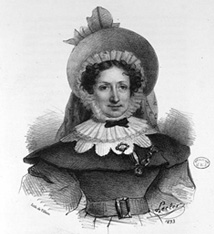
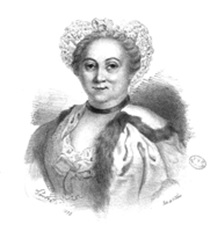
Marie-Anne GILLAIN was born in 1773 in Montreuil near Versailles.
She is sent to boarding school with the Visitation nuns.
During the Revolution, she took refuge in Etampes, at the home of a relative who was the mother superior of the Hospitalières de l’Hôtel-Dieu.
There she studied under the surgeon and worked for two and a half years, from 1793 to 1796, as a hospital lady, that is, a lay person offering her services voluntarily to the poor and sick.
In 1797, she returned to Versailles to marry Louis BOIVIN, deputy head of the National Domains office.
Quickly pregnant, she suddenly found herself widowed in 1798, at the age of 25, without resources and with a young daughter to raise.
She then decided to put to good use the knowledge she had acquired from the surgeon at the Hôtel-Dieu d'Étampes and enrolled at the Maternity Midwifery School in 1799.
In 1800, she graduated and left for Versailles to join her daughter and practice her profession.
In 1801, following the death of her daughter, she obtained permission from Marie-Louise Lachapelle to return to the Hospice de la Maternité.
In 1803, she was appointed head supervisor of the breastfeeding section. She held this position for eleven years, until 1814. During this long period, she took the opportunity to attend classes given by her patron, the surgeons at the Maternity Hospital (Baudelocque, then Dubois) and the chief physicians (Andry, and especially Chaussier), from whom she gathered observations and lessons.
In 1812, she wrote a Mémorial de l’art des accouchements(Memorial on the Art of Childbirth) and published it. It was approved by the Department of the Interior, which made it one of the textbooks given to graduates of the Maternity School.
In 1814, her position as supervisor was eliminated and she was dismissed, receiving a gratuity equal to her annual salary of 360 francs.
In October, she obtained a position as storekeeper and bursar at the Poissy General Hospital, which she held until January 1819, when the general hospital was converted into a prison.
Little is known about this period of her life: did she continue to practice obstetrics despite her new, more administrative duties? Did she do so within the framework of the general hospital? Or did she have a private practice? In any case, she seems to have enjoyed a comfortable salary of 1,200 francs per year for a time, which was almost as much as the head midwife at the maternity hospital.
In 1818, she anonymously competed for the Paris Medical Society's prize for academic achievement, submitting a thesis on internal uterine hemorrhages. She was awarded the medal.
On February1, 1819, she entered the Maison Royale de Santé in Paris as head midwife, with a modest salary of 350 francs per year.
In 1821, an opportunity for promotion arose with the death of Marie-Louise Lachapelle.
According to procedure, the General Council of the Hospices must submit to the Minister of the Interior a list of five candidates to succeed the illustrious midwife.
On November 14, 1821, the Council voted and agreed on a list with Marie-Anne Boivin in first place; she received 12 out of 12 votes in the first round to select the top candidate.
A month and a half later, the Minister of the Interior endorses the Council's choice.
But the winner refused the position (or rather resigned), forcing the council to propose another list. Why did she refuse? All contemporary biographers explain this decision by the public promise Marie-Anne Boivin made to her former protector never to replace her, even after her death. If this is the case, she kept her word and another midwife, Madeleine Catherine Legrand, was appointed in 1822.
Marie-Anne Boivin therefore continued to practice at the Royal Health Care Facility, where she accumulated observations, publications, and distinctions.
In 1828, she presented a thesis on spontaneous abortions, which was awarded a prize by the Bordeaux Medical Society.
In September 1835, at the age of 62, worn out and tired, she retired and urged the hospice council to pay her a pension. Finally, after a first stroke that left her hemiplegic, she died in May 1841.
In 1902, one of the rooms in the renovated maternity ward was named after Marie-Anne Boivin.

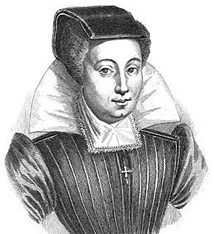
She was born in 1563 on Boulevard Saint Germain or in Mons into a family of doctors.
She married Martin BOURSIER, master surgeon and pupil of Ambroise PARÉ, in 1594.
She finds herself without resources when her husband is enlisted in the king's armies.
She quickly gained renown among the ladies of the court and delivered the queen's babies six times.
She receives 500 crowns for the birth of a boy and 300 for the birth of a girl.
She lost her reputation following the death of Marie De BOURBON-MONTPENSIER, wife of Gaston d'ORLÉANS, during the birth of the Grande Mademoiselle.
According to the surgeons who performed the autopsy on the woman who had given birth, the death was caused by placental debris remaining in the uterus, and Louise Bourgeois was subsequently accused of negligence.
At that time, there were few male obstetricians practicing, and they attempted to take precedence over the midwives' guild.
Louise questions their competence by harshly criticizing the autopsy findings and the skills of obstetricians; however, her response has the opposite effect to that intended, giving them publicity.
She was the first midwife to write a book on obstetrics, Observations diverses sur la stérilité, perte de fruits, fécondité, accouchements et maladies des femmes et enfants nouveau-nés(Various Observations on Sterility, Miscarriage, Fertility, Childbirth, and Diseases of Women and Newborn Children), published in 1609.
In this book, she points out that infertility in couples can be male-related, even though, like doctors of that era, she confuses the ability to procreate with sexual vigor.
She identified the role of malnutrition in fetal health and was the first to prescribe iron supplements to treat anemia.
She emphasizes the importance of anatomical knowledge for midwives and urges doctors to allow them to attend lectures and dissection classes.
In 1636, Parisian midwives launched a petition to the Faculty of Medicine requesting that Louise Bourgeois be allowed to teach them obstetrics, but this right was denied.
Subsequently, however, one of her students, Marguerite du Tertre de la Marche, was appointed head midwife at the Hôtel-Dieu hospital and succeeded in overhauling the content of their training.
She died on December 20, 1636, on Boulevard Saint Germain at the age of 73.

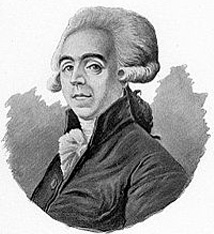
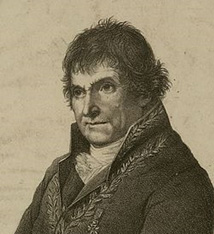
He was born on November 30, 1745, in Heilly, Picardy.
He was the son of Jean Baptiste BAUDELOCQUE, a surgeon, and Anne Marguerite LEVASSEUR. His brothers Félix Honoré (1744-1794) and Jean Baptiste (1749-1800) were both doctors. He was the third of ten children.
It was his father who introduced him to surgery in the countryside of Picardy.
He completed his studies in Paris at the Hôpital de la Charité, where a renowned master of obstetrics, Solayrès de Renhac (1737–1772), practiced.
In 1772, after Solayrès' premature death at the age of 35, he collected his lecture manuscripts and succeeded him as professor of obstetrics at the Hôpital de la Charité. Thanks to Baudelocque, Solayrès' work was saved from oblivion.
In 1775, on the initiative of the surgeon Augier du FOT, a demonstrator of childbirth in Soissons, he published, thanks to the manuscripts bequeathed by Solayrès de RENHAC, the first edition of a manual intended for the training of midwives. This work was later republished under his name alone, under the title "Principles on the art of childbirth through questions and answers for midwifery students." It was reprinted three times during Baudelocque's lifetime and three more times posthumously.
In 1776, following his thesis defense on symphysiotomy, "An in partu propter angustiam pelvis impossibili, symphysis ossium secanda?", he was appointed surgeon at the Hôpital de la Charité in Paris and was awarded a master's degree in surgery by the Collège de Chirurgie de Paris.
On April 5 or 6, 1777, in Paris, he married Andrée DERULLIER (de Vulier, de Voulier, de Rullie, de Rouillier), whose family manufactured mannequins of pregnant women for demonstrations in childbirth classes. She died on January 4, 1787, without children.
In 1781 and 1789, he published the first two editions of his scholarly treatise "L'Art des accouchemens" (The Art of Childbirth) in two volumes. He became famous for his forceps, his practice of cesarean sections, and the invention of the pelvimeter, which measures the external anteroposterior diameter to determine which patients might encounter difficulties during childbirth.
On September 14, 1788, in Amiens, he married Marie Catherine Rose Laurent, and the couple had five children (three daughters and two sons).
During the French Revolution, guilds and faculties were abolished. Hospitals lost some of their staff and funding. However, Baudelocque managed to build his reputation as a midwife thanks to a city clientele and private obstetrics classes.
In 1794, the former Faculty of Medicine was replaced by the École Centrale de Santé de Paris (Paris Central School of Health), where he was responsible for teaching medical students and midwives.
In October 1795, the Maternity Hospice welcomed poor women and single mothers to give birth and provided clinical training for midwives and doctors from the School of Health.
In addition, this institution also takes in abandoned children.
In 1798, Baudelocque, in addition to his position as professor of obstetrics at the Paris School of Health, became chief surgeon at the Maternity Hospital.
In 1802, the Hospice de la Maternité school was founded, where Baudelocque put his teaching talents to good use, employing mannequins to practice examinations and obstetric procedures. He favored observation over action, preferring to let nature take its course and using instruments as little as possible.
Busy with his many responsibilities, he delegated some of his authority to the head midwife of the Maternity Ward, Marie-Louise Lachapelle (1769-1821), who took on part of the teaching of the midwifery students and was authorized to use forceps on her own in cases of difficult deliveries.
He was involved in a high-profile lawsuit brought against him by an obstetrician, Jean François Sacombe, a fierce opponent of cesarean sections and defender of traditional midwifery practices. Sacombe, who had set himself up as a defender of midwives, accused Baudelocque of infanticide, but ultimately lost his case in 1804 and, at the same time, all sense of proportion.
In 1806, Napoleon appointed Jean-Louis Baudelocque to the chair of obstetrics, the first chair of medical specialty in France.
He became the obstetrician to the queens of Spain, Holland, Naples, and all the ladies of the court.
He had been chosen and selected in advance to bring into the world the heir awaited by Napoleon and Empress Marie-Louise of Austria. But, struck down by a cerebral hemorrhage, he would not live to see the birth of the King of Rome.
He died on May 2 or 3, 1810, at 16 Rue Jacob in Paris (6th arrondissement) at the age of 65, where he lived.
He was buried in the Vaugirard West Cemetery, then exhumed due to expropriation for the construction of the current Boulevard Pasteur.
He was then buried on August 17, 1839, in the Père-Lachaise Cemetery (45thdivision).
He was the most famous obstetrician of his time.
A doctor at the Hôpital des Enfants Malades (Hospital for Sick Children), he gave his name to the Baudelocque Clinic in 1890.
In 1966, the Port-Royal maternity hospital was built. The two merged in 1993 (Paris14th arrondissement).
Today, there is a midwifery school named after her on Avenue Denfert-Rochereau.

He was born on July 2, 1746, in Dijon, in the parish of Saint Pierre.
His father was a master glazier.
After attending the hospital in Dijon, his mother sent him to Paris to continue his medical studies, and he enrolled at the Royal College of Surgery, where he studied regularly between 1765 and 1767, attending anatomy classes taught by Raphaël SABATIER and Jean-Joseph SUE.
At the same time, he was learning about surgery at Lafaye's clinics and, in the afternoons, at Isaac GOURSAUD's clinics.
His years of surgery came to an end in 1768, when he obtained the title of Master of Surgery: he settled in Dijon as a surgeon.
He married Jeanne CARRE, daughter and granddaughter of a master surgeon, on July 27, 1767, in Quetigny, Côte d’Or. Together they had a son, Bernard François Hector (1769-1837).
In 1769, he opened a free course in human and comparative anatomy, which was attended by many students for over ten years.
In 1774, the States of Burgundy established a chemistry program with Louis-Bernard GUYTON de MORVEAU as the head professor and Hugues MARET and François CHAUSSIER as assistants. Upon MARET's death in 1786, he was promoted to second professor of chemistry.
In Dijon, his professional qualities earned him the favor of his clients, and his reputation quickly spread beyond Burgundy. He made a name for himself at the Academy of Surgery through several presentations, which led to him being awarded the Academy's Gold Medal at the public session on April 10, 1777.
He received his Doctor of Medicine degree from the University of Besançon on January 14, 1780, and in 1784, he became a correspondent for the Royal Society of Medicine. That same year, he was admitted to the Academy of Sciences, Arts, and Letters in Dijon, where he became secretary general following the retirement of Guyton de Morveau.
In 1785, at the request of the States of Burgundy, he published a popular guide on treating bites from rabid animals: "Method for treating bites from rabid animals and vipers, followed by a summary on malignant pustules" (with Joseph Enaux, 1726-1798).
In 1789, he published a study on the muscles of the human body, in which he proposed a more rational classification than that previously taught: "Summary exposition of the muscles of the human body according to the methodical classification and nomenclature adopted in the public anatomy course in Dijon"; this work was republished in 1797.
On December 20, 1789, he read a paper entitled "Surgical and legal observations on an important point of criminal jurisprudence" at the Academy of Dijon, in which he demonstrated the role that doctors could play in informing the justice system. This work was well received, and the following year he began teaching a course in forensic medicine in Dijon.
On 3 Nivôse Year III (December 23, 1794), he married Angélique LABOREY in Dijon (Section du Crébillon), and they also had a son, Franck Bernard Simon (1804-1866).
In 1794, Antoine-François Fourcroy was tasked by the National Convention with reorganizing medical education and sought out a figure who could provide him with details on how to go about this. Claude-Antoine Prieur-Duvernois, from Côte-d'Or, who headed the Committee of Public Safety's Department of Science and Arts, recommended François Chaussier, who thus joined the Committee of Public Instruction. He drafted a report and a draft decree, which he read to the Convention on 7 Frimaire, Year III (November 27, 1794). In it, he proposed the creation of a single "Central School of Health" in Paris. The members of the Convention, who were largely open to decentralization, requested the creation of other similar schools in Montpellier and Strasbourg, and it was on this basis that the report was adopted on 14 Frimaire (December 4).
Chaussier returned to Dijon, where he resumed his classes and studies, as well as the duties entrusted to him: he had been appointed physician at the Hospices de Dijon in April 1793 and surgeon to the prisons. He did not remain there long, however, as he was called back to Paris to take up the chair of anatomy and physiology at the Ecole de Santé. Chaussier was, in the words of Joseph-Henri Réveillé-Parise, the most famous professor of physiology at the Paris School: he argued that vitalism was the basis of all physiological studies.
A decree dated 7 Vendémiaire Year III (September 28, 1794) officially created the École Centrale des Travaux Publics (Central School of Public Works), which would later become the École Polytechnique. less than a month after it opened, the Board of Directors proposed setting up an infirmary and appointing a "health officer" (the revolutionary term for doctors) to care for sick students and also give lessons on "the art of preventing and alleviating illness." The list of École Polytechnique staff for the following year lists him as Claude Louis Berthollet's assistant, "responsible for teaching zootechnics and sanitation, and school doctor." In fact, he taught Berthollet's course during his absence in Italy in 1796-1797. After the regularization of chemistry teaching, Chaussier seems to have abandoned teaching this science and restricted himself almost entirely to his duties as a physician.
In 1799, "Les tables synoptiques" (Synoptic Tables) was published to great acclaim. It is a summary of the physiology, pathology, and therapeutics of the various anatomical systems of the human body.
On May 9, 1804, he was appointed Physician of the Maternity Hospices and entrusted with the Presidency of the medical juries for the examinations of Health Officers, Pharmacists, and Midwives for the district of the Paris Faculty of Medicine.
He was a member of the commission appointed by the Minister of the Interior in October 1810 to study "secret remedies," where he worked alongside André Marie Constant Duméril, Jean-Joseph Menuret, and Nicolas Deyeux.
In 1815, after the fall of the First Empire, he was replaced in his position as physician at the École Polytechnique, but he remained a professor at the Faculty until November 21, 1822, when the Restoration changed the organization of the Faculty: he was appointed honorary professor and his chair was taken away from him. He was deeply embittered by this and the next day suffered a stroke that temporarily deprived him of his speech and ability to walk. He recovered, but remained hemiplegic, which did not prevent him from continuing his work at the Maternity Hospital.
On May 6, 1823, he was admitted tothe Academy of Sciences.
Between 1824 and 1827, he published several works on forensic medicine: "Forensic Manual on Poisons, Preceded by Considerations on Poisoning"14, "Collection of memoirs, consultations, and reports on various subjects of forensic medicine"15, "Forensic Memoir on the Viability of the Unborn Child, Presented toHis Excellency the Keeper of the Seals, Minister of Justice"16
François Chaussier died at his home in Paris on June 19, 1828, at the age of 81, from a stroke.
He was buried in Père-Lachaise Cemetery (18th division) on June 21: Nicolas-Philibert Adelon gave a speech on behalf of the Academy, Marie-Alexandre Désormaux, representing the Faculty, did the same, and Duméril, on behalf of the Royal Academy of Sciences, read a long eulogy.
Don'ssecond son, Franck CHAUSSIER, followed in his father's footsteps and defended his doctoral thesis in 1827 in Montpellier.
He is a French physician, professor at the Paris Faculty of Medicine, and member of the Royal Academy of Medicine and the Academy of Sciences.
Chaussier was the main editor of articles devoted to pharmacy inthe Encyclopédie méthodique13.

She was born in 1712 in Clermont-Ferrand into a family of doctors.
She first spent three years as a student of Anne BAIRSIN, a midwife teacher.
On September 26, 1739, she received her diploma and shortly thereafter became a certified midwife.
She worked as a midwife at the Châtelet in Paris for sixteen years.
In 1752, to combine practice with theory, she published a book entitled "A Summary of the Art of Childbirth."
In 1754, she returned to Auvergne and began giving lessons free of charge.
In 1758, she designed her famous demonstration "machine" (made of wood, cardboard, fabric, and cotton), which was approved on December1 by the Academy of Surgery.
During the two-month training course, students were invited to practice on the mannequin.
She died on April 16, 1794, at the age of 79, in Bordeaux, in poverty and solitude, her niece and husband being absent. There is a Rue Angélique du Coudray in Thorigné-Fouillard and also a Rue Madame-du-Coudray in Clermont-Ferrand, her hometown. The maternity ward at the hospital in Melun (77) also bears her name.