Commemoration of the Armistice of November 11, 1918
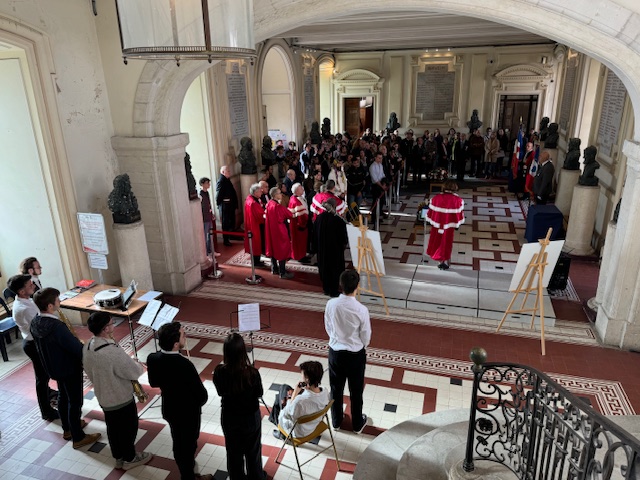
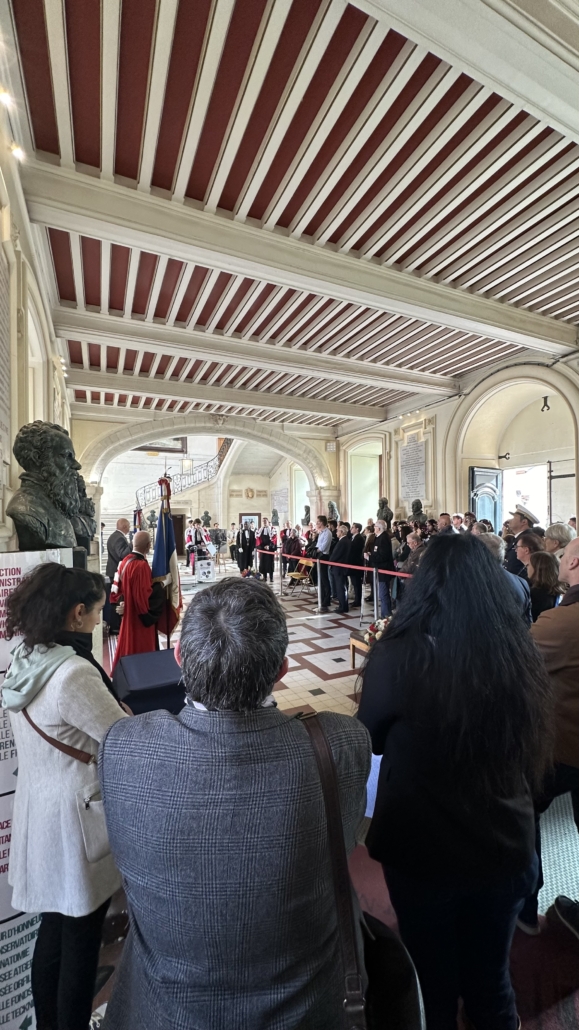
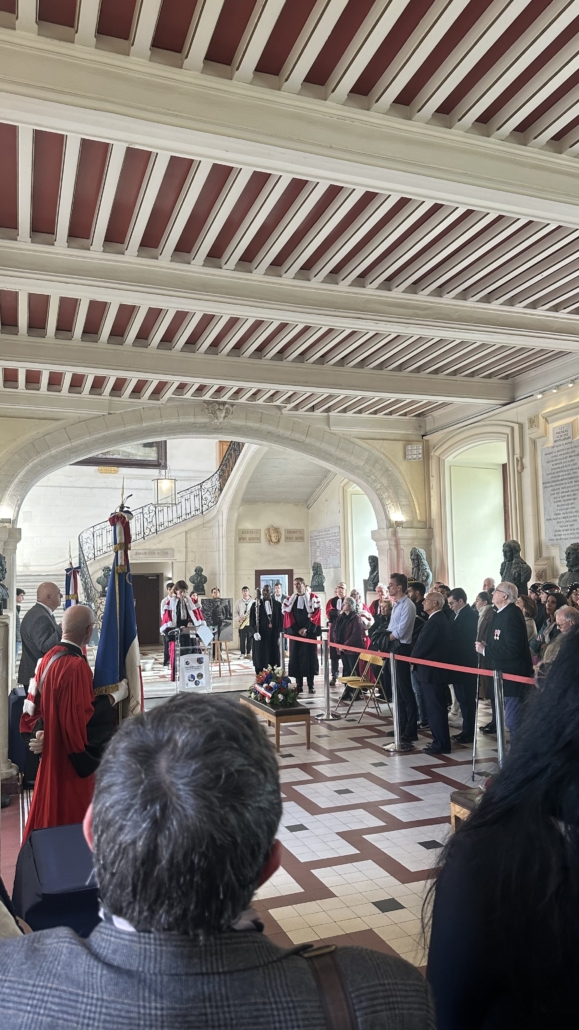
On Tuesday, November 12, 2024, the Montpellier-Nîmes School of Medicine commemorated the Armistice of November 11, 1918.
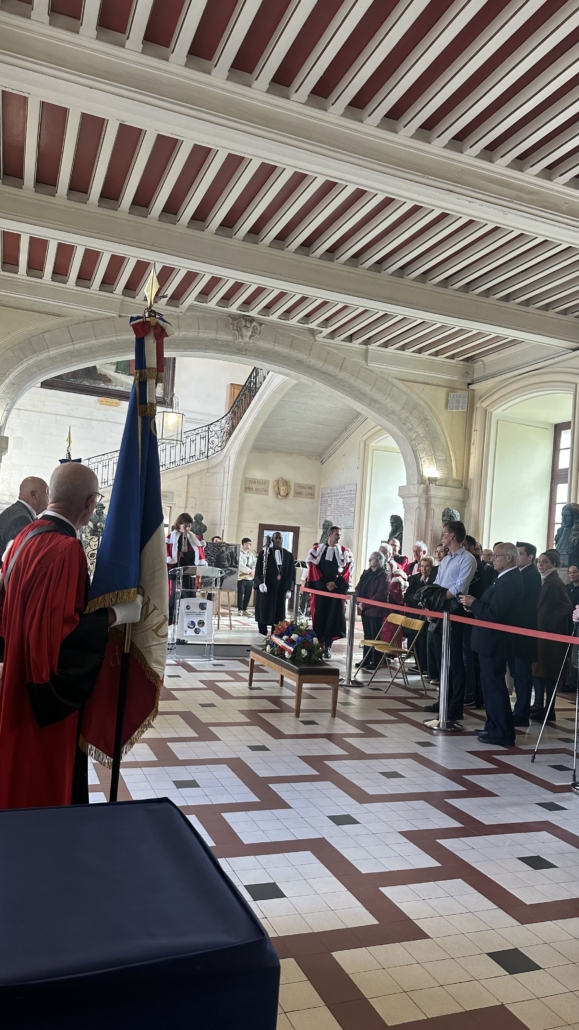
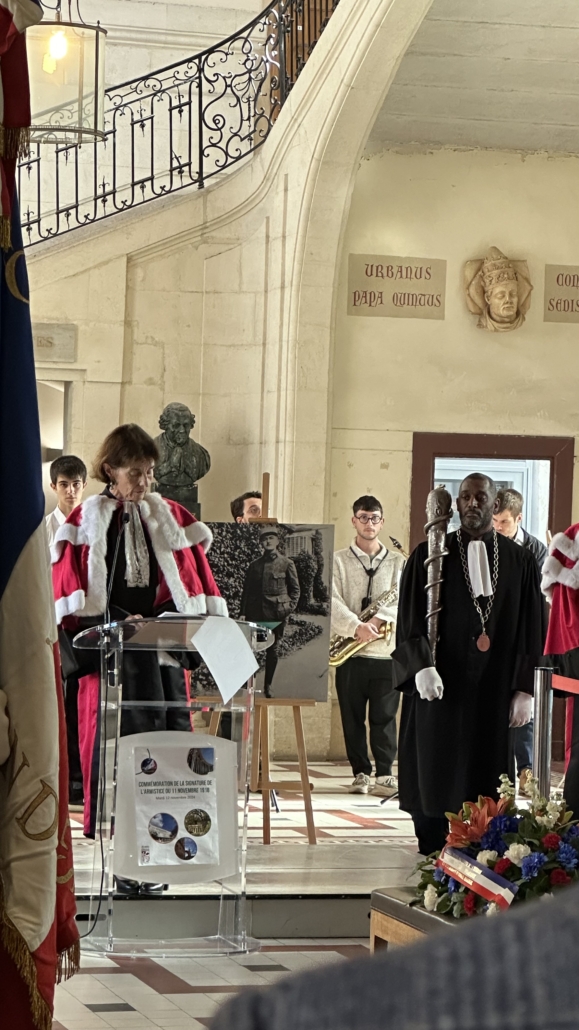
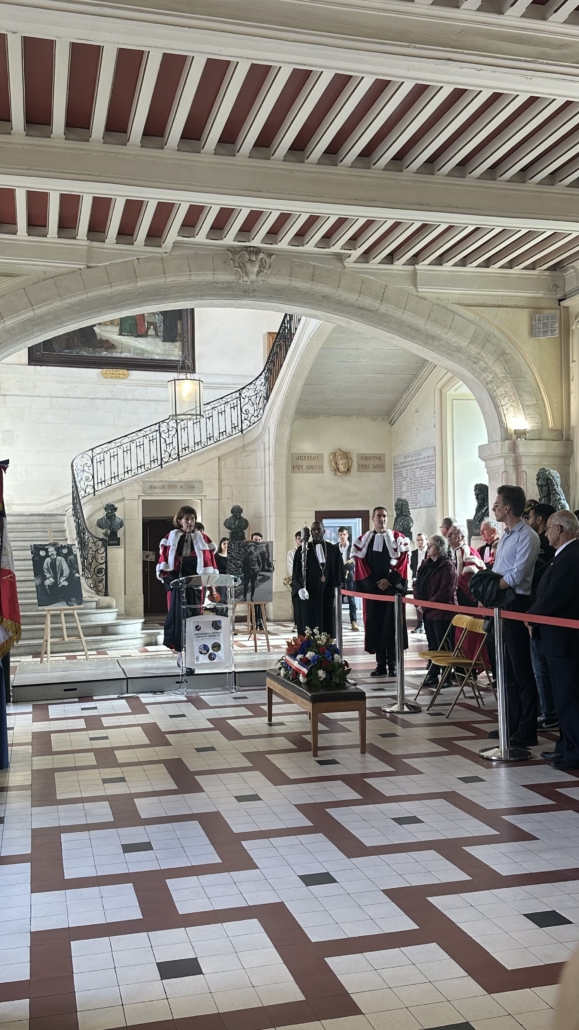
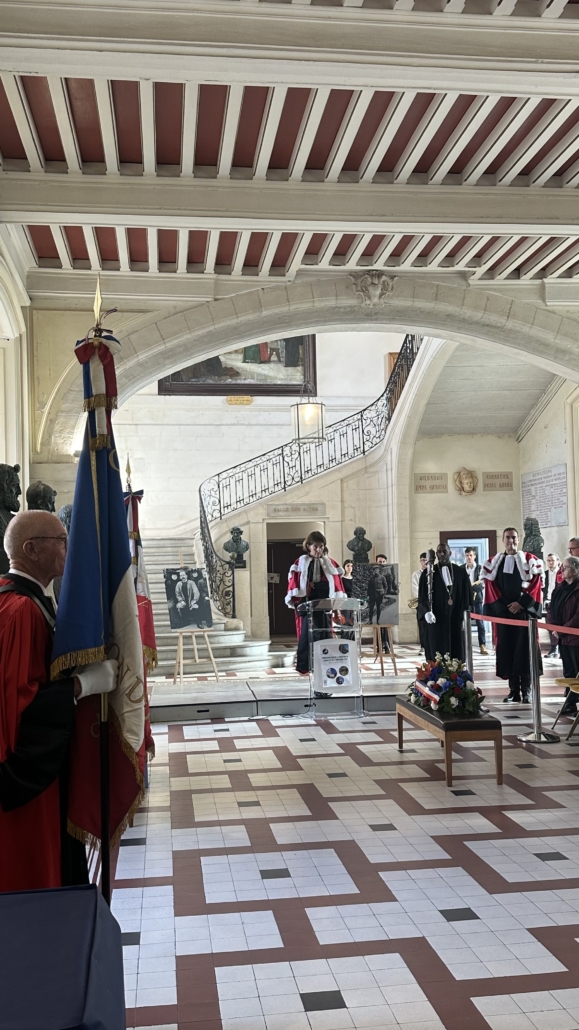
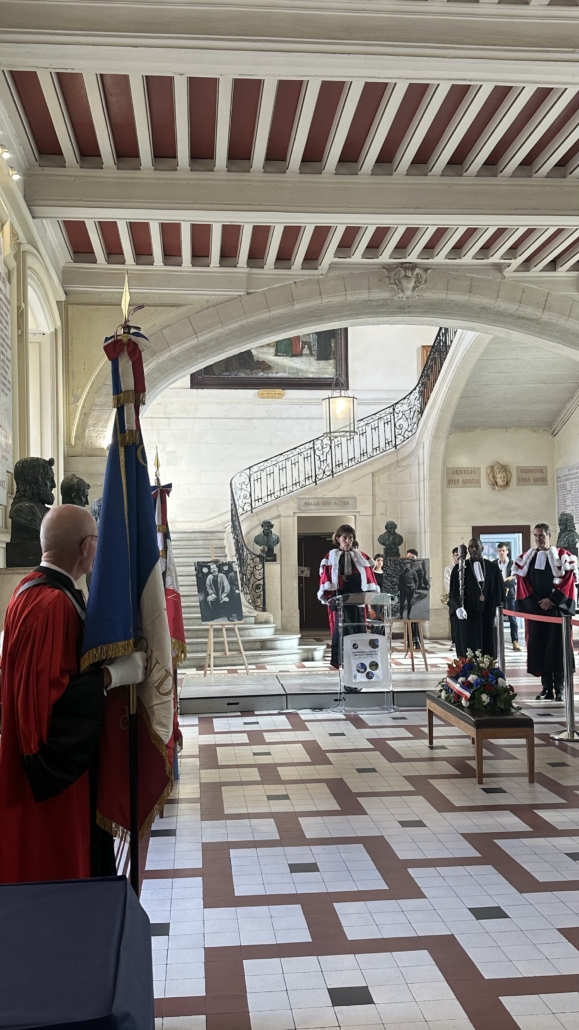
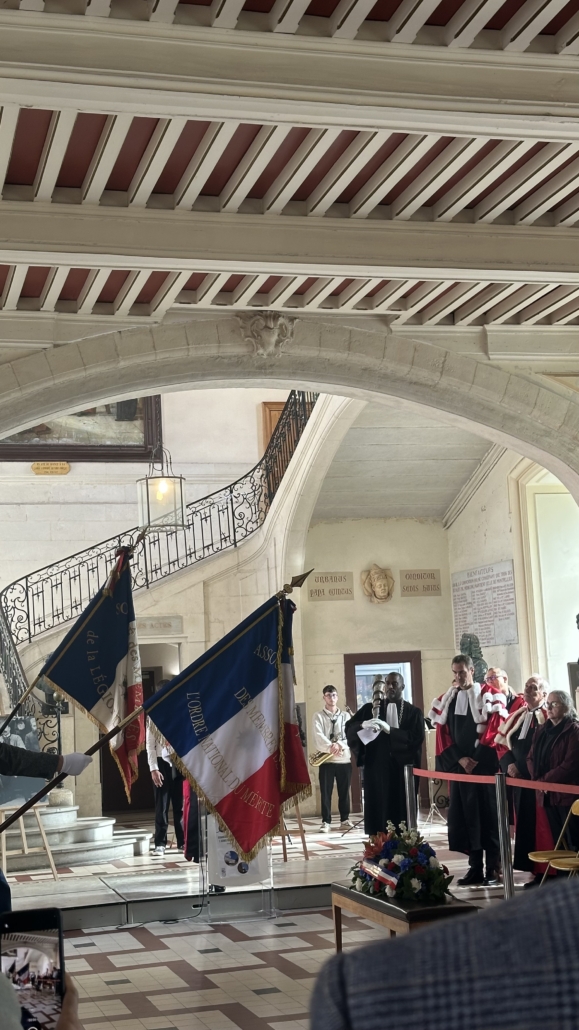
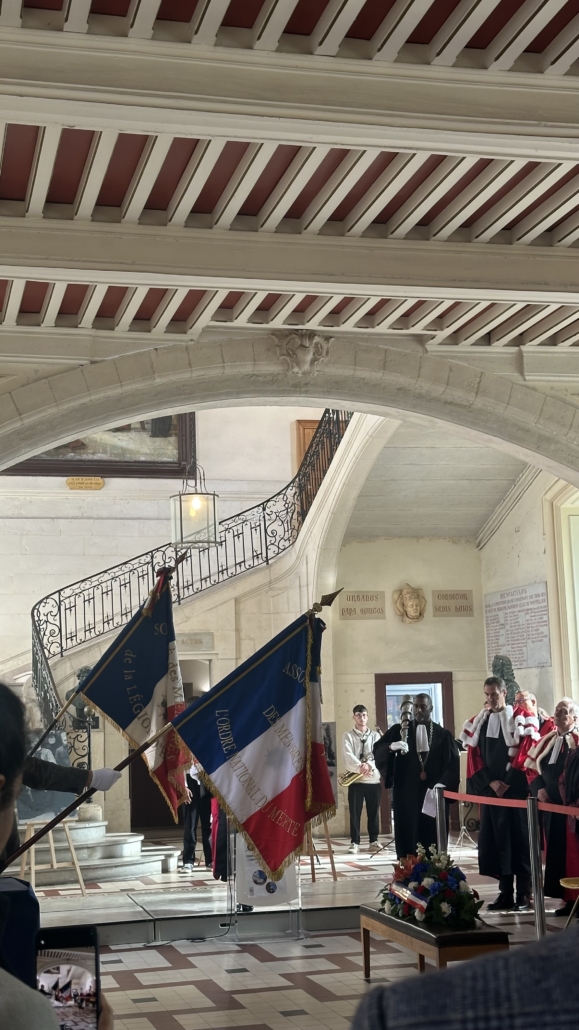
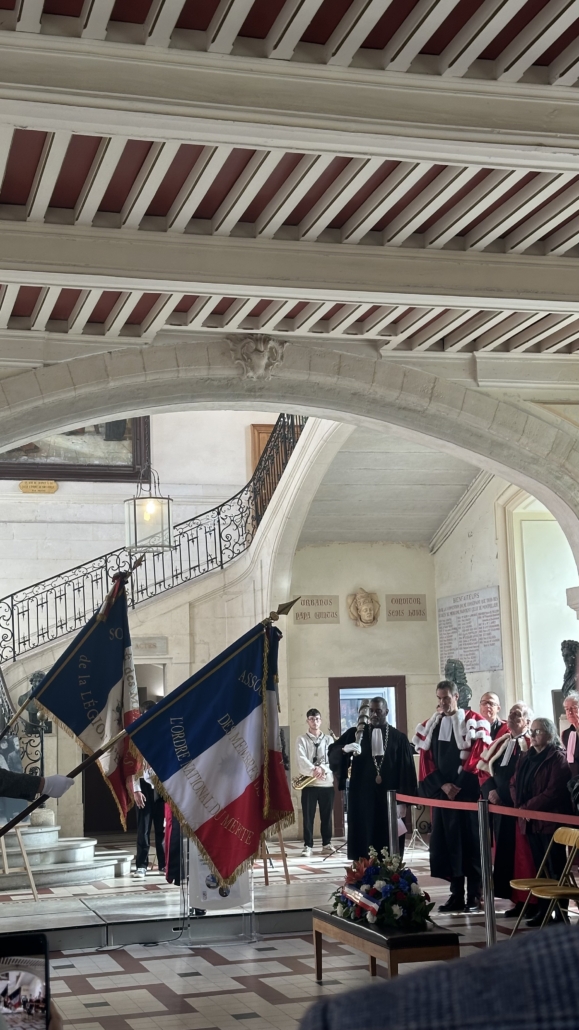
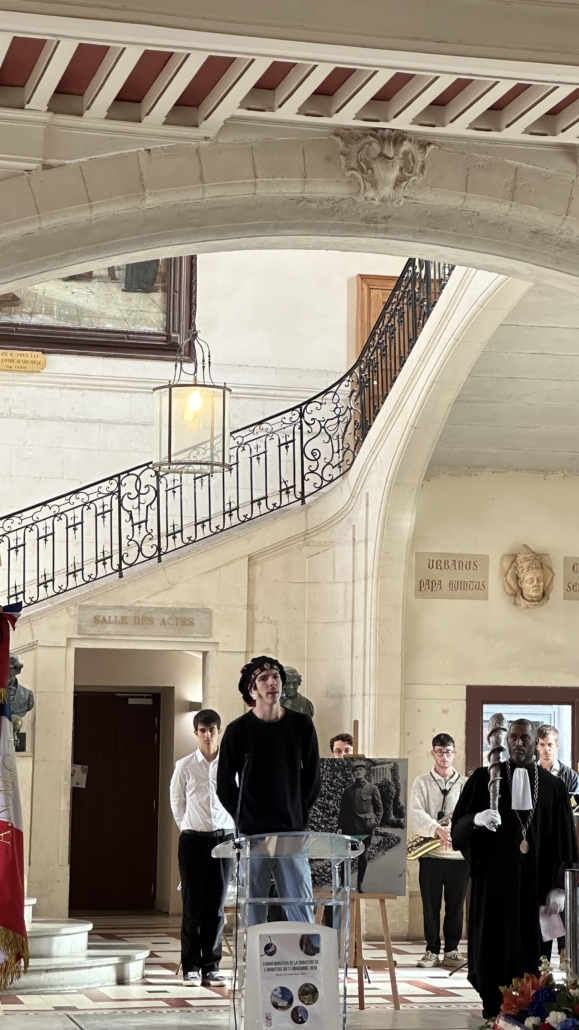
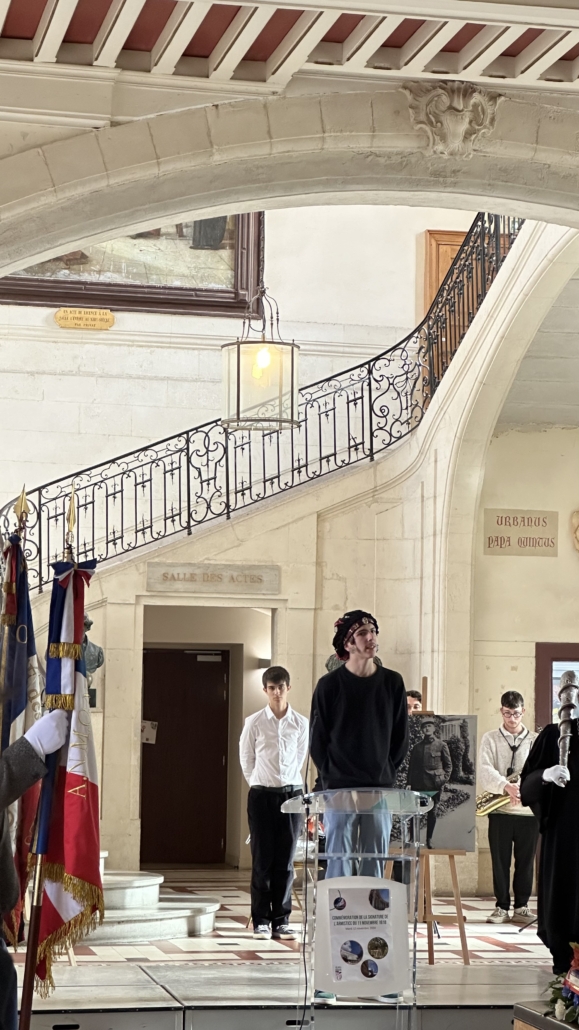
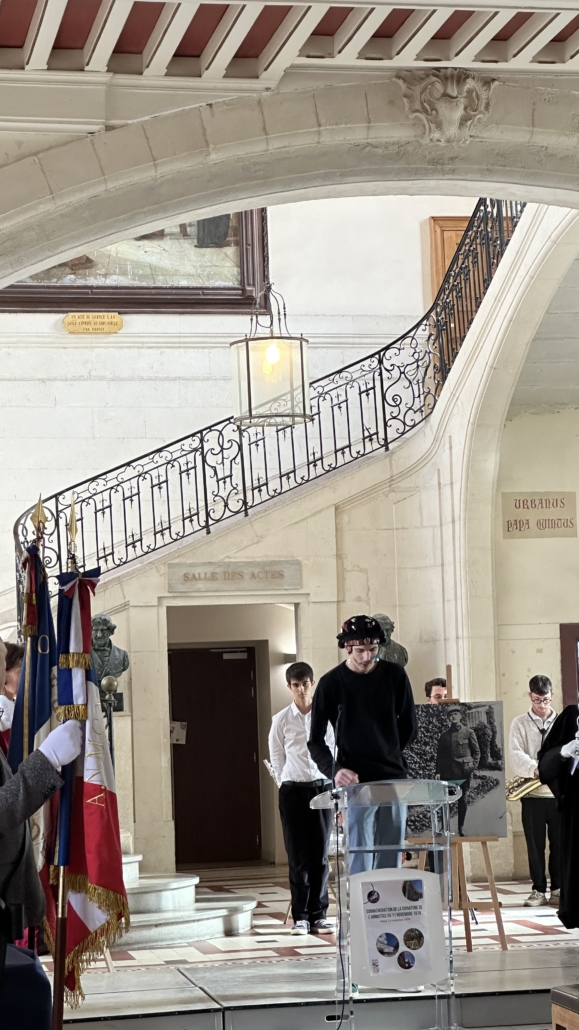
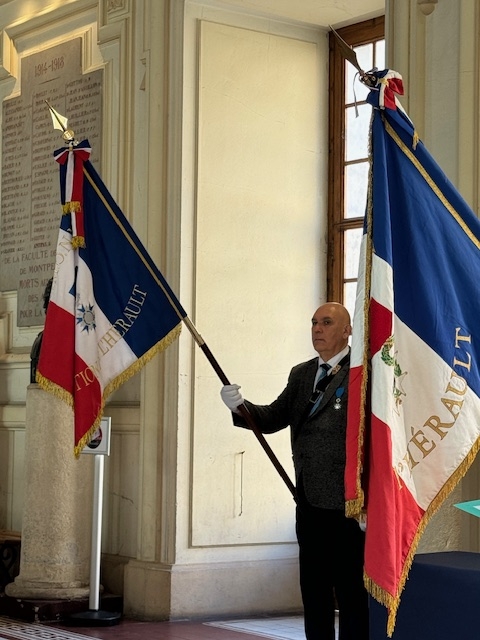
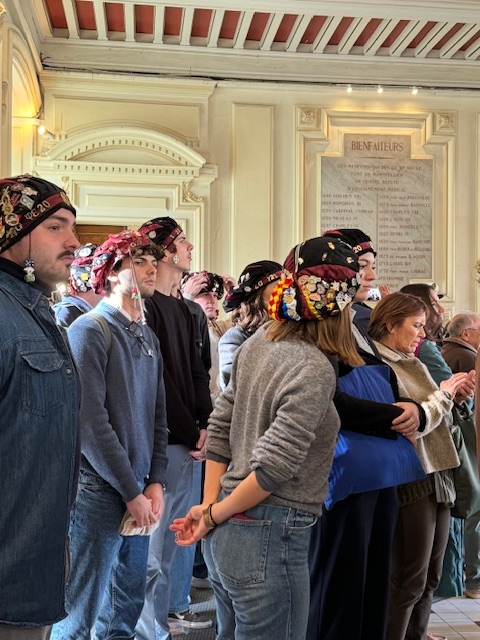
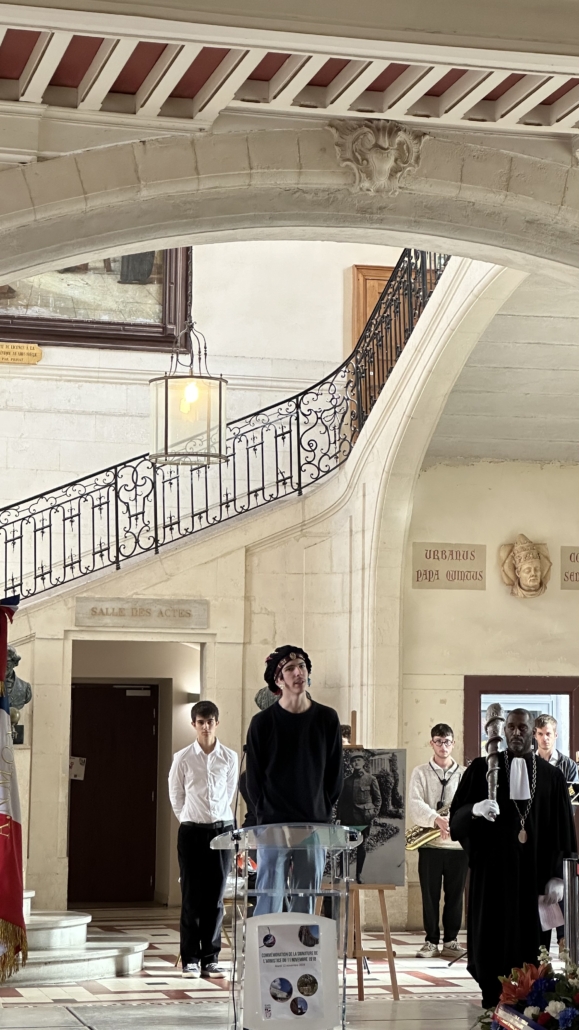
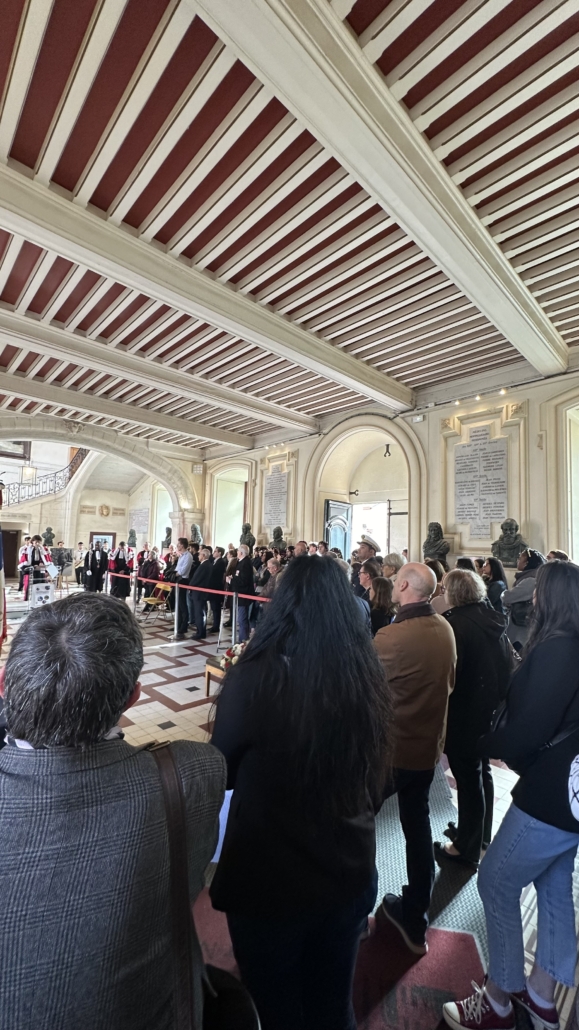
After a color guard called out“Attention”to mark the start of the ceremony, the Dean welcomed everyone in attendance, including representatives from the city and the university, military personnel, professors in academic robes, faculty staff, and students. Many of the students were wearing the faluche.
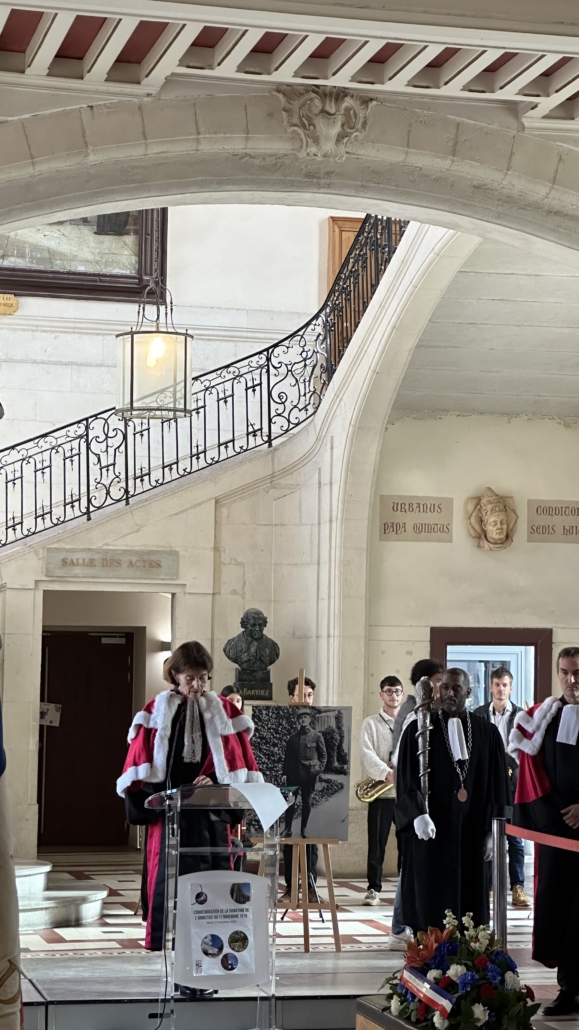
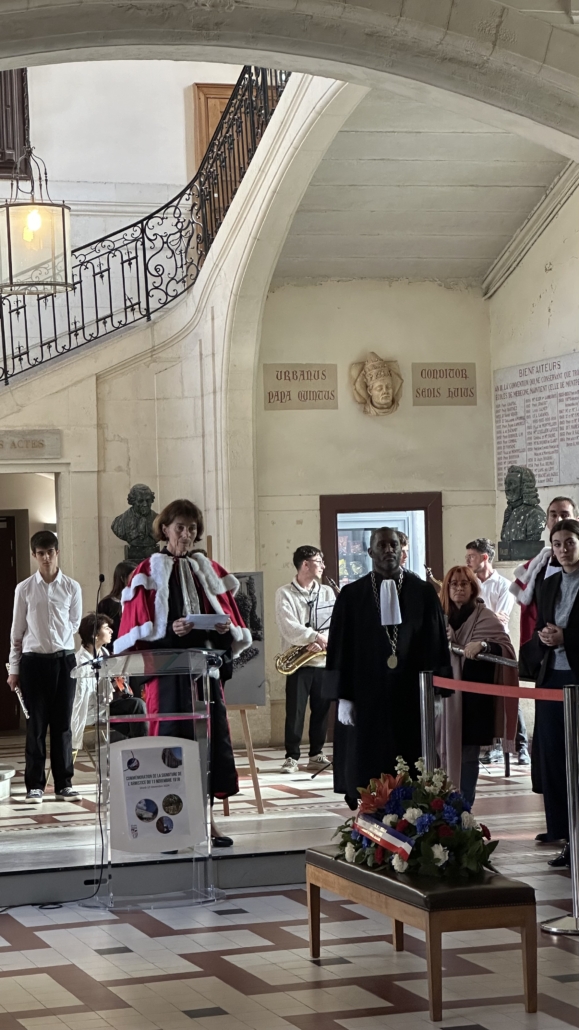
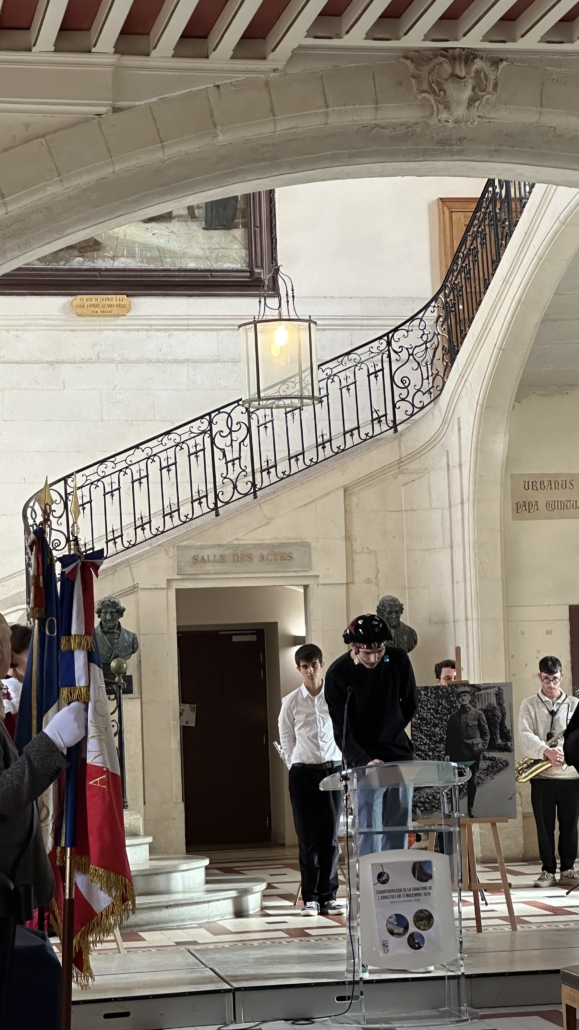
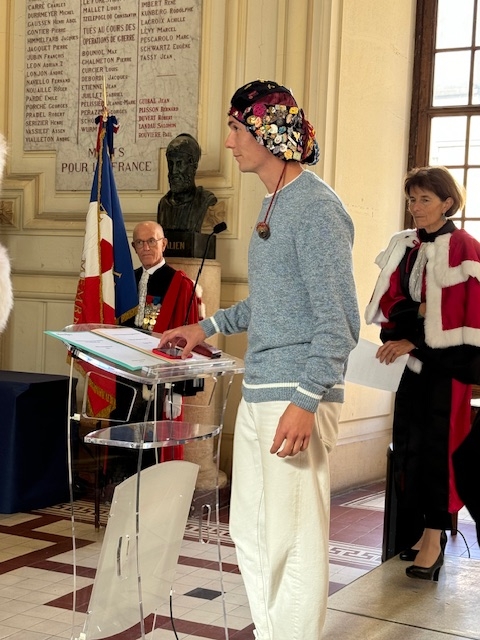
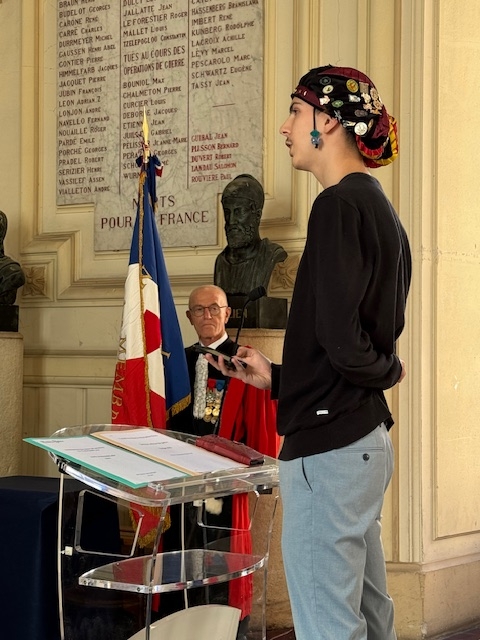
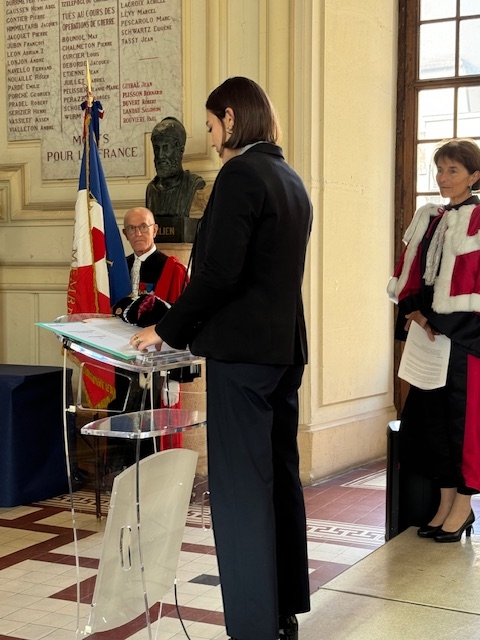
The president of the Montpellier Medical Students' Association, Nathan Montels, read a text drawing parallels between the two biographies selected this year and written by Mr. Gilles Morlock:
The two men whose memory we honor today both knew Dean Gaston Giraud, who was still a medical resident during World War I.
Maurice Warnery was a friend of Gaston Giraud. Along with Edmond Salager, they were members of the Montpellier Society of Medical and Biological Sciences, of which Gaston Giraud was the secretary. A tribute to them appeared at the end of every issue of the society’s newsletter from 1919 to 1939.
The connection they had with Dean Giraud, who went on to lead the Faculty during World War II, gives this ceremony a special significance.
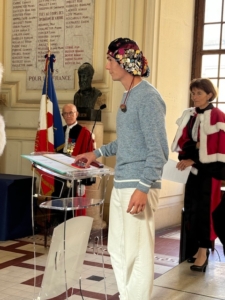
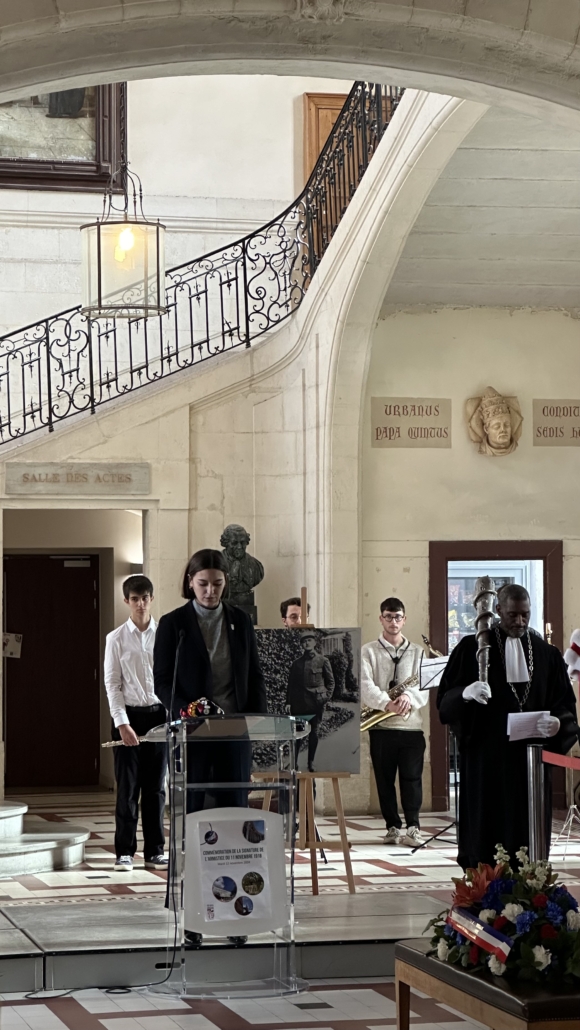
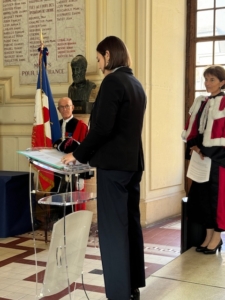
Ms. Marianne KERMAC, a medical student and student vice dean, read the biography of Mr. Maurice WARNERY
Maurice Warnery was born in Montpellier on January 22, 1894. He was the son of Charles Warnery and Marthe Leenhardt, the fifth of eight children. A student at the Lycée de Montpellier from 1905 to 1911, he earned his high school diploma in 1911, received a Bachelor of Science degree in 1913, and began his medical studies in November 1912. At the same time, he was actively involved in community service through the Association of Christian Students and in numerous initiatives led by his father, notably within the Mutualité Française, whose national convention was held in Montpellier shortly before the war. Appointed as a hospital intern following the 1913 competitive examination, Maurice Warnery became a member of the Montpellier Society of Medical and Biological Sciences in 1914. Like all young people of his generation, his promising career was brought to an abrupt halt by mobilization, just as he was completing his second year of studies.
Initially assigned to Montpellier, at Auxiliary Hospital No. 3, he left for the front at his own request, first serving in an ambulance with an Algerian infantry division, then joining the4th Battalion of the3rd Regiment of Algerian Tirailleurs—an elite regiment—as an auxiliary physician, effective June 17, 1915. His conduct there was exemplary, to the point that his bravery and dedication became legendary within his regiment. His deep religious faith helped him overcome his fears and anxieties, as he wrote in his journal during the Battle of Champagne in September 1915. It was there that he received his first commendation.
He subsequently served several tours in the hell of Verdun. He was wounded at the Côte du Talou in February 1916 but refused to be evacuated, an act that earned him a second citation. He went on to serve a total of four tours in Verdun (Avocourt, Fleury, Douaumont).
It was during his fourth stay in Verdun that his all-too-short life came to an end, at the age of 22.
In the Douaumont sector, he was mortally wounded by shrapnel on November 14, 1916, and died the following day from his injuries in Ambulance 12/20 at the Fontaine-Routon Hospital Center in Souhesmes. The Military Medal was awarded in addition to his War Cross with the following citation: “A model of bravery and dedication. Since the beginning of the campaign, he has demonstrated remarkable calm and composure while tending to the wounded under the heaviest shelling. Already wounded, he was struck by a new injury while at his post. Cited three times in the Order of the Day.”
Gaston Giraud, the future dean and an assistant physician serving at the front, wrote in his notes: “Warnery fell at Verdun. We will suffer greatly from anemia.” He used the medical term “anemia” because he knew that the war was causing appalling bloodshed across all classes of society and that all these missing men would be sorely missed.
Originally buried at the Souhesmes Military Cemetery, Maurice Warnery was reburied at the Protestant Cemetery in Montpellier in May 1922 in the presence of representatives of the Faculty Council and members of the Society of Medical and Biological Sciences.
In every issue from 1919 to 1939, the Society’s newsletter would honor the memory of Maurice Warnery, alongside that of his elder, Edouard Salager.
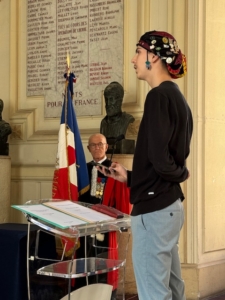
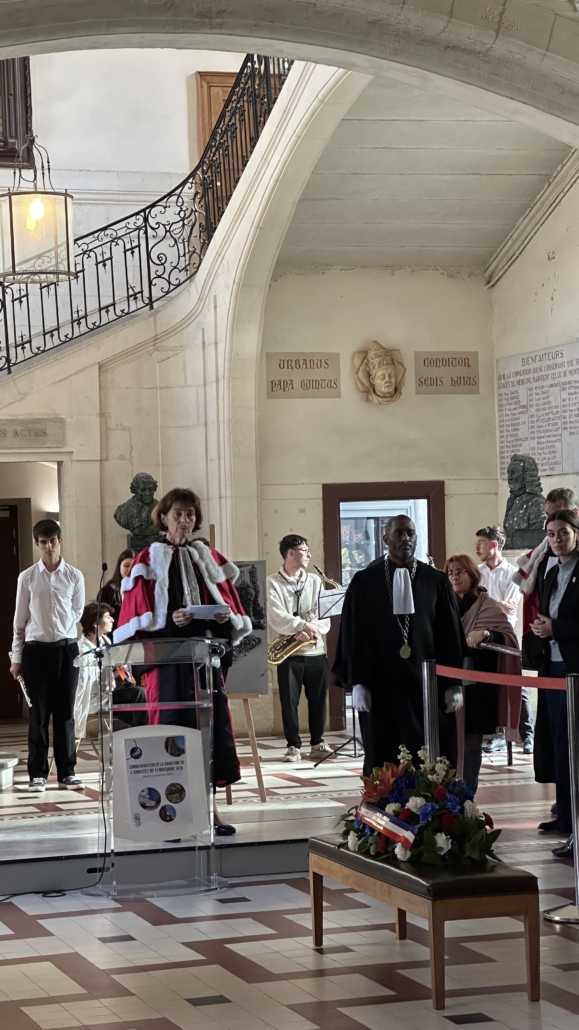
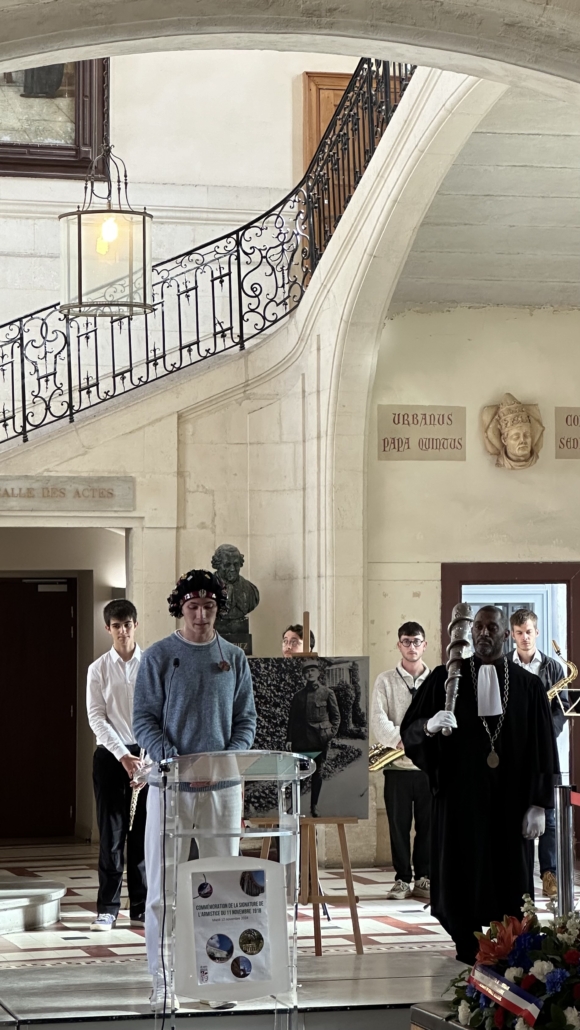
Nathan Leroy then read the biography of Mr. Edmond SALAGER
Edmond Salager was born on September 16, 1874, in Mèze, where his father was a court officer. He earned his baccalaureate in the humanities and then in the sciences in 1892. He studied medicine continuously from 1892 to 1896. Exempted from military service for medical reasons, he went on to have a distinguished career in academia and hospital practice. Initially appointed as a clinical assistant specializing in geriatric diseases through the 1897 competitive examination, he passed his final medical exams and defended his thesis on June 3, 1899, under the chairmanship of Professor Carrieu. Inspired by Professor Virès, the thesis, titled *De l’Antagonisme Morbide*, received the highest honors. In 1900, he contributed to the publication of *Clinical Lectures in Medicine Delivered at the Montpellier General Hospital*. He then turned his attention to mental disorders and, in 1904, earned a Bachelor of Arts degree in philosophy, dedicating his thesis to Francisque Lélut, one of the pioneers of contemporary psychology. He was appointed chief resident in mental and nervous disorders through the 1904 competitive examination. As a member of the Montpellier Society of Medical Sciences, he published his work in various journals covering neurology, experimental medicine, and pathological anatomy. He was awarded the Palmes Académiques in 1907. In 1908, he qualified for the competitive examination for the agrégation in internal pathology and forensic medicine but did not attain the rank of agrégé. He then served as an assistant physician at the mental asylum under Professor Albert Mairet. He became head of the psychology laboratory at the Clinic for Mental and Nervous Diseases in 1909, was appointed as a preparatory instructor in forensic medicine that same year, and as a result served as a lecturer and gave courses at the Faculty of Law, and later became head of the experimental psychology laboratory. In 1910, he co-authored *La folie hystérique* with Albert Mairet.
During this time, he married Jeanne Marie Brézet in 1906. The couple had three children: Annette in 1907, Paule in 1909, and later Jacques in 1915. The family lived at 2 Rue de l’Ancien Courrier.
Called up on August 2, 1914, Edmond Salager initially served as a military nurse in the auxiliary army but was quickly assigned as an attending physician at Auxiliary Hospital No. 2 in Montpellier. At his request, he was classified for active duty and assigned to the 16th Military Nurse Section and to Auxiliary Hospital No. 1. He was appointed assistant major 2nd class, which granted him officer status. He then served in Pézenas. Finally, on the eve of theSecond Battle of Champagne, on September 24, 1915, he was assigned to the divisional stretcher-bearer unit of the37th Infantry Division in the Suippes sector. This major offensive, launched without sufficient preparation, would prove to be yet another failure.
Edmond Salager was killed along with two stretcher-bearers on September 28 during the bombardment of Saint-Hilaire-le-Grand. He was mentioned in the division’s order of the day: “Joined his unit on September 24, which was under constant heavy bombardment. Was killed at his post on September 28.” He was posthumously awarded the Croix de Guerre and, later, the Médaille Militaire.
After his remains were exhumed from his temporary grave, he was buried in the military section of the municipal cemetery in Saint-Hilaire-le Grand.
Until 1939, his memory was honored in every issue of the *Bulletin of the Society of Medical and Biological Sciences of Montpellier and the Mediterranean Languedoc*, which resumed publication in 1919, with the following note:
Killed in action while serving in the French armed forces.
Dr. SALAGER, laboratory assistant at the Faculty.
Maurice WARNERY, hospital intern
Members of the Montpellier Society of Medical Sciences
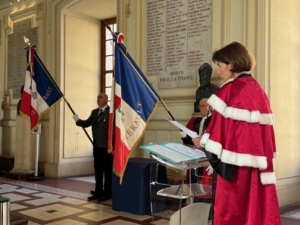
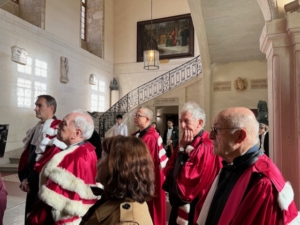
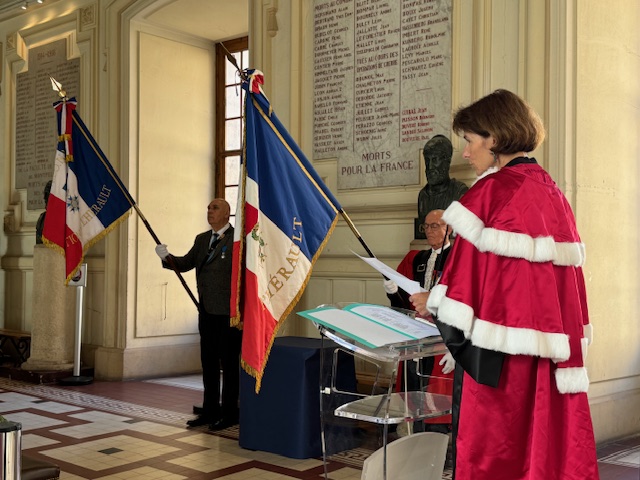
The Dean read the roll call of the fallen from World War I (1914–1918), as well as from World War II (1939–1945) and overseas theaters of operations.
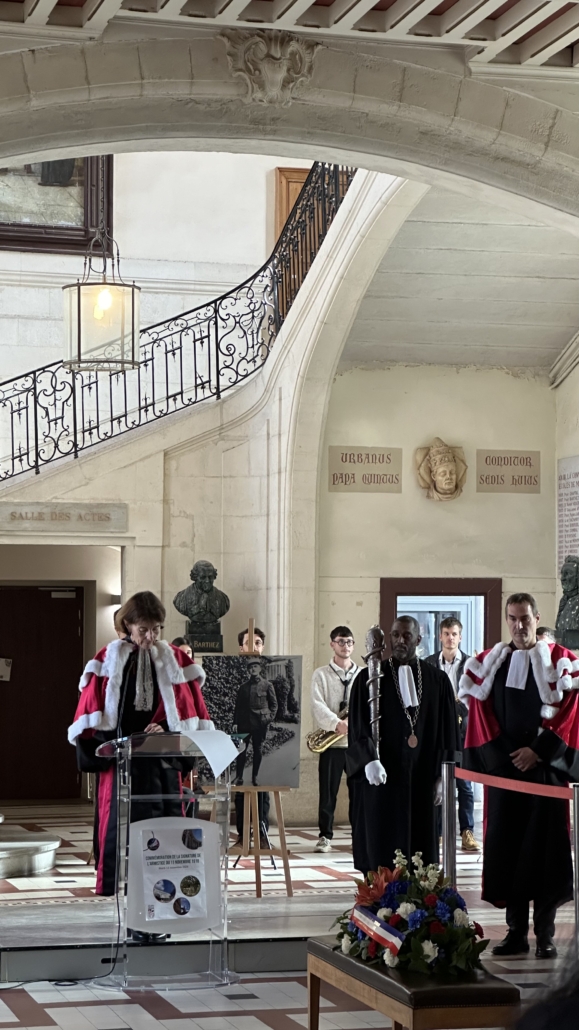
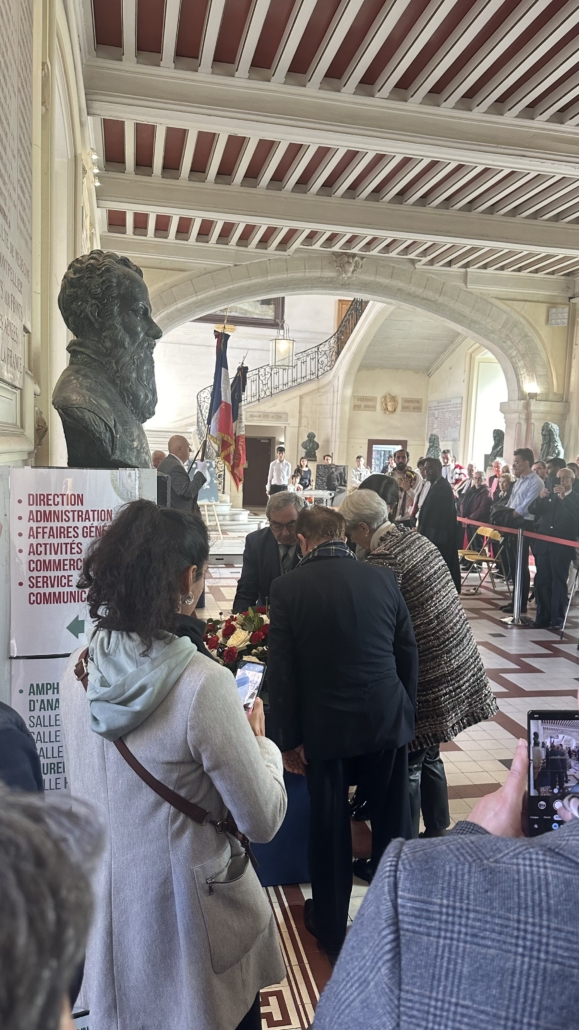
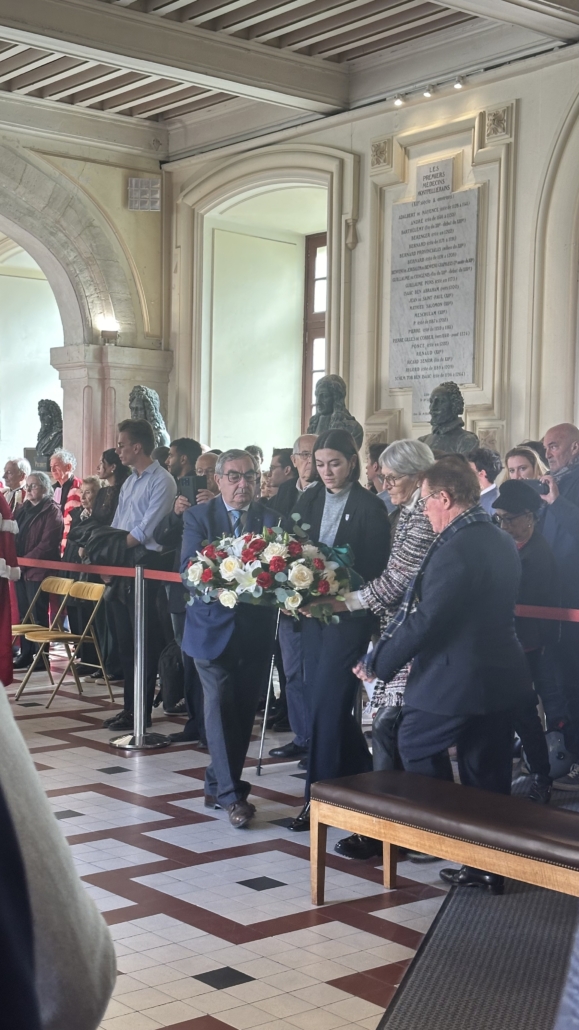
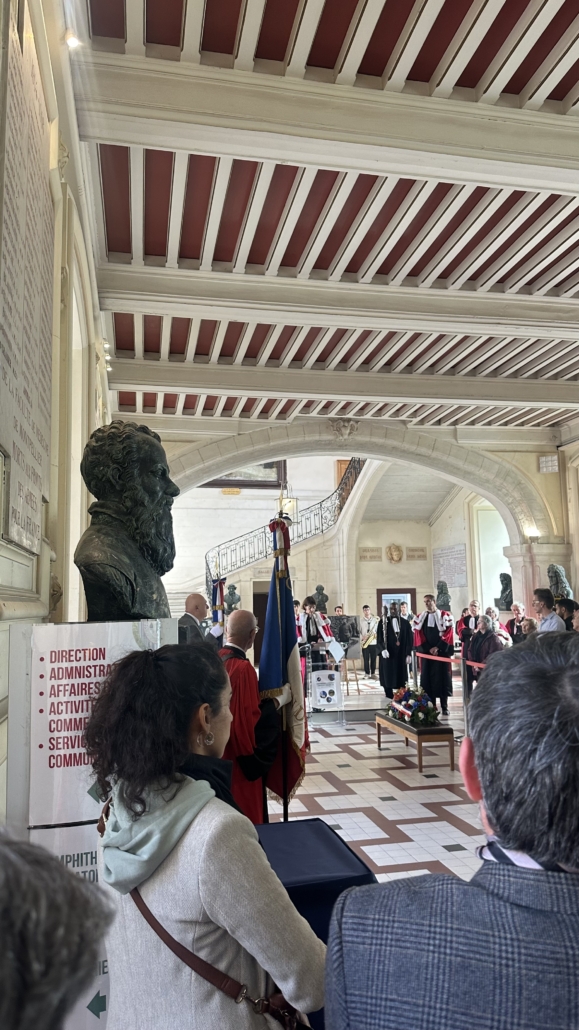
Ms. Aben and Mr. Marcou, representing the National Orders, the Dean, Mr. Lamou, and two students then laid wreaths.
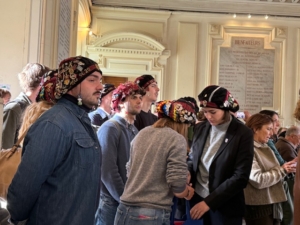
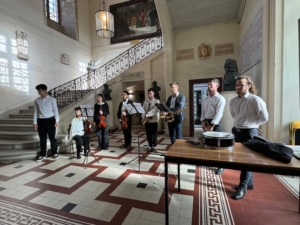
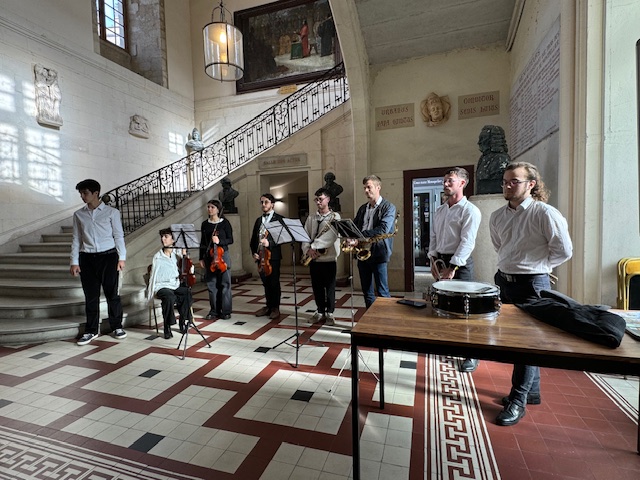
The OSEM continued the commemoration with a drum roll in “Honor of the Fallen” before the assembly observed a minute of silence.
Then the OSEM began playing “La Marseillaise.”
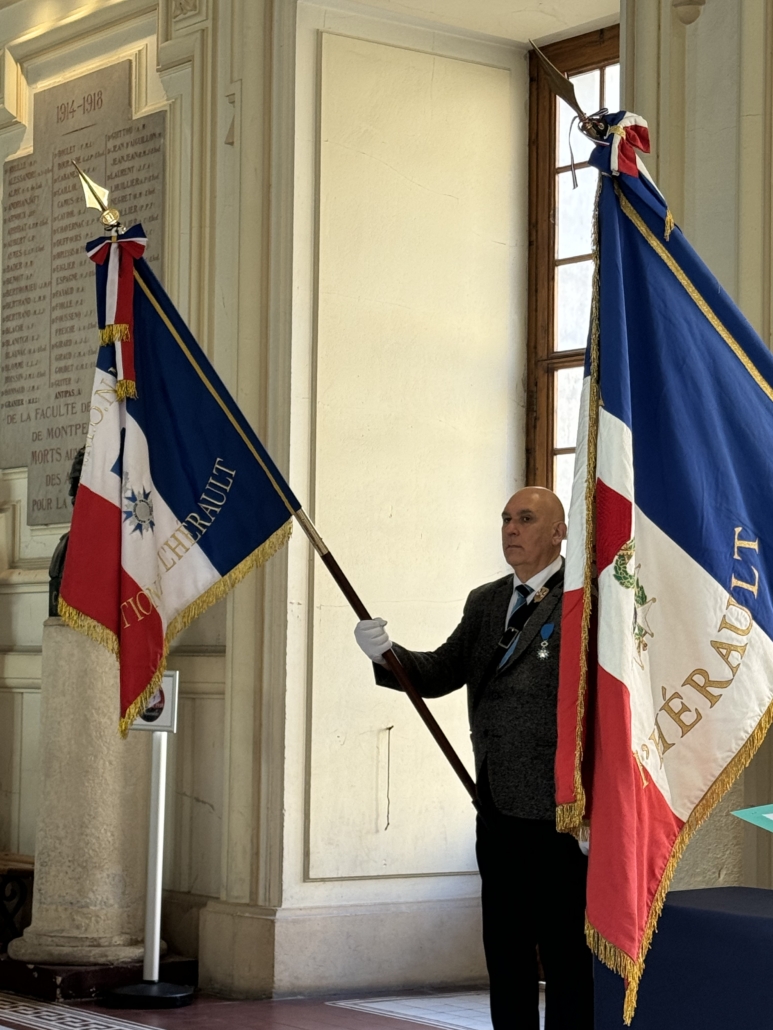
In closing, the Dean thanked the audience and those involved in organizing the ceremony, introduced the Montpellier Student Symphony Orchestra (OSEM), and went to greet the flag bearers.
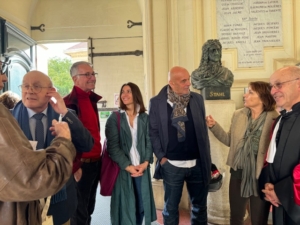
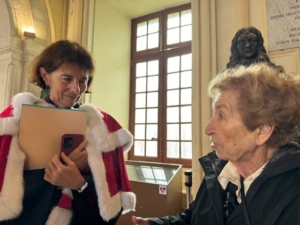
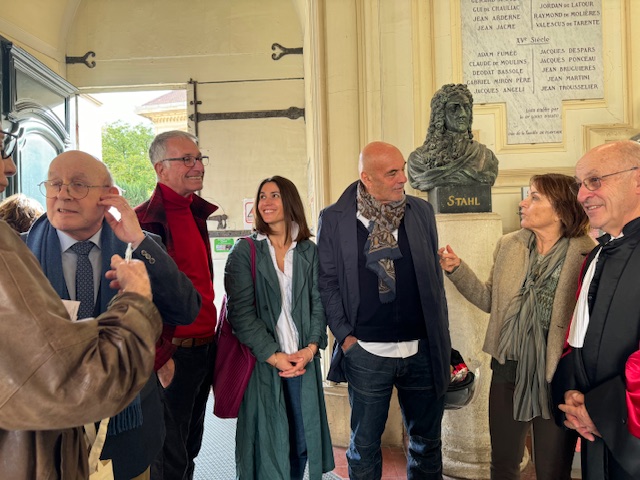
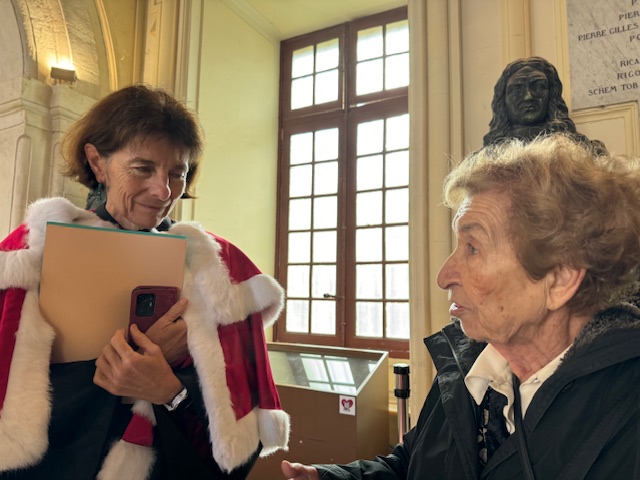
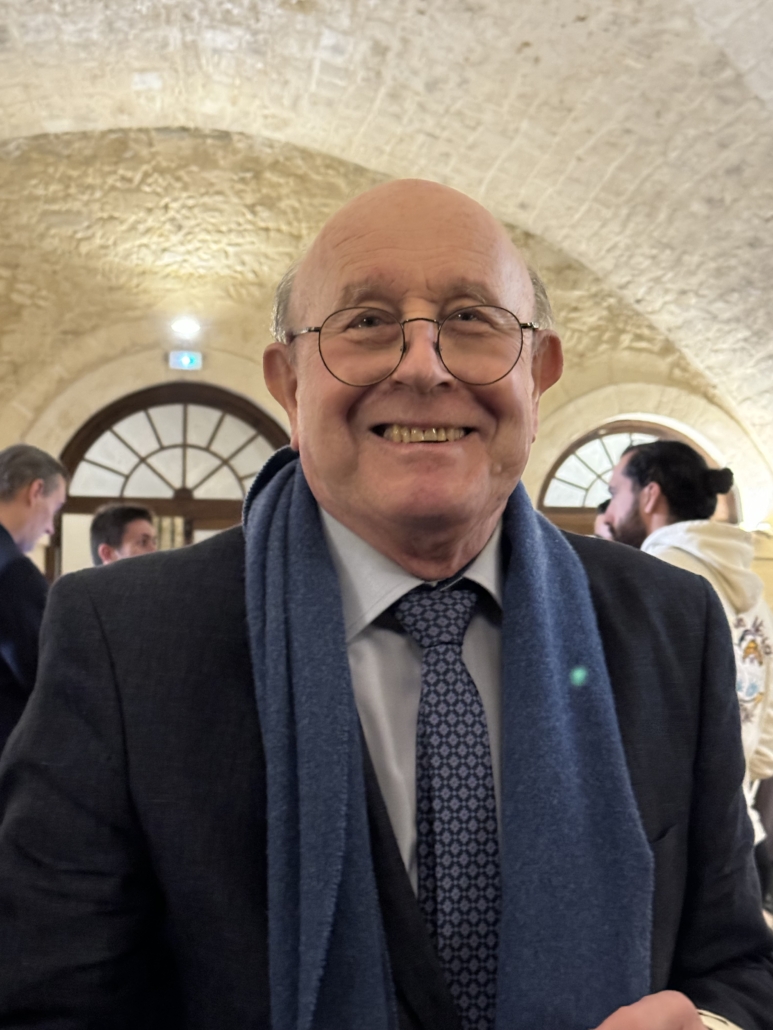
This ceremony was particularly moving, as Anne and Michel TOUZERY—members of Pierre SALAGER’s family—were with us, as was Mrs. BARJON GIRAUD, daughter of Dean Gaston GIRAUD.
Below are a few photos from the event.