
Interview with Student Vice Dean Elie GHATTAS
Hello, Elie. For those who might not know you, could you please introduce yourself?
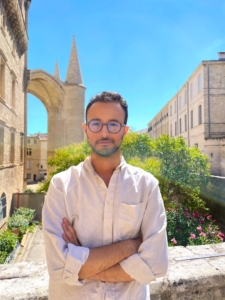
Hello, my name is Elie GHATTAS. I’m 21 years old and a third-year medical student at the Montpellier campus. This is the first time a Student Vice Dean has been in their third year. With the reform of the upper-level medical curriculum, it was important to me to serve this term in my third year, since we still have time to fully commit to the students. I am also president of the Association of Student Representatives for Montpellier-Nîmes in Medicine, Speech-Language Pathology, Orthoptics, and Midwifery (ADEMMOOS), responsible for national representation for the Montpellier campus, as well as the liaison for the 2022–2027 medical student class.
I have also been elected to the Academic Council for the 2024–2026 term.
What made you want to run for the position of Vice Dean of Student Affairs?
Since my sophomore year, I have served as the representative for the medical school class starting at the beginning of each academic year. This experience has made me realize the importance of student representation, both at the local and national levels. With this in mind, I ran for the position of Vice President for National Representation for Montpellier within ADEMMOOS.
In this role, I had the opportunity to actively participate in the conferences of the National Association of Medical Students of France (ANEMF), where I represented students’ interests on a wide range of topics, ranging from the Reform of Admission to Health Studies (REES)—with the support of the Montpellier Health Tutoring Association—to the reform of the second cycle of medical studies (R2C), as well as issues such as combating sexual and sexist violence (VSS) and, above all, student mental health.
This experience motivated me to foster connections between the local and national levels by bringing together all students from every program in the faculty, across both campuses. It was with this in mind that I decided to run for the position of Vice Dean for Student Affairs at the Montpellier-Nîmes School of Medicine.
How will you balance your duties as associate dean with your obligations as a student and your other roles?
Effectively managing these responsibilities requires a methodical approach and a high degree of adaptability. It involves rigorous planning and proactively working on multiple projects simultaneously—as was the case with the national student representation for the summer of 2023, when I prepared informational posts for students on social media a full semester in advance and also educated myself on all issues affecting medical students.
Before running for office, I was fully aware of the scope of the work ahead of me—especially with the start of my term, the renovation of the Arnaud de Villeneuve campus building, and the study space crisis. I have tried—and will continue to do so—to work with the academic departments and the administration to find solutions that suit all students at the Arnaud de Villeneuve campus, as well as those in the historic downtown building, the UPM building, and the Nîmes campus.
The synergy between the various roles I hold makes it much easier to manage my responsibilities and allows me to juggle them effectively while closely monitoring a variety of issues.
What are your goals and priorities for this term?
Several projects are central to my term. Initially, the focus is on the process of renewing the faculty’s academic and administrative councils, particularly through the election of student representatives. A key objective during this period is to promote high-quality representation by providing training for newly elected representatives and overseeing their activities across all degree programs and at both university campuses. After years of work to implement the R2C, the first graduating class took the EDN exams under the new format in October 2023. Close monitoring is essential to ensure the effective implementation of this reform at both the local and national levels. My commitment is demonstrated through close oversight of all developments and improvements, drawing in particular on my role as National Representative. It is important to explain the reform to students and help them understand it. This is achieved through the R2C presentation conference for second- and third-year students at the start of the academic year, which—as a new feature this year—is open to all students across all graduating classes. This synchronization will facilitate the coordination of representation efforts in collaboration with the other vice presidents of the faculty associations.
It is also essential to closely monitor the implementation of the sixth year of midwifery studies, with the assistance of the vice president in charge of relations with ADEMMOOS midwives, as well as the elected officials and the entire AMESF executive board. Another priority for me during this term was to organize a graduation ceremony for the class of 2024 midwifery students—similar to the one held for medical students—at the Montpellier Botanical Garden. This is one of the programs that brings life to the campuses, and recognizing their hard work and personal growth is of the utmost importance.
I believe it is essential to participate in national working groups. Students’ voices must be heard more clearly and will be conveyed at both the local and national levels, particularly during academic and administrative councils, as well as at all meetings and conferences.
Student health—and especially mental health and gender-based and sexual violence (GBSV)—are at the heart of my term. Raising student awareness about the importance of mental and emotional well-being was already a major goal during my first year as a class representative, and this initiative will continue throughout my term and until the end of my studies. Combating SGBV, in all its forms, both within the hospital and in any other setting, remains a central focus of my terms in office. We plan to train student organization executive boards to serve as trusted advisors.
As president of ADEMMOOS, I organized, in partnership with the Buisson Bertrand Institute and the Montpellier University Hospital, a flu vaccination campaign for students in early December on the Montpellier campus. This is an important event eagerly anticipated by students in all programs, so they can carry out their clinical work and internships safely—and also out of concern for their patients.
Can you explain how you plan to promote students’ mental health within our college, as well as the specific measures you intend to implement as an organization to support students facing challenges related to their psychological well-being during their time at college?
ADEMMOOS, the association of elected student representatives, addresses a wide range of issues, with a particular focus on mental health. It all began with a survey conducted by the office of Théo LACOSTE, Student Vice-Dean for 2020–2021, which sounded the alarm. This prompted us, along with all the faculty’s student organizations, to support students and offer them several initiatives designed to promote their well-being.
I can mention the project to update the list of key contacts for those in need of psychological support, with the help of the ATSM and their guide. We want to inform students about all the resources available to support them in every way possible. We also want to highlight “March Awareness Month,” organized by ADEMMOOS in partnership with several faculty associations—to whom we extend our deepest gratitude for their commitment—such as MAP and AMESF. This month is dedicated to raising awareness about various types of violence—such as violence in healthcare settings and sexual and sexualized violence—as well as precarious living conditions and harassment, through a series of events throughout March. Roundtable discussions, a self-defense workshop, a film screening followed by a discussion, and a debate competition will be offered to students.
I’ll conclude with one of our association’s major events, the Forum for Future Residents (FFI), which is organized for medical students starting in their fourth year in partnership with the Languedoc-Roussillon Residents’ Union (SILR) to support them in choosing their specialty and alleviate stress about their future and the postgraduate training reform. The relationship of friendship and trust with the SILR is incredibly beneficial for externs and residents, because together, we can make things better, and above all, support externs and residents on their journey, in the fight against sexual and sexual violence (VSS) and harassment in hospitals—and that is why I would like to thank Killian L’HELGOUARC’H, a general practice resident and president of the SILR, who has committed himself to this cause along with his entire executive board, which is doing remarkable work.