Interview with Associate Dean for Student Affairs Juan PUJOL
Hi Juan, for those who might not know you, could you introduce yourself?
Hello!
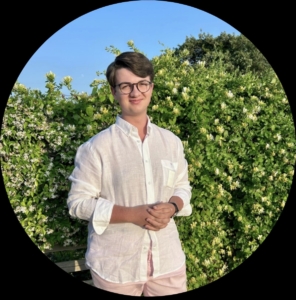
My name is Juan PUJOL. I am a third-year midwifery student in the University Department of Midwifery at the Arnaud de Villeneuve Health Campus.
I am a member of the Committee on Education and University Life at the University of Montpellier and also a student representative on the Institutional Medical Committee at the Montpellier University Hospital. As part of my studies, I serve as the class representative for the 2024–2029 cohort in the Maieutics program in Montpellier.
I completed the 2023–2024 PASS program, after which I was admitted to the Midwifery program.
From a more institutional perspective, I have served as Vice Dean for Student Life since September 8, 2025—a position more commonly known as “Student Vice Dean” or “VDE.” I am also the President of ADEMMOOS, the Association of Student Representatives from Montpellier-Nîmes in Medicine, Speech-Language Pathology, Orthoptics, Midwifery, and Psychomotor Therapy.
What made you want to run for the position of Vice Dean of Student Affairs?
The role of Vice-Dean is, first and foremost, an additional commitment that complements my role as President of ADEMMOOS. Indeed, as president of our faculty’s one and only student representative association, I occupy—thanks to my colleagues on the executive board and the elected representatives—a central position at the intersection of all graduating classes and all medical and paramedical programs within the faculty. So first and foremost, there is this personal desire of mine to build on the work of my colleagues by fostering better communication among the various stakeholders in what I call “the student representation chain.” I often say—as I did this year to the graduating classes I visited during their back-to-school lectures—"It all starts with you!"; "Each and every one of you plays an active role in your own education"; or "Our university cannot function without you, just as you cannot grow without it." I therefore felt the need to ensure continuity—whether in the present, through the work I’ve outlined for you, or by building on the past to ensure stability, which is fundamental to any institution. It was this institutional aspect of the Vice Dean’s role that immediately “resonated” with me.
Around the same time, I felt a desire to innovate—within reason—and to do my part in contributing to the 806-year history of the Montpellier-Nîmes Faculty of Medicine. In fact, I am the first student Vice-Dean from the Midwifery program in our faculty’s history. This is a first for Montpellier, if not on a larger scale. This brings me to my second source of motivation: interprofessionality.
Many students and professionals view the multiplicity and diversity of professionals as an administrative or functional constraint. I only partially share this view, because for me, the richness that comes from multidisciplinarity far outweighs any other difficulties. In other words, and generally speaking, I want to turn these constraints into opportunities so that we can provide students with a college and an educational program that truly reflect their needs and address the challenges they face now and will face in the future.
How will you balance your duties as Vice Dean with your obligations as a student and your other roles?
Just a few seconds ago, we were talking about constraints. Mine aren't related to my job, but simply to the fact that a day only has 24 hours!
On a more serious note, I firmly believe that the key to personal success lies in part with others; in other words, together we will achieve great and meaningful things during this 2025–2026 term through strong teamwork and coordination. Personal organization is, of course, fundamental, but I’m also thinking about others—their abilities and their commitments. It will therefore be a matter of distributing the workload among the various components of the student representation chain that I’ve mentioned to you. This brings us back to the idea of the strength that comes from working together, which allows for better representation of the actions carried out at the UFR level.
This question is all the more relevant in the context of my life as a midwifery student. In fact, in addition to classes, there are clinical rotations—many of which take place in the third year. My approach, therefore, is to set priorities: my academic success on the one hand, my institutional responsibilities as Vice Dean and President on the other, and my role as a young student. I will not prioritize one of these three goals over the others but will balance them all, because I know full well that they are all interconnected. As I often tell my friends who ask me about this—and whom I thank immensely for their concern and their “serene worry” about the life that is becoming mine this year—“The simple fact of living my life is already a source of considerable fulfillment, growing year by year. So for me, it’s not a matter of worrying, but of keeping my head held high and moving forward.” Finally, yes, my family and friends are the source of much of my daily happiness. I consider myself deeply privileged to be part of this community, which I find to be more than conducive to student engagement, personal development, and fulfillment.
What are your goals and priorities for this term?
The 2025–2026 academic year is a pivotal one in several respects. First, from an educational standpoint, clinical rotations will be one of my priorities, whether they take place at the Montpellier University Hospital or at various external clinical sites. Student well-being and the quality of clinical training received are top priorities, as medicine is best learned at the patient’s bedside. The R2C reform is also a matter of concern, both in terms of its local implementation and the logistical aspects of administering the exams. On both of these points, in-depth work will be necessary, on par with local adaptation to regulatory requirements.
At the Montpellier campus, we have been experiencing a building crisis for several years. Remedial measures are currently being developed and will eventually provide students with better access to buildings, whether on the Arnaud de Villeneuve Health Campus or in the Historic Building.
At the Nîmes branch, I want to maintain this spirit of collaboration across campuses and promote equality among the campuses to ensure the highest quality of education throughout the UFR. With the help of various stakeholders from organizations and institutions, I will establish a more in-depth process for listening to the voices of the Nîmes community and, to the extent possible, address the needs of this branch.
For the entire UFR, I have three key objectives. The first is student well-being and the fight against student violence. Well-being is a prerequisite for a high-quality education. It is therefore essential to promote it and take preventive action—for all students, across all graduating classes. The second is to foster closer ties between the university and its students. As mentioned earlier, a faculty without students can do nothing, and vice versa. This brings us to the final objective: student representation. Giving voice to the 14,000 students in the UFR is no easy task, but it is greatly facilitated by close cooperation with all stakeholders in the student representation system, particularly student representatives. In 2026, a new class of student representatives will be elected to represent every student in the faculty’s decision-making bodies. My goal is to coordinate and support these representatives, highlight their work, and, by extension, amplify the voices of each and every student in our faculty.
Can you explain how you plan to promote students’ mental health within our faculty, as well as the specific measures you intend to implement as an association to support students facing challenges related to their psychological well-being during their time at the university?
Promoting students' mental health is one of my priorities. Here, too, it requires a collective effort combined with ongoing, constantly updated work.
From an organizational perspective, I will take steps to enhance mental health training for students through Mental Health First Aid (MHFA) courses, Sentinelle training, and so on. The expansion and dissemination of the Gélules software is also a key resource for reporting adverse events. It’s always easier to share a burden than to carry it alone, and that is my mission: to always be open, available, and accessible to students. Furthermore, as mentioned earlier, student mental health is a collective effort. As part of my duties as associate dean, I will strive to be a source of proactive ideas for the administrative teams so that we can create a harmonious partnership between students and the faculty when it comes to mental health.
A final word…
In conclusion, we still face many challenges. Nevertheless, that is precisely what makes student engagement so meaningful. Being Vice Dean is no small matter, and I have been reminded of this every day since the start of my term. However, it is also a haven of opportunities, diversity, and encounters that shape a student’s life and bear fruit. For all these reasons, I am deeply grateful for the trust placed in me by the UFR and all the students—through their elected representatives—in carrying out this mandate.
Alone, we go faster; together, we go farther! Thank you!