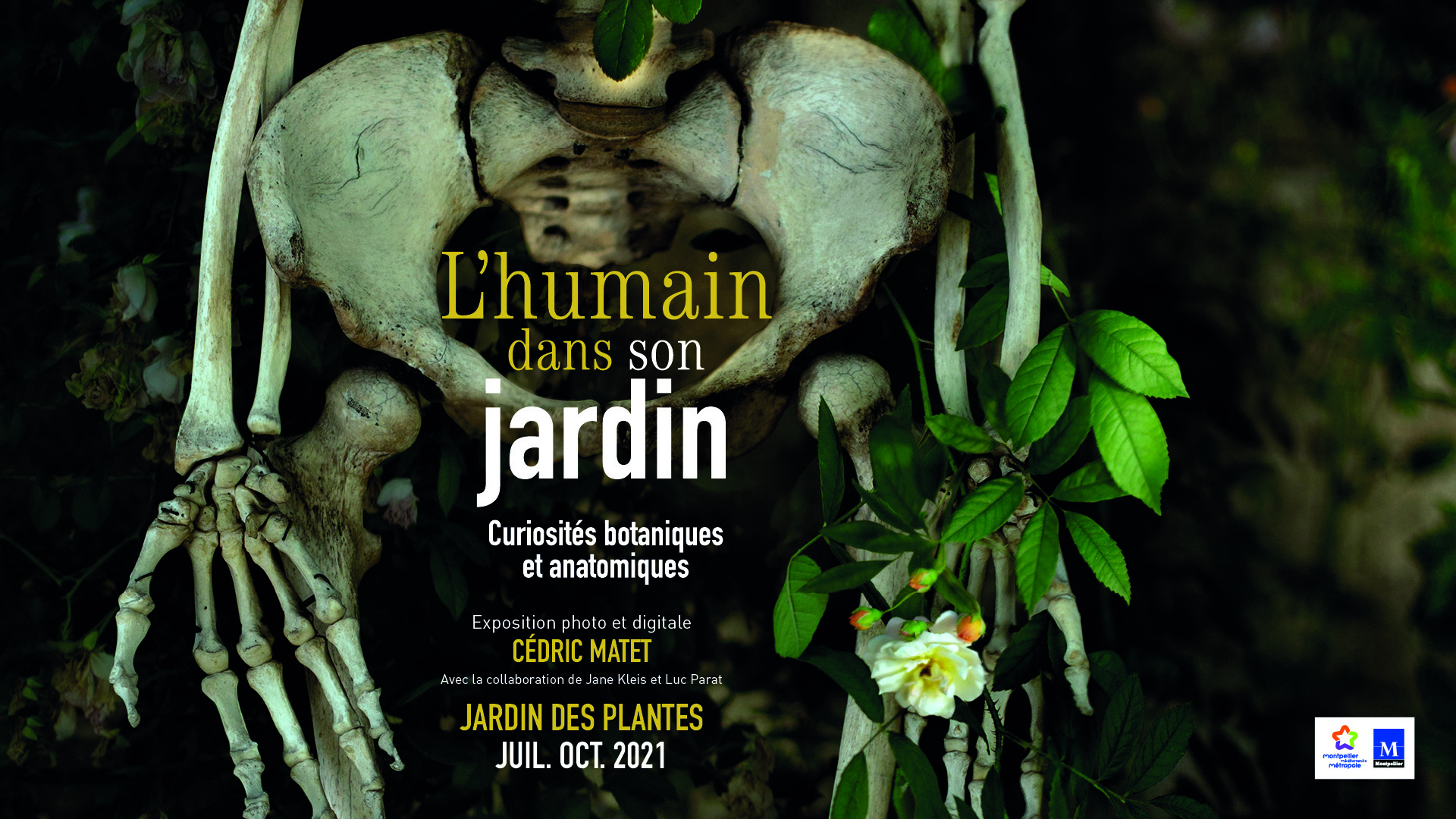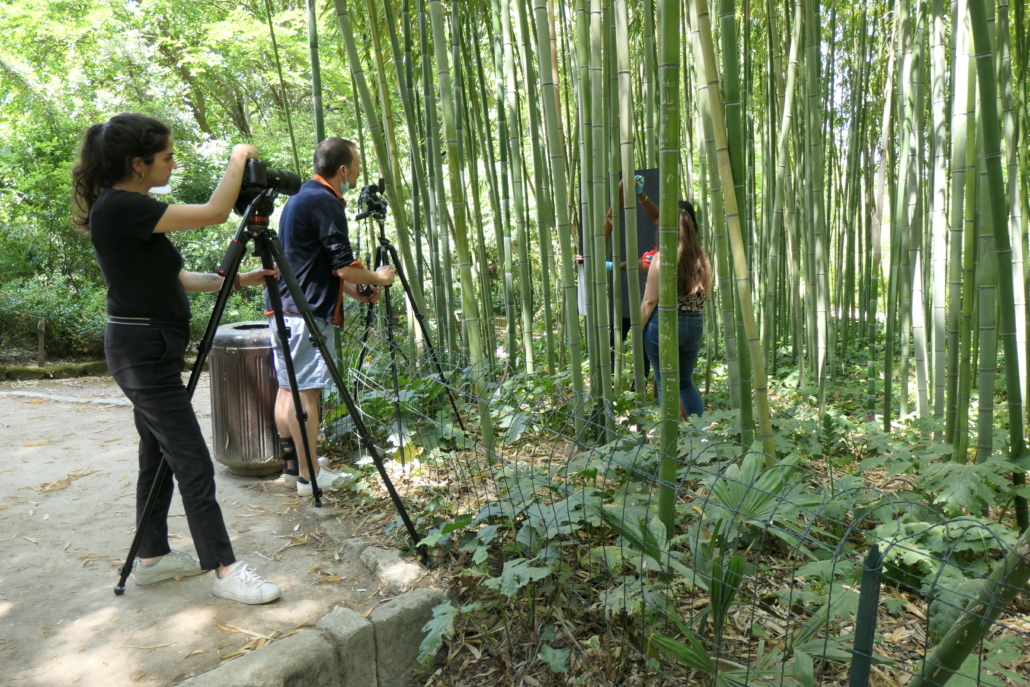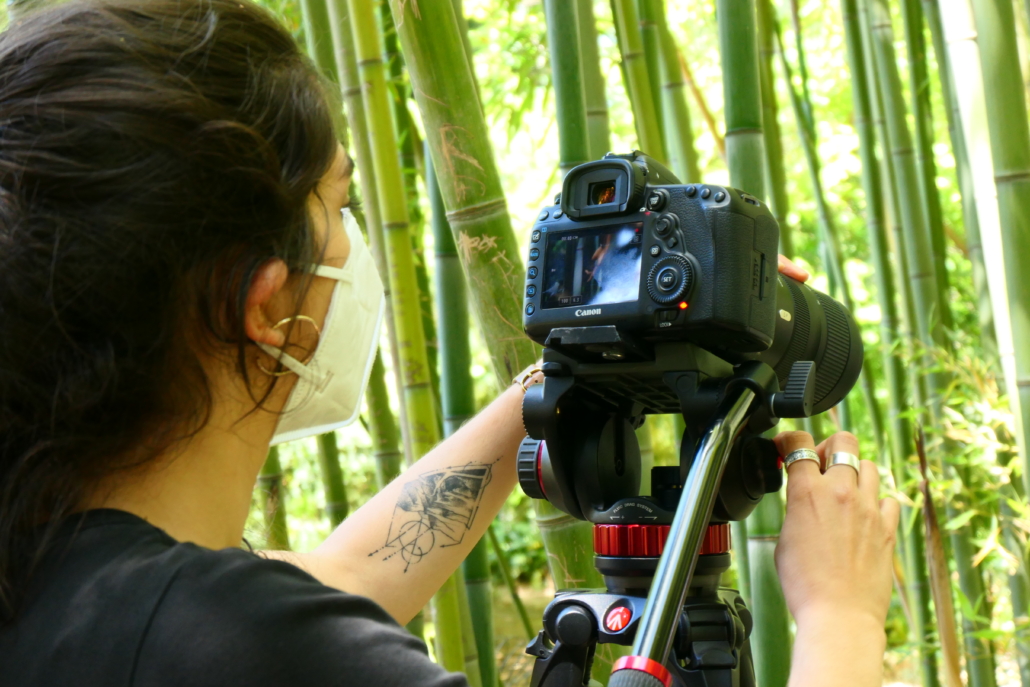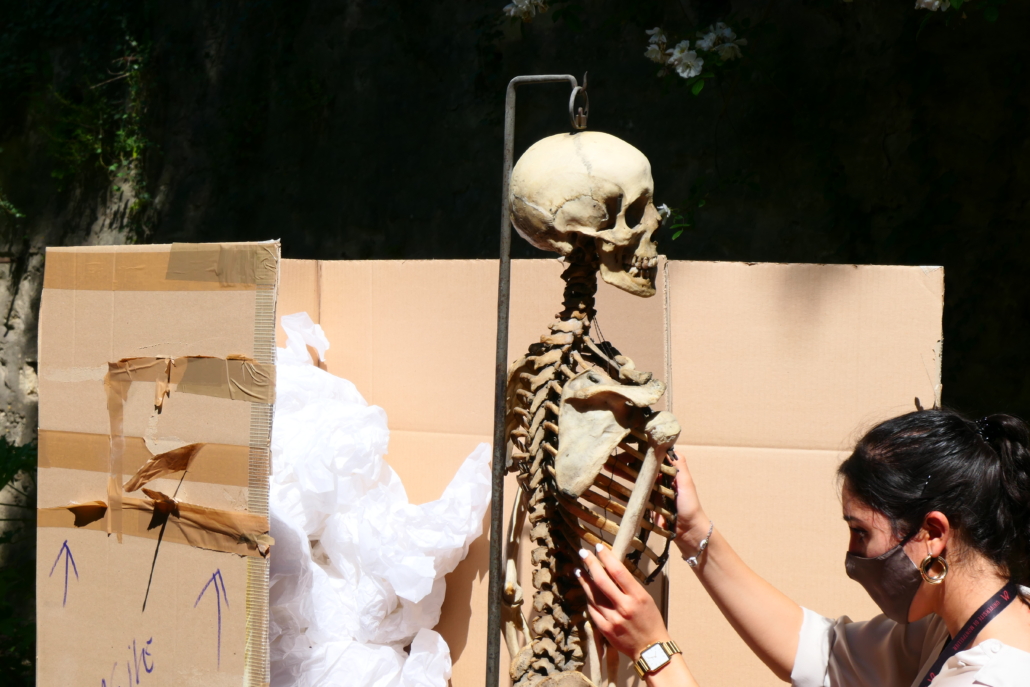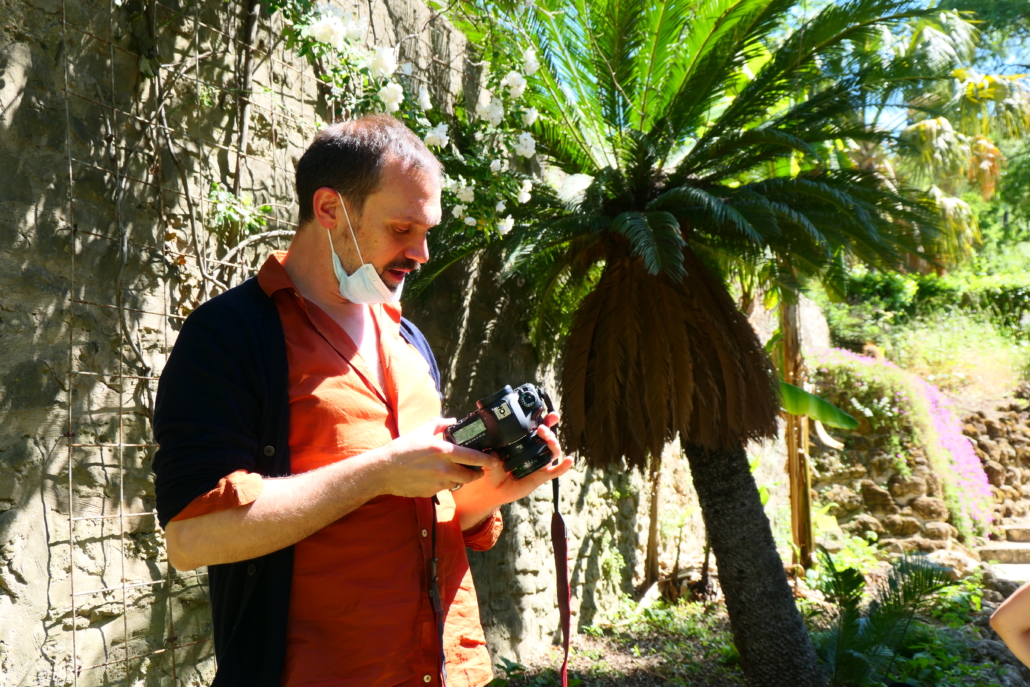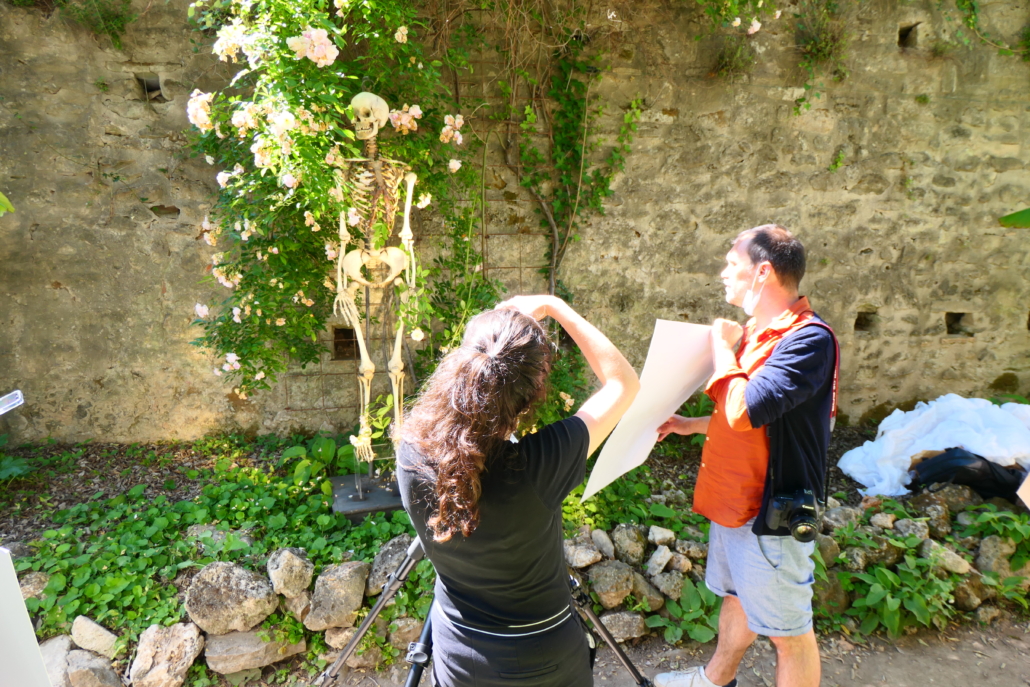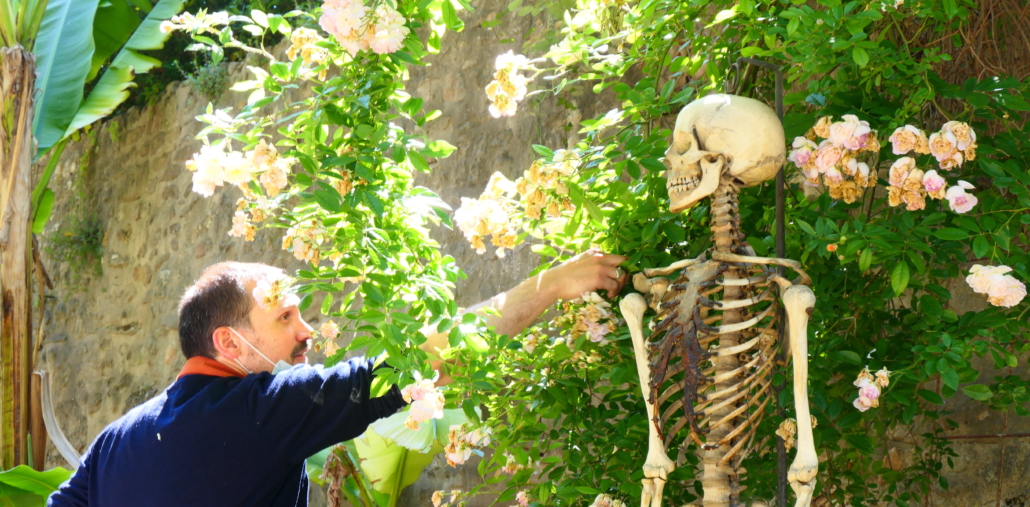

As part of the 800th-anniversary celebrations, a photography exhibition will take place from July 10 to October 10. Curated by renowned photographer CédricMATET, it will be held at the Jardin des Plantes. In 2020, this photographer also curated the exhibition “Behind the Masks,” whichfeatures200 portraits of medical personnel.

Practical Information


"People in Their Gardens"

The title of the exhibition is fundamentally linked to itscontent. In fact, for this exhibition, the artist chose to work with anatomical specimens from the Faculty’s anatomy collection. To better understand his project, we interviewed the photographer.


What is your background?

I’m originally fromSète. I attended a design school in Montpellier that is now called ESMA. After that, I enrolled at the Gobelins School of Visual Arts in Paris. Later, I went back to school to earn a master’s degree in Urban Planning and Sustainable Development because I’m interested in cities. In the meantime, I’ve been working in art direction and design at various communications agencies.

What interests me is connecting art to the city, to maps, to cartography, and to people. In my view, an artist must be rooted in their context: urban, political, and human.


Can you tell us about the “Behind the Masks” project?

It was GéraldCHANQUES, a professor at the faculty and a doctor atSaint EloiHospital, who contacted me and proposed this project. I wanted to convey a vision ofwhat healthcare providers can be and the commitments they make. 


How would you describe yourself?

If I had to define myself and my work, I would talk abouttransdisciplinarity. I am a photographer, but I’m also a visual artist; I enjoy working with various materials and collaborating with people from different fields.


Can you tell us about your new exhibition, “Man in His Garden”?

It’s been a while since I first thought of writing about the Jardin des Plantes, but I’ve always had a real passion for the anatomy museum I visited when I was a student. Being able to explore botany through the garden, but also to explore humanity and research on the human body—I think that’s fabulous. The project was a collaboration between the two of us, once again with ProfessorCHANQUES.
This project is interesting becauseit takes me out of my comfort zone;I usuallytake portraits, but that’s not the case here.
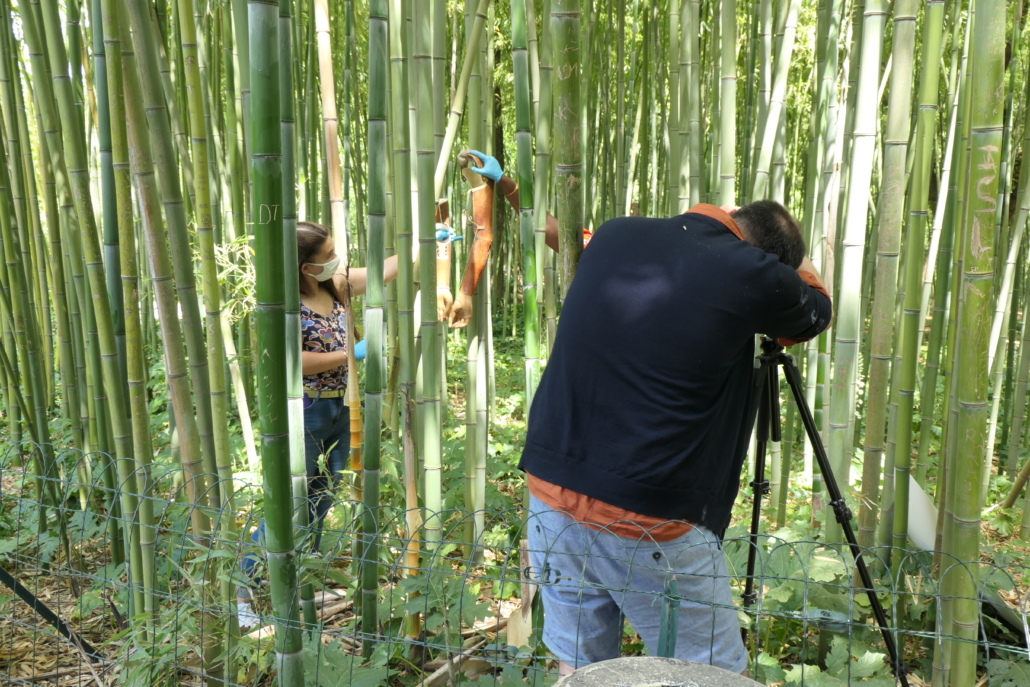
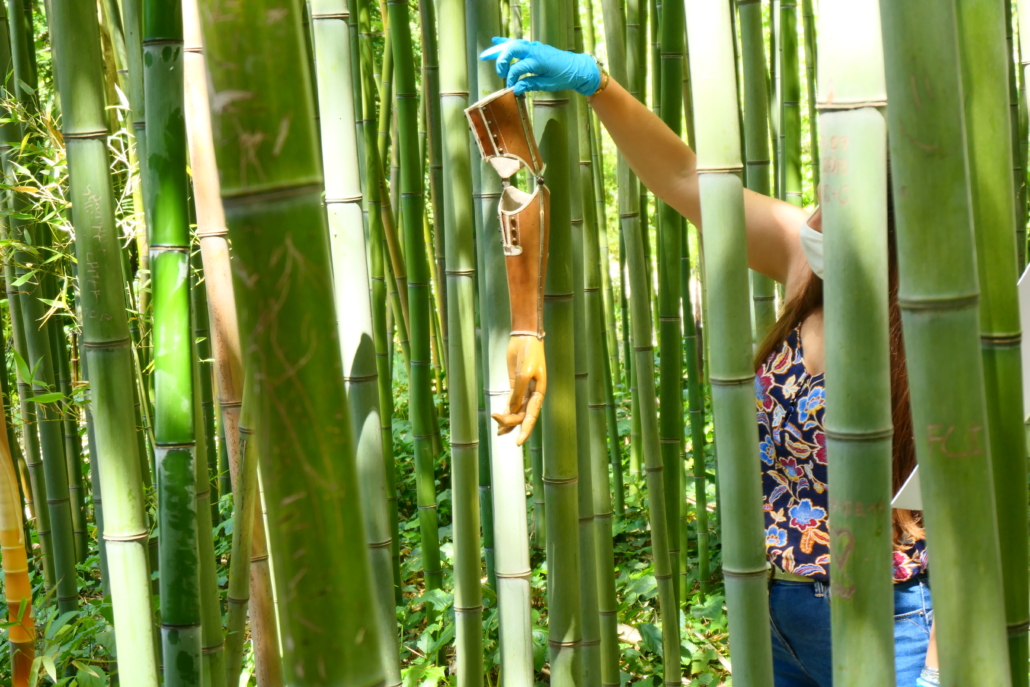
Furthermore, since all the rooms are designated as heritage sites, I have a special relationship with the curator. She’s the third subject of this project—I can’t work without her. Usually, I direct my model,but here I can’t because of the piece’s fragility—every movement must be carried out by the curator.
It’sinteresting becausethe artwork and the garden exist independently of me. 

There are three of us working on this project: Jane, who creates digital art and is a videographer; Luc, who does motion design, among other things; and me, who works with visuals and handles the art direction for the whole project. None of us knows what the final result will be.


How did you choose the anatomical structures?

I first sought advice from ProfessorCHANQUES and the curators to find out which pieces are emblematic of the conservatory. I didn’t choose the pieces based on their aesthetic appeal, since the goal of this exhibition is to tell a story and convey meaning.
The only exception to this is a bust we found—no one knows the identity of the person depicted, its history, or the era it comes from. I found it fragile and touching, so I decided to include it. It’s the only piece I selected based on a gut feeling.

There are some pieces that,unfortunately, we were unable to include because of their fragility. I was also drawn to other pieces, but they didn’t depict the human body and therefore strayed from the subject. I’ll explore those later for another, more personal project.

Some pieces are also too heavy to move. However, that’s part of the exhibition’s story.
For some pieces that we couldn’t bring out to the Jardin des Plantes, we brought the Jardin to them by using branches and foliage.


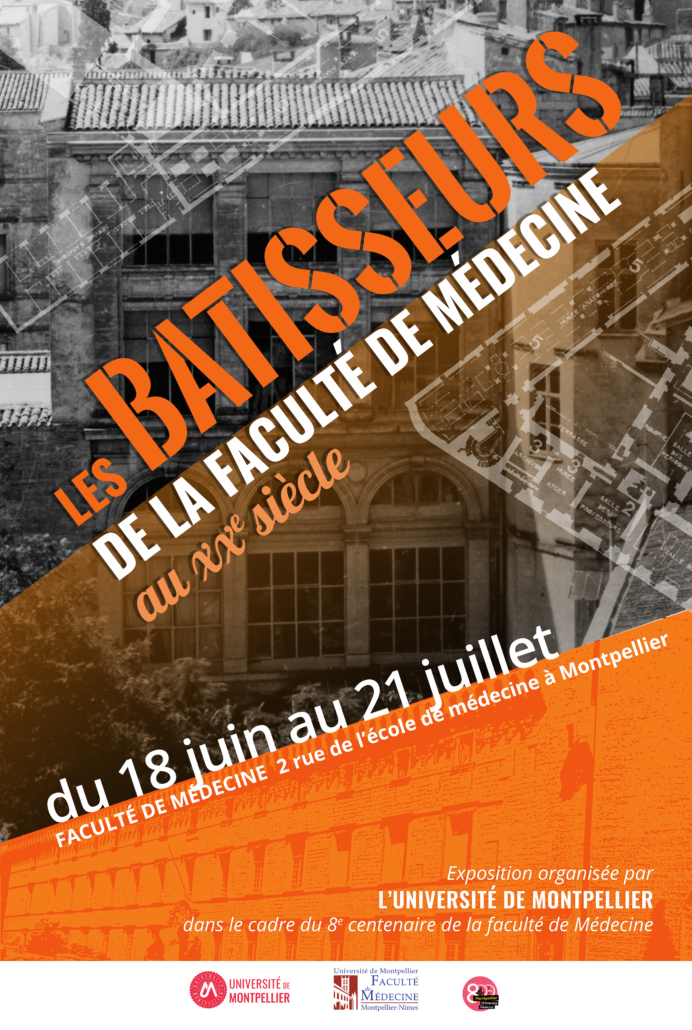
In 2016 and 2018, Ms. Barjon and Ms. Blanc, daughters of former Dean Gaston Giraud, bequeathed their father’s archives to the University of Montpellier. Thanks to these archives, we are now able to present an exhibition on the evolution of the Faculty’s various buildings and sites since its 700th anniversary, commemorated in 1921.


An exhibition divided into several sections

This exhibition, organized by the University of Montpellier’s Archives Department (Sophie Dikoff, Antoine Redouly, and Gwendoline Perrault) in collaboration with Ms. Barjon and Professor Dedet—and with the special participation of Dean Jacques Bringer, Professor Daniel Jarry, and Mr. Serge Caminade—will focus on the evolution of the various buildings and sites that make up the Faculty: the Historic Building, the Institute of Biology, the extensions in Nîmes and on the northern site of Montpellier (the UPM and the Arnaud de Villeneuve campus building), and finally the Jardin des Plantes.

Dive into the heart of the archives

Thanks to donations from the family of former Dean Giraud, this exhibition features a wealth of photographs. You can admire photos of the old buildings and gain an appreciation of how their architecture has evolved over time. The exhibition also showcases other documents that shed light on the buildings’ development, such as architectural plans, handwritten letters, and postcards…

A large-scale project
To mark the occasion, we spoke with Sophie Dikoff, the archivist in charge of this exhibition, to learn how it was put together.

Could you tell us about your job?

My role as an archivist at the University of Montpellier is to assist all departments in managing their archives in accordance with current legislation governing public archives. I carry out this mission in collaboration with the Hérault Departmental Archives, which provides scientific and technical oversight. Archives serve to document changes—whether architectural, societal, or otherwise…


Where do the archival materials in this exhibition come from?

Most of these items come from donations by Dean Giraud’s family. Indeed, the dean kept many documents related to his various projects, both in his capacity as dean of the Montpellier Faculty of Medicine and in his personal capacity, as he was passionate about the history of medicine and the Montpellier Faculty of Medicine. The remaining archival materials come from the University’s image collection, the University’s photo library, and that of the Conference of University Presidents, which have been supplemented by photographs taken for the exhibition.


How long did it take you to prepare this exhibition?

The exhibition was originally scheduled to take place in October 2020, but due to health restrictions, we had to postpone it. So I’ve been working on this project since around the beginning of 2020. The process is very time-consuming, as it first requires conducting research to understand the various aspects of the subject (searching archives, reading, meeting with experts), selecting the most interesting documents, obtaining permission to use photos in accordance with copyright laws, writing texts, and determining a visitor route. For the exhibition design, we enlisted the help of a professional exhibition designer, André Dumonnet. For this exhibition, the approach was to organize the presentation by building and then in chronological order. One panel presents a timeline covering all buildings and sites.
 

An exhibition open to everyone

The exhibition, which will run from June 18, 2021, at 1:30 p.m. to July 21, 2021, at 6:00 p.m., is free of charge. Self-guided tours will be available Wednesday through Friday from 1:30 p.m. to 6:00 p.m. and on Saturdays from 10:00 a.m. to 12:30 p.m., with guided tours available on Saturdays from 1:30 p.m. to 6:00 p.m.


Following the HAS’s approval of the initial prescription of pre-exposure prophylaxis (PrEP) in community settings, the University Departments of General Medicine in Toulouse and Montpellier, along with COREVIH Occitanie (Regional Coordination Committee for the Fight Against STIs and HIV), are hosting an online themed evening on HIV prevention—specifically through PrEP—STIs, and addiction issues related to sexual health.


Webinar Agenda

The webinar will take place on Monday, June 14, at 8:00 p.m. It is intended for general practitioners practicing in the Occitanie region.
The moderators for this event will be Julie Dupouy (MCUPH, DUMG Toulouse), Beatrice Lognos (MCUPH, DUMG Montpellier), and Marie Bistoquet (COREVIH physician).

  • Introduction and COREVIH in a Nutshell (moderators)

  • Epidemiology of HIV and STIs in 2020 (France, Occitanie, Cities) (Alain Makinson, President of COREVIH, Associate Professor of Infectious Diseases, Montpellier) (15 minutes)

  • STIs: Treatment and Vaccination (Dr. Pauline Lansalot Matras, COREVIH Physician) (20 minutes)

  • PrEP: What Do the Studies Say? (Prof. Pierre Delobel, Infectious Diseases, Toulouse) (20 minutes)

  • Diverse Prevention Strategies and PrEP in Practice (Dr. Cyril Perrollaz, CeGIDD Montpellier), (15 minutes)

  • Psychoactive Substances and Sexual Performance: Chemsex (Prof. Hélène Rigole, Montpellier Addiction Center) (20 minutes)

  • Prep and Prevention in the City: What I Do (Dr. Julien Artigny, DUMG Toulouse) (20 minutes)

  • Summary and Q&A (30 minutes)

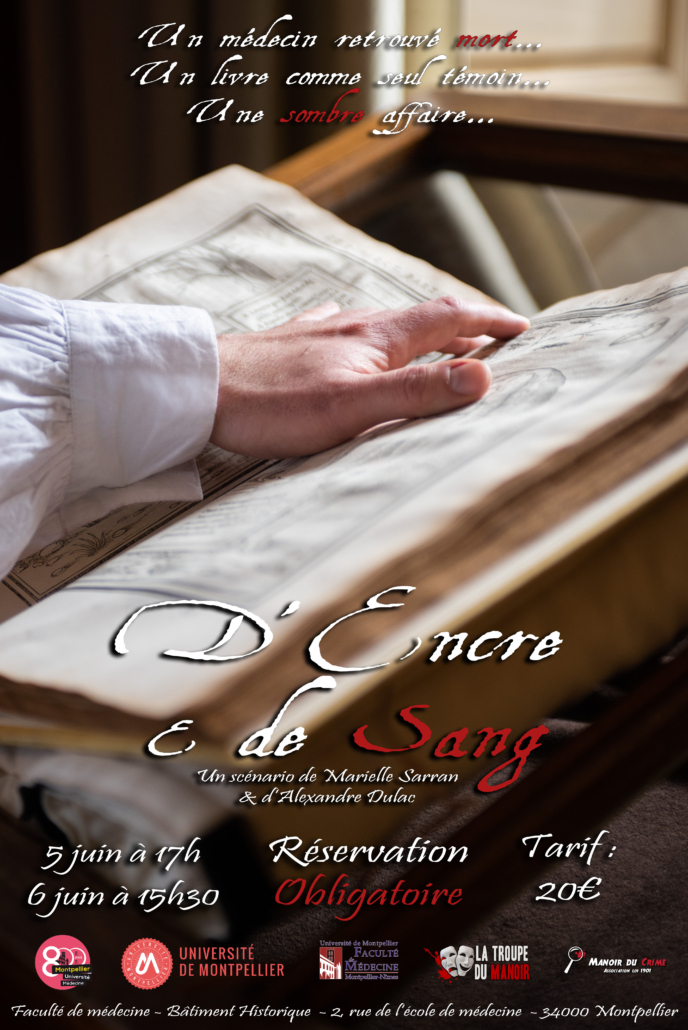
The celebration of our Faculty’s 800th anniversary continues with a new, fun-filled event! Join the team at the Manoir du Crime on Saturday, June 5, and Sunday, June 6, for unforgettable evenings full of thrills…

A Full-Scale Investigation

This historic building will be the setting for a life-size game. Fans of Cluedo and mystery shows, put on your best detective outfit to solve the mysteries of theTroupe du Manoir!

The year is 1806. Gabriel Prunelle is traveling the roads of the Empire, gathering a large collection of books to build a one-of-a-kind library.
But meanwhile, in Montpellier, something sinister is brewing at the university. One of the books acquired by Mr. Prunelle is at the center of a macabre discovery. 
Will you be able to get to the bottom of this story?

This “Soirée du Crime” marks the return of the Manoir du Crime Association after several months of anticipation.
And the Manoir Troupe is celebrating its return in partnership with the University of Montpellier and the School of Medicine.
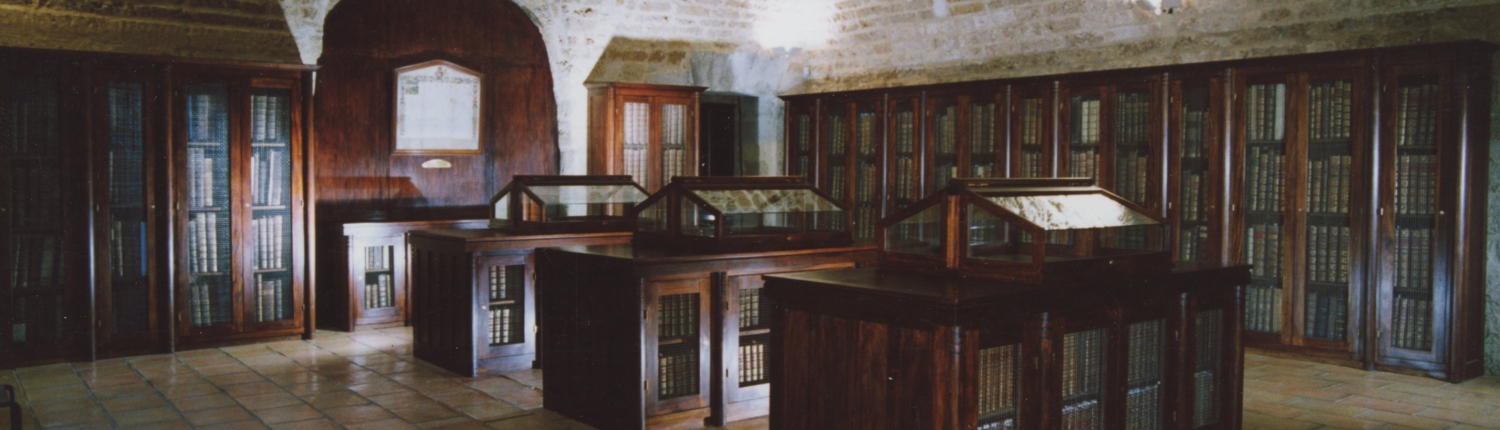
To mark the faculty’s 800th anniversary, we are once again delighted to welcome you to the prestigious setting of the anatomy amphitheater in the historic building located across from the Jardin des Plantes.

A demonstration that adheres to safety guidelines

We want to ensure you have a wonderful evening in an incredible setting while complying with health guidelines, so here are the rules to follow:

– Masks are required for everyone, including members of the Troupe.
– Hand sanitizer will be available. Please feel free to use it.
– Teams of 6 players will be formed to comply with the current “Rule of 6”
– Teams will be spread out throughout the auditorium to ensure social distancing
– The evening’s “assistants” (members of the Troupe du Manoir) will wear gloves when handing out event materials.
– Part of the evening will take place outdoors, in the main courtyard.

An event requiring registration

Two sessions are offered:

  • Saturday June 5, from 5 p.m. to 8 p.m.
  • Sunday June 6, from 3:30 p.m. to 6:30 p.m.

Flat rate: 20€

The Dean of the School of Medicine and all the administrative and teaching staff at our institution extend their best wishes to you for 2021. To mark the occasion, watch this video message from our Dean, Michel Mondain.


“This has been an intense year for everyone: between the first-year reforms, the celebrations marking the Faculty’s 800th anniversary, and the health crisis we’ve been facing since last March. These somewhat challenging circumstances remind us of the importance of the values of collective commitment. But more importantly, they compel us to return to what truly matters: people.”

“Solidarity among all, solidarity across generations”

"This year, more than ever, people are playing a significant role in our daily lives, whether professionally or personally. 2021 will be a year of recovery from the health crisis for students, teachers, and staff."

"For this new year, the key word is solidarity."

"Take care of yourself; let's take care of each other"


And finally, Ms. Herrada, Ms. Mengual, Mr. Lumbroso, Mr. Matecki, Mr. Messner, Mr. Mary, and Mr. Doladille wish you a wonderful 2021 and send you their best wishes for happiness.

As of October 30, 2020, France is once again under a nationwide lockdown. This has impacted the Faculty’s operations, but unlike during the last lockdown, the Faculty will not be closing its doors. Please find the guidelines regarding these new operating procedures below.


Last updated: 11/05/20 – 9:38 a.m.

The Faculty Is Not Closing Its Doors

Unlike during the first lockdown, the university will not close its doors.

Services will continue to be provided in person, and some service counters will be open by appointment (please contact the relevant department to schedule an appointment).

During remote work, services will continue to operate as usual, and all departments can be reached by email (see the directory below).

Places in Montpellier


How Classes Work


  • EVERY STUDENT AND STAFF MEMBER HAS A ZOOM ACCOUNT

    Every student and faculty member at the Montpellier-Nîmes School of Medicine has a Zoom license provided by the University of Montpellier. 

    To attend classes, meetings, or tutoring sessions, simply create your Zoom account 💻 using your university email address: prenom.nom@umontpellier.fr for staff and faculty, or prenom.nom@etu.umontpellier.fr for students.

  • FIFTH-GRADERS SWITCH TO DISTANCE LEARNING

    Lectures will be held entirely online starting Monday, November 2. This change also applies to the ECNi preparation sessions. ⚠️ No students will be allowed to attend lectures in person at the faculty. ⚠️

    Classes will be held on Zoom. The lecture schedules will remain the same as originally planned. A virtual room has been created for each lecture hall. Simply log in to the virtual room corresponding to the physical room originally listed on the schedule. The links to the virtual rooms will be sent to each class via email. 📧

  • ED CLASSES ARE GOING ONLINE

    Tutorials will be held entirely online starting Monday, November 2. ⚠️ No students will be allowed to come to the faculty in person to attend a tutorial. ⚠️

    Classes will be held on Zoom. The schedules for the extracurricular activities will remain the same as originally planned. A virtual room has been created for each extracurricular activity room. Simply log in to the virtual room corresponding to the physical room originally listed on the schedule. The links to the virtual rooms will be sent to each class via email. 📧

  • TUTORING SESSIONS ARE NOW BEING HELD REMOTELY

    Tutoring sessions will be held entirely online starting Monday, November 2. ⚠️ No students will be allowed to come to the school in person to attend a tutoring session. ⚠️

    The sessions will be held on Zoom. The tutoring groups will post details about their new sessions directly on their usual social media channels. Be sure to follow them!

    • ATSM (Montpellier—ADV)
    • ATP (Montpellier – Flahault)
    • TSN (Nîmes)
  • SOME PRACTICAL COURSES WILL CONTINUE TO BE HELD IN PERSON

    Certain lab sessions that are essential to students’ education will continue to be held in person under a special exemption. Non-essential lab sessions will be postponed to a later date or canceled.

    The students in question will be provided with a special travel permit, which they must carry with them in case they are stopped during their trip.

    ⚠️ Only students with this certificate will be allowed to enter the campus to attend their lab session. ⚠️ Students participating in these lab sessions will be notified by email. 📧

    Practical sessions will be conducted in strict compliance with health and safety guidelines: masks are required 😷, hands must be washed regularly, social distancing measures must be followed, and the capacity of the facilities will be reduced to 50% of their original capacity.


How the University Libraries and Study Rooms Operate

BU: Access by reservation only

After a temporary closure to reorganize their visitor policies, the UM university libraries will reopen on Thursday, November 5, 2020, subject to certain conditions:

  • ⚠️ Access to the university libraries is limited to borrowing and returning materials and equipment, as well as individual study on site. Access to group study rooms is therefore temporarily suspended;
  • ⚠️ Access is by appointment only: users must therefore reserve a borrowing/return time slot or a study space, either through Affluences or by email, depending on the library in question
Reservations on Affluences for the UPM Medical Library Reservations on Affluences for the Nîmes Medical Library Reservations by email for the Historical Medicine Library

⚡ For reservations made by email, please indicate the reason for your visit: borrowing/returning materials or working on-site. Please note: Written confirmation of your appointment (sent by email) is required to enter the library. This, along with your student ID and the travel exemption certificate (available byclicking HERE), will serve as proof of your visit.

⚠️ A limited number of spots for individual study on campus are reserved for D4 students preparing for their ECNi exams, as well as for PASS/PACES students ⚠️

Due to the lockdown, extended hours in the evenings and on weekends have been suspended. However, all services remain available within the university libraries, provided that health measures and protective measures and equipment are followed: access to materials, use of self-service computers, printing/copying/scanning, Wi-Fi, interlibrary loans, and unrestricted borrowing and returns, etc. Librarians are available to answer questions online at boomerang.biu-montpellier.fr


Workrooms

⚡ More information on how study rooms will operate during the lockdown will be posted in this article soon.


How Thesis Defense Presentations Work

The format of thesis defenses has been modified: only the candidate will be permitted to defend their thesis in person, before the committee, in the traditional Salle des Actes of the Historic Building. A personalized exemption certificate allowing travel will be provided to the candidate.

📧 More information will be provided at a later date via email to the residents concerned.


How Internships Work

Semiology courses have been suspended until further notice in Montpellier and Nîmes.

The DFASM1, 2, and 3 clinical rotations will continue as scheduled; the affected hospital students will continue their training in full within the hospital departments.

For all students who may come into contact with patients infected with SARS-CoV-19, it is important to note that strict adherence to preventive measures during their clinical rotations is an effective way to protect themselves against the risk of infection.

The continuation of health services is currently under discussion and review by the Regional Education Office. More information will be available soon.

⚡ More information on how internships and the health services will operate during the lockdown will be posted in this article soon.


How Exams Work

In-person exams will proceed as scheduled. Students will be provided with a personalized travel exemption certificate. Details regarding the exam arrangements will be communicated directly to the affected students via email 📧

The interregional ECN exams (DFASM3) will take place as scheduled on November 20, 2020; the exams will be administered remotely. The exam schedule and organizational details will be sent via email 📧


We'll keep you updated on any changes to this article on our social media channels: Twitter, Facebook, and Instagram. Follow us!


Due to the pandemic, the President of the Republic has imposed a curfew on the Montpellier metropolitan area. All residents must be home by 9:00 p.m. starting Saturday, October 17, 2020. See below for how the curfew will affect the Faculty’s hours of operation.

Update on October 23: The curfew has been extended to the Gard department, resulting in new measures for the Nîmes site.

Opening of the premises

The Faculty's facilities in Montpellier (the historic site and the Arnaud de Villeneuve campus) will close at 8:00 p.m. to give everyone—staff and students alike—time to get home.

Starting Monday, October 26 , the Faculty's facilities in Nîmes will close at 8:15 p.m. to give everyone—staff and students alike—time to get home.


Impact on the Business Units

  • The Downtown History and Medicine Library remains open during its regular hours
  • The UPM Medicine Library is changing its hours and will close at 8:00 p.m. on weekdays
  • The Nîmes School of Medicine is now affected by curfew restrictions and will switch to curfew hours starting October 26:
    • Closed on weekdays at 8:15 p.m.
    • Will be open on Saturdays from 10 a.m. to 7 p.m.
    • Will be open on Sundays from 1:00 p.m. to 7:00 p.m.
We would like to remind everyone of the importance of following preventive measures to limit the spread of the virus. Wearing a mask remains mandatory in all Faculty facilities.

After celebrating our anniversary on August 17, come see the anatomy exhibition “Corps à Coeur,” which is free and open to the public, at the Historic Building from September 2 through October 31, 2020.


SEPTEMBER 2021 - RE-RUN OF THE "CORPS A COEUR" EXHIBITION

From September 22, 2021, through October 30, 2021, the “Corps à Cœur” exhibition reopens in the Tekné Makré galleries of the Historic Building!

You can find her Wednesday through Friday from 1:30 p.m. to 6:00 p.m. and on Saturday from 10:00 a.m. to 12:30 p.m. and 1:30 p.m. to 6:00 p.m.

Starting November 2, the exhibition will be open to the public by reservation through the Montpellier Méditerranée Métropole Tourist Office: 04 67 60 60 60


An exhibition on the anatomical sciences

Through this exhibition, the Faculty and the University are showcasing the Faculty of Medicine’s anatomical collections. These collections illustrate the methods used to teach anatomy from the late mid-18th century to the mid-20th century, before the advent of “anatomy of the living” and modern techniques for studying the human body.

By selecting unique pieces from these collections, the exhibition allows visitors to compare these objects—which bear witness to historical methods of studying anatomy—with today’s medical imaging technologies.

The book covers three main topics: the diversity of educational materials, the anatomy of the human body, and, finally, diseases and treatments.

An exhibition not to be missed for anyone interested in anatomy, history, or cultural heritage!

Practical Information

General Curators: Caroline Ducourau, Marie-Angeline Pinail
Scientific Curators: Prof. François Bonnel, Dr. Christophe Bonnel

The exhibition will be held in the Tekné Makré galleries , on the garden level of the Historic Building, from September 1 to October 17, 2020.

Admission is free starting September 2, Wednesday through Friday from 1:30 p.m. to 6:00 p.m. and Saturday from 10:00 a.m. to 12:30 p.m. and from 1:30 p.m. to 6:00 p.m.

Masks are required.


UM Thursdays

Update as of September 29, 2020 – The UM Thursdays events scheduled for October 6 and 8 have unfortunately been canceled due to the current health situation. Following their launch at the Arnaud de Villeneuve Campus in January, UM Thursdays are returning toward the end of 2020 for a series of new lectures on health. Attend the “UM Thursdays” sessions at the Faculty of Pharmacy campus as well as at the Orangerie in the Jardin des Plantes.


A new series of lectures on health

UM Thursdays are back in 2020! Open to the public, these lectures offer an opportunity to learn more about new technologies and teaching methods in health care, as well as to expand your knowledge of medicinal plants and aromatherapy! These are just some of the topics that will be covered throughout the year by faculty members from our university.

Update as of September 29, 2020 – The UM Thursdays scheduled for October 6 and 8 have unfortunately been canceled due to the current health situation.

Tuesday, October 6, 2020 – Medicinal Plants

As far back as we can go in time, thanks to ancient manuscripts, the future of humanity seems to have always been closely linked to plants. The reputation of the earliest physicians (beginning with Hippocrates, the Father of Medicine, 450 years B.C.) was most often built on their extensive knowledge of plants and the treatments they derived from them. Logically, then, the plants used to formulate these new remedies (“medicines” = “pharmakon”) were termed “medicinal.” But what remains of this historical and ancestral definition? What does it still mean to people today, and what is the significance of “medicinal plants” in 2020?


Thursday, October 8, 2020 – The Use of Aromatic Plants: From Perfume to Medicine

One event, two lectures! Learn more about the Jardin des Plantes, as well as plants and fragrances!

● 3:00 p.m.: The Jardin des Plantes in Montpellier, the oldest botanical garden in France – by Thierry Lavabre-Bertrand
● 4:00 p.m.: The Use of Aromatic Plants: From Perfume to Medicine – by Sylvie Munier


Due to the current health situation, everyone is required to wear a mask.


Worth (Re)Discovering – Thursday, January 16, 2020 – Medical Education: Pathways to Innovation

“There’s never a ‘first time’ with a patient” for a healthcare professional. Even though there’s always a first time, it’s important to prepare future healthcare professionals through scenario-based training—whether for technical procedures, interpersonal skills, interprofessional communication, or preparing for emergency situations where every action must be perfectly coordinated.

Inspired by aerospace standards, healthcare simulation platforms are an essential tool for developing the technical and interpersonal skills of future healthcare professionals, complementing clinical rotations with patients. This first edition of “UM Thursdays,” held as part of the Faculty of Medicine’s 800th-anniversary celebrations, offers an opportunity to explore these remarkable tools while touring the Arnaud de Villeneuve Health Campus and to gain insight into the challenges posed by these educational techniques, which remain fully aligned with the Faculty of Medicine’s philosophy of placing the human being at the center of its concerns.


Below is the schedule of today’s lectures, which will begin at 3:00 p.m. in the Rondelet Amphitheater!

  • A Simulation-Based Learning Platform: Just a Gimmick? – by Blaise Debien
  • Research on Simulation-Based Teaching – by Valérie Courtin
  • Situational-Based Teaching: Assessment Using the C3 Framework – by Philippe Guilpain