
Théo Lacoste: Well-being at the Heart of Your VDE's Priorities
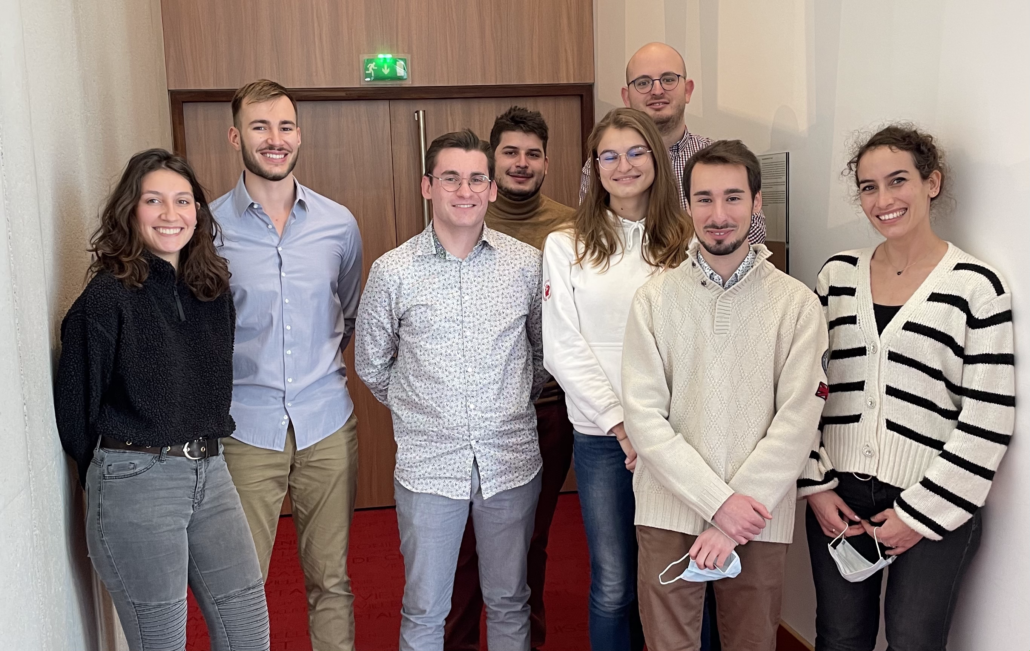
Every year, students elect a representative to speak for them on the dean’s office team. This year, Théo Lacoste, a fourth-year medical student on the ADV campus, was chosen to represent you. Learn a little more about him and Ademmoos’s initiatives in this interview! Profile.
Hi, Théo. First of all, who are you? Can you introduce yourself?
My name is Théo Lacoste; I’m a fourth-year medical student on the ADV campus. I’m also a student representative on the Academic Council and president of Ademmoos (a student representative body for all programs). I’m planning to become a doctor, of course, but I don’t necessarily have a specific specialty in mind—other than perhaps something cross-disciplinary like emergency medicine. But I’m keeping my options open; I think it’s important to complete internships in various fields to secure your future!
You’re the president of Ademmoos: can you tell us about the role of this organization?
It’s important to note that our Faculty has several campuses and several academic programs. Student representation on the various councils is therefore provided by elected student representatives. This is a very substantial undertaking. So in 2016, we decided to create this association to relieve elected student representatives of the administrative workload (particularly everything related to communication, infographics, etc.) but also to develop projects with other student associations. The goal is truly to bring together, unite, and coordinate the associations—and, through them, the students.
The association’s members consist of students elected to the various representative councils, but we also have non-elected members. They often contribute very interesting insights from a different perspective during our monthly meetings.
Can you give us some examples of projects coordinated by Ademmoos and other organizations?
Yes, for example, the MAP (Montpellier Artistic Project), which is an arts-focused nonprofit. Together with them, we organized an art therapy workshop—led by a professional in the field—for students, with the goal of helping them cope with academic stress. But the projects we lead or coordinate can also take place outside of our organizations. I’m thinking in particular of the“Dry January”challenge (see Instagram post below) that we recently ran in collaboration with the ICM, or“Smoke-Free Month.”
View this post on Instagram
In addition to being the president of Ademmoos, you are now the student vice-dean. Can you tell us more about your role in this position?
I have three main responsibilities: First, an academic role, which is very institutional in nature. I work closely with the dean’s office—particularly Dean Isabelle Laffont—as well as the teaching and administrative staff to represent the students’ perspectives. This involves regularly attending meetings, but also staying attuned to what’s happening among students and within the faculty as a whole. I act as a sort of “shuttle,” passing information up and down the chain. I relay this information to the student representatives, who then share it with the various programs, campuses, and graduating classes.
The second task focuses on the Ademmoos association. I need to establish a “guideline” for our term’s policy. I’ll come back to this, but the idea is to distribute key issues among the association’s 40 students: some will handle reforms, others will focus on well-being or coordination with other associations.
My third responsibility is really to maintain direct contact with the students. Class representatives may reach out to me for this purpose, but that’s not enough—information can get lost along the way. So, I make it a point to organize as many in-person meetings as possible with the different classes to discuss issues, “gauge the mood,” and gather feedback directly from students about their needs and feelings. This information is then useful to me in carrying out my primary academic role, so that I can represent the students’ views as accurately as possible.
What are the priorities of your term in office?
There are several priority areas. First, there is a somewhat more academic and administrative aspect, which mainly involves continuing the work of my predecessors: Salomé Duteurtre and Florian Mary. They both worked on what I callthe “Pedagogical Alliance.” That is, the collaborative shaping of our student experience, together with all stakeholders: faculty, students, and the Faculty’s administrative staff.
It seems simple from the outside, but it’s actually quite complex, because we have to reconcile everyone’s views; ultimately, we have to succeed in reaching agreements based on our disagreements! Nevertheless, this is achieved through everyone’s goodwill and mutual understanding. We must work together and view the issues to be resolved through each person’s perspective, so that the solutions we adopt benefit everyone. This responsibility to live together is truly essential, and we regularly emphasize this to the entire team—most recently to the newly elected student representatives on the Administrative Council and the Academic Council.
Then there are all the discussions surrounding student well-being. This is a relatively new issue—one that wasn’t talked about much a few years ago and that was brought to light by the health crisis. Today more than ever, this topic has become our top priority.
But we can’t take action without understanding the full scope of the problem! So we set our first goal as gathering students’ opinions and experiences through surveys. We were able to collect over 1,000 responses to our first questionnaire on mental health, which was distributed over the winter— and I’d like to take this opportunity to thank all the respondents! The results of this survey are currently being analyzed. In addition, a few weeks ago we began distributing a new survey regarding gender-based and sexual violence that students may experience at the university, at parties, or in their workplace or internship setting, in order to define the scope of the problem and thus identify corrective actions to limit such incidents or even impose sanctions where appropriate.
In practice, do you implement any initiatives to promote student well-being?
Yes, from a practical standpoint, this year we created a wellness center staffed by two project coordinators who are medical students (Ulysse Godin and Maribelle Dossou-Yovo). Their mission is to organize awareness-raising events. For example, there was a conference on addiction with Professor Hélène Donnadieu-Rigole, Smoke-Free Month, Dry January… In March, we’ll have a conference on psychosocial risks and “workaholism.” These events are quite popular with students.
There are also other practical projects outside the “well-being” theme, such as the Internship Forum, which is led by former Associate Dean Florian Mary and aims to connect fifth- and sixth-year students with interns so they can share their experiences.
What motivated you to take on this role as an elected official and Vice Dean?
My motivation grew out of my previous commitments, both with Ademmoos and with the ANEMF (National Association of Medical Students of France), because last year I was very involved in issues surrounding the R2C (reform of the second cycle of medical studies) at the national level. This made me want to get even more involved at the local level, addressing the issues we face on a daily basis.
Of course, my discussions with my predecessors also had a strong influence on me. Everything fell into place very naturally after that, with my desire to help the incoming classes guiding my decisions. I wanted to look at my studies from a different perspective.
That said, yes, it’s very time-consuming. It can sometimes be a little hard to juggle everything! So it’s important to surround yourself with the right people and know how to delegate. In that regard, I’d like to give special thanks to Florent Benoist, who is Ademmoos’s General Vice President and a representative on the Pedagogical Council; he really helps me a lot and enables me to stay well-organized.
How is someone elected as Vice Dean?
The Vice Dean is nominated by the student representatives on the Management Council. He or she is often part of the list of elected students. The Council then votes in favor of or against the nominated student. This nomination is the subject of preliminary internal discussions within Ademmoos. Once elected, the Vice Dean serves a two-year term, but we often resign after one year so that we can focus fully on our studies.
Thank you so much for this conversation: do you have any closing remarks?
Yes, regarding one of the priorities of my term in office: well-being. I’d like to get this message across: it’s okay not to feel well. Health sciences students come from a highly selective system where you’re expected to always be the best. Culturally, it’s hard for us to admit when we’re struggling—we tend to hide our vulnerabilities. But that doesn’t mean it’s abnormal to feel down! There are support services available on the Faculty’s website. We need to break the silence surrounding this taboo and take advantage of the resources developed jointly by students and the faculty to feel better. Alone, we go faster, but together, we go farther!