Tag archive for: covid-19

PASS students, you will be taking your exams starting tomorrow. In accordance with the latest health measures dated January 3, please take note of the following instructions related to the new isolation rules outlined below.


CASE 1 – PEOPLE WHO TESTED POSITIVE FOR COVID-19

A – Individuals with a complete vaccination schedule

  • Isolation:
    • for 7 full days (from the date the symptoms first appeared or the date the positive test was taken)
    • reduced to 5 days if:
      • Negative antigen or RT-PCR test
      • AND no clinical signs for 48 hours

B – Individuals with incomplete vaccination schedules or unvaccinated individuals

  • Isolation:
    • for 10 days
    • reduced to 7 days if the test is negative and there have been no clinical signs for 48 hours


CASE 2 – PEOPLE CASE CONTACT

A – Individuals with a complete vaccination schedule

  • No isolation BUT:
    • Antigen or PCR test as soon as the contact is known to be positive
      • If positive: ISOLATION
      • If negative: self-tests on day 2 and day 4 after last contact with a positive person
        • If self-test positive, perform TAG or RT-PCR and isolate

B – Individuals with incomplete vaccination schedules or unvaccinated individuals

  • Isolation for 7 days (from the date of last contact with a positive person) and negative TAG or RT-PCR on day 7.


WARNING

Anyone with potential symptoms is strongly advised to take an antigen or PCR test by tomorrowto ensure they are not positive for COVID-19.


Please take care of yourself and others.

As part of the 800th anniversary celebrations of the Faculty of Medicine, in partnership with the Occitanie Ethical Reflection Space and under the patronage of the National Academy of Medicine, we will be hosting the symposium "Man Facing Science" at our Arnaud de Villeneuve campus.


A symposium organized to mark the 800th anniversary of the Faculty of Medicine.

Healthcare is evolving, raising ethical and societal questions.

Topics such as the ethical challenges of predictive biotechnology, innovation in the context of a health crisis, and ethical guidelines for innovation in neuroscience will be addressed at this conference, organized in partnership with the Occitanie Regional Ethics Center.

Open to all (upon free registration), this event will welcome members of the Academy of Sciences and the National Academy of Medicine, which is sponsoring the event.


Conference program, October 7, 2021, on the ADV campus

  • 8:30 a.m.

    Home

  • Introductory Remarks

    Jean-François ALLILAIRE – Philippe AUGE – Michel MONDAIN

    9:00 a.m.

  • 9:20 a.m.

    When does opposition to medical and scientific facts become unreasonable?

    Jean-François MATTEI

    Introduction by Jacques BRINGER

  • Challenging experts in times of scientific uncertainty and health crises

    Virginie TOURNAY

    Host: Claude JAFFIOL

    10:00 a.m.

  • 10:40 a.m.

    Maintaining scientific integrity in the age of COVID-19

    Alain FISCHER (on video) – Didier HOUSSIN

    Introduction by Bernard CHARPENTIER

  • Science, politics, and society: lessons from the COVID-19 crisis

    Jean-François DELFRAISSY

    11:20 a.m.

  • 12:20 p.m.

    Lunch Break

  • What ethical guidelines should guide innovation in neuroscience?

    Michel CLANET

    1:30 p.m.

  • 2:15 p.m.

    New technologies to read our minds?

    Laurence DEVILLERS (on video) – Emilie OLIE

    Host: Jacques TOUCHON

  • Organoids: facts and fantasies

    Albano MELI – Jean-Marc LEMAITRE

    Host: Alain PRIVAT

    3:15 p.m.

  • 4:15 p.m.

    Algorithm-based care: impact on patient relationships

    Alain LIVARTOWSKI – Bernard NORLINGER

    Host: Jacques BRINGER

  • The ethical challenges of predictive biotechnology

    Pierre LE COZ – Pascal PUJOL

    Host: François-Bernard MICHEL

    5:15 p.m.

  • 6:00 p.m.

    Conclusion

Professor Jean-Pierre Dedet is a physician and microbiologist. He has been professor emeritus at the Faculty of Medicine of the University of Montpellier since 2010. Following his book "800 Years of Medical Education in Montpellier: the Oldest School of Medicine in the Western World," published last year to mark the 800th anniversary of the Faculty of Medicine, Professor Dedet returns with his new book, "Epidemic: From the Black Death to COVID-19,"* which deals with various epidemics throughout history.

The book:

Professor Dedet's new book*, published by Dunod (EKHO collection), has been available since April 2021.

This book recounts the history of the greatest epidemics, placing them in their global context, both scientific and historical. It also offers us the opportunity to reflect on how epidemics arise and whether it is possible to anticipate them. The book also features a foreword by Françoise Barré-Sinoussi, winner of the 2008 Nobel Prize in Medicine and Physiology.


Meeting with Jean-Pierre Dedet, Professor Emeritus of the Faculty and author of the book:


In this new book, you address the topic of epidemics. Why did you want to tackle this subject?

This book is a reissue of an earlier work entitled "Epidemics, from the Black Death to Influenza A/H1N1," published by Dunod in 2010. In light of the current health crisis, this older work has sparked renewed interest. Dunod then asked me to reissue the book and discuss the current epidemic, which I gladly accepted.


How is the topic of epidemics addressed in your book?

This book has a dual approach: first, to discussthe history of epidemics from a scientific perspective; to show what scientific progress has been made in the field of epidemiology throughout history. But it also discusses epidemics in history: what are the human, sociological, economic, cultural, and other consequences of an epidemic? How significant are past epidemics today? What factors contribute to the emergence of epidemics? How have they evolved throughout history? What is their status today?


Who is this book intended for?

This book is intended for the general public. Epidemics and their histories are explained in a simplified manner so that the book is accessible to all readers. The aim is to popularize the subject and try to give the public some perspective on epidemics in general and Covid-19 in particular.


You asked Françoise Barré-Sinoussi to write the preface. Why? 

I worked at the Pasteur Institute for 20 years, which allowed me to meet many people in the field. I had already called on Luc Montagnier for my book "Microbiology, from its origins to emerging diseases," published in 2007. Françoise Barré-Sinoussi specializes in the AIDS epidemic, which earned her the Nobel Prize in Medicine and Physiology in 2008. So it seemed obvious to me to call on her. This book is a bit of a link between my career at Pasteur and Montpellier!


What are your plans for the future?

I am currently starting to write my next book, which will focus on vaccines and vaccination. This book will also be aimed at the general public.

*Professor Dedet's new book is available for €8.90 in bookstores and online.

Due to the epidemic, the government has placed the entire French population under curfew. All residents must be home by 6 p.m. starting Saturday, January 16, 2021. Below are the consequences of the curfew on the Faculty's opening hours.

Opening of the premises

The Faculty premises in Montpellier (historic site and Arnaud de Villeneuve campus) and Nîmes will close at 6 p.m. Faculty occupants must vacate the premises by 5:30 p.m.

Please note that the Jardin des Plantes also closes at 5: 30 p.m.

Impact on BUs

  • The downtown History and Medicine Library remains open during its usual hours.
  • The UPM Medicine Library is changing its hours and will close at 5:30 p.m.
  • The Nîmes Medical Library is changing its hours and will close at 5:30 p.m.

Reserving your time slot remains mandatory in all university libraries:

  • ⚠️ Access to university libraries is limited to borrowing/returning documents and equipment and individual work on site. Access to group study rooms is therefore temporarily suspended.
  • ⚠️ Access is by appointment only: users must therefore reserve a loan/return slot or a workstation, either via Affluences or by email, depending on the university library concerned.


How in-person exams and practical work sessions operate

Exams and practical work scheduled to take place in person will go ahead as planned. Your schools will contact you by email 📩 with information about these specific cases. If these cases are close to or after 6 p.m., students must carry a personal exemption certificate (check reason 1), their student card, and their course schedule visible on the ENT, to be presented in case of inspection.

We remind everyone of the importance of respecting protective measures in order to limit the spread of the virus. Wearing a mask remains mandatory in all Faculty premises.

Following a webinar on COVID-19 care from city to hospital, a new webinar will focus on vaccination. Join us on February 1! Find all the details in this article.


"Vaccination and COVID-19: from theory to practice"; a webinar organized by the Faculty and university hospitals for interns and doctors

On February 1, 2020, at 7:00 p.m., a webinar will be held for physicians and interns. TheThe main topic of the webinar will be vaccination in the context of the COVID-19 epidemic.

Providing a genuine university-level education, it will give participants access to the latest scientific data on the vaccine, target populations, and the practical aspects of this vaccination campaign. The webinar is presented and designed by faculty members specializing in emergency medicine, pulmonology, clinical pharmacology, infectious diseases, and general medicine.


Webinar program

Professor Michel Amouyal (University Department of General Medicine), Professor Jacques Reynes (Head of COPIL Vaccination – Infectious and Tropical Diseases) and Dr. Paul Loubet ( Infectious Disease Specialist, Nîmes University Hospital) will give the floor to Professors Fessler, Le Moing, and Demoly, as well as Doctors Bourgeois, Makinson, Morquin, and Villiet.


Each presentation will last between 10 and 20 minutes. The webinar will be followed by a roundtable discussion. 


  • COVID and vaccine development: why so fast?

    Dr. Alain Makinson Infectious and Tropical Diseases, Montpellier University Hospital (10 minutes)

  • Vaccines and COVID: What do the studies say?

    Prof. Vincent Le Moing, Infectious and Tropical Diseases, Montpellier University Hospital (15-20 minutes)

  • Vaccine and COVID: Allergies and contraindications

     Prof. Pascal Demoly, Pulmonology and Allergology, Montpellier University Hospital (10 minutes)

  • Vaccine and COVID: Target populations and prioritization

    Dr. David Morquin Infectious and Tropical Diseases, Montpellier University Hospital (10 minutes)

  • Vaccines and COVID: Practical aspects: storage, cold chain, and administrative procedures

    Dr. Maxime Villiet, Clinical Pharmacology (10 minutes)

  • Discussion, Q&A 30 minutes and summary

     in the presence of the previous speakers, the moderators, Dr. Anke Bourgeois (Vaccination Center – Institut Bouisson Bertrand) and Prof. Pierre Fesler (member of the Vaccination Steering Committee) (30 minutes)


Replay

Find the link to the replay of this webinar below!


"COVID-19: From the City to the Hospital" is the name of the upcoming webinar organized by the faculty teams in emergency medicine, general medicine, and infectious diseases, in response to the global COVID-19 pandemic. The event will take place on December 10. Find all the information you need in this article!


COVID-19: from the city to the hospital; a webinar organized by the Faculty for interns and doctors

On December 10, 2020, at 7:00 p.m., a webinar will be held for physicians and interns. TheThe main theme of the webinar will be the health crisis and COVID-19: from the city to the hospital.

Providing genuine university-level teaching, it will give participants access to the latest data on the epidemic, enabling them to understand how to manage COVID-19 in their daily practice. The webinar is presented and designed by the Faculty's emergency medicine, infectious disease, and general medicine lecturers.


Webinar program

Professor Michel Amouyal (University Department of General Medicine) will give the floor to Professors Le Moing and Sebbane, as well as Doctors Loubet and Makinson.


Each presentation will last 20 minutes, followed by 5 minutes of discussion on the topic addressed.


  • Epidemiological and clinical aspects

    Dr. Paul Loubet Infectious Diseases, Nîmes University Hospital (20 minutes)

  • Diagnosis and transmission

    Dr. Alain Makinson, Infectious and Tropical Diseases, Montpellier University Hospital (20 minutes)

  • Therapy and vaccination

     Prof. Vincent Le Moing, Infectious and Tropical Diseases, Montpellier University Hospital (25 minutes)

  • COVID pathway, hospital city: role of the SAMU and emergency services

     Prof. Mustapha SEBBANE, Department of Emergency Medicine (10 minutes)

  • Care in community medicine: summary

    Prof. Michel Amouyal, University Department of General Medicine (10 minutes)

  • Discussion

     (30 minutes)


Replay

This webinar is intended for practicing general practitioners and emergency physicians, as well as residents in these same specialties.

You can find the replay of this webinar below. Here is the secret code: *CtH?6kc


FacMedMtp-BH

Following a decision by the Prefect of Hérault, Heritage Days will not be held in public buildings. The Faculty and the Jardin des Plantes are affected by this cancellation. More information in this article.


Cancellation of Open House Days at the Faculty of Medicine and its Botanical Garden

Prefectural decree no. 2020.01.1066 prohibits the admission of the public to state-owned establishments during European Heritage Days 2020 due to the current health situation.

We therefore regret to announce the cancellation of the guided tours scheduled for Saturday, September 19, and Sunday, September 20. 

This cancellation applies to events scheduled to take place in the Historic Building of the Faculty of Medicine and in the Jardin des Plantes.

Download the Prefectural Order Download the Prefecture's press release


Suspension of the temporary exhibitions "Art and Anatomy" and "Corps à Coeur" on September 19

In consultation with the University Presidency, the Faculty Management has decided to also suspend the temporary exhibitions currently on display in the Historic Building over the weekend: "Art and Anatomy" at the Atger Museum and the "Corps à Coeur" exhibition in the Tekné Makré rooms.


These exhibitions will resume their usual opening hours on Monday, September 21.


Below you will find the complete procedure for confirmed and suspected cases of COVID-19: reporting, contacts to be made, recommendations. This procedure applies to all students of the faculty as well as all administrative and teaching staff.


Reminder of the principles to be applied


  • MASKS MUST BE WORN

    Masks must be worn by everyone at all times on university campuses, including university premises (and in the city). Hand washing with SHA is recommended, as well as maintaining sufficient distance between everyone as much as possible.We also ask you to maintain these rules in your daily life, as these precautions should not be limited to university premises.

  • WAITING TO TAKE A PCR TEST

    If you are waiting to take a PCR test (or waiting for the results), regardless of the reason for taking the test:

    • If you are a non-hospital student: you must not attend any classes or internships and must notify your academic department by email.
    • If you are a hospital student on an internship:you must immediately notify the Head of Department and/or the department manager of this situation, follow the procedure below entitled "CHU Info – COVID 19 hospital student."
    • If you are a member of faculty staff: you must report to your institution's COVID representative via the addressmedecine-covid19@umontpellier.fr.
  • YOU ARE A CONTACT PERSON AT RISK

    If you are a "contact person at risk," whetheryou are symptomatic or not,

    • Students: You must not attend any classes or internships for hospital students and must notify your academic department by email.
    • Hospital students: If you are a hospital student on an internship, you must immediately inform the head of department and/or the department manager of this situation and notify your academic department by email.
    • Staff: you must not go to work. Contact the COVID crisis unit for instructions: medecine-covid19@umontpellier.fr
  • YOUR PCR TEST IS POSITIVE

    If your PCR test is positive:

    • For all students (external or otherwise, during term time or internships): you must systematically notify the academic services corresponding to your year of study, at the site (Montpellier or Nîmes) to which you belong, by email and as soon as possible.
    • For students during the academic year: you must stay at home and follow the university procedure below entitled " Covid-19 Information from the University of Montpellier."
    • For hospital students currently on internship, you must notify the head of the department (department head and/or senior nurse) where you are assigned and send your sick note to the CHU Medical Affairs Department (damsco-etudiants-hospitaliers@chu-montpellier.fr). Please also follow the procedure below entitled " CHUInfo – COVID-19 hospital students . "  ."
    • For staff: you must report your situation to the COVID representative via email at medecine-covid19@umontpellier.fr and send your sick note to the Faculty's HR department.
COVID-19 Information - University of Montpellier COVID-19 Information - University Hospital Students


Definitions of the various possible situations


  • Confirmed case: Any individual, symptomatic or asymptomatic, with a positive RT-PCR test result confirming infection with SARS-CoV-2.
  • Possible case: Person showing clinical signs suggestive of COVID-19, who may or may not have had contact with a confirmed case in the 14 days prior to the onset of symptoms, and for whom an RT-PCR test has been prescribed by a physician.
  • Contacts at risk: A contact at risk is any person who has had direct contact with a confirmed casein one of the following situations without effective protective measures (surgical mask worn by the case or the contact, general public mask manufactured according to the AFNOR standard or equivalent worn by the case AND the contact, hygiaphone or other physical separation such as glass or plexiglass). This therefore concerns:
    • students or teachers in the same class or group,
    • anyone who has shared the same living space (home, etc.) as the confirmed or possible case, or who has had direct face-to-face contact with a confirmed case at a distance of less than 1 meter, regardless of the duration (e.g., conversation, meal, flirting, hugging, kissing). However, people encountered briefly in public spaces are not considered to be at risk of contact.
    • any person who has provided or received hygiene or care services,
    • anyone who has shared a confined space (office or meeting room, personal vehicle, etc.) for at least 15 minutes with a case, or who has been face-to-face with a case during several episodes of coughing or sneezing.

Processing of personal data


The processing of personal data is governed by the regulations currently in force, as specified on the ARS website:

The aim is to gain a detailed understanding of the spread of SARS-CoV-2 among students at the UFR so that, if necessary, teaching methods can be adapted and, as far as possible, infections can be prevented both during teaching periods and during internships. Ultimately, this system will help to protect you and your loved ones.

The Faculty management thanks you in advance for your indispensable participation in applying these principles and remains at your disposal for any further information.

Lockdown is forcing universities and their faculties to reinvent themselves. Courses are now being delivered online, and exams will soon follow suit. While we are currently conducting several load tests to ensure that all our students have optimal conditions for taking their exams, below you will find some tips on how to improve your connection quality, as well as a reminder of the procedure to follow for your future online exams.

Test your speed and interpret the results

In order to enable students to take their exams online and staff to work in the best possible conditions, the DSIN provides a tool that allows you to measure the quality of the connection between your home and the university: https://testdebit.umontpellier.fr/

Data reception (download)

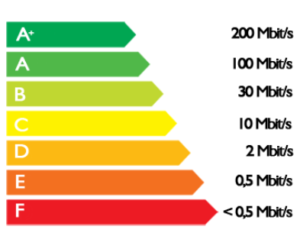
Following this test, results will appear, which you can interpret using this short guide:

  • A speed between D and F is considered slow (low throughput);
  • A speed classified as C between 3 and 7 Mbps is considered "medium speed," and it is at these speeds that remote working can begin to take place under good conditions.
  • A speed of 8 Mb/s corresponds to the threshold for a "high-speed" connection.
  • Above 30 Mbps, the connection is classified as "very high speed."

Sending data (Upload)

This value represents the speed at which data is transmitted from your computer to the Internet; it is often referred to as "upload speed" or "Upload."

An average speed of 1.2 Mb/s is sufficient to transmit data from your workstation.

Response time (ping) 

This value represents the time taken for a round trip between your computer and the computer hosting the files used to measure the data reception speed; it is often referred to as "latency."

A value in the green zone is required to conduct high-quality video conferences (without interruptions).

Improve your Wi-Fi network connection

If the connection is not optimal (between D and F), you must:

  • If possible, prioritize wired connections : The connection will be more stable and Wi-Fi-connected devices will have better throughput.
  • Position your box correctly : Avoid placing it under the TV or in a closed cabinet. It is best to install it approximately 1.50 m above the floor in an open area. Never place anything on top of it and plug it in directly (do not use a telephone extension cord or power strip).
  • Stop running programs: To get the most out of your bandwidth, remember to turn off Wi-Fi on devices you are not using (phones, connected devices).
  • Disable automatic Wi-Fi search : By default, Windows constantly searches for nearby wireless networks. This feature, which is unnecessary if you always connect to your own network, consumes bandwidth.
  • Check that you don't have a virus: Whether by displaying ads or discreetly using the computer's capabilities, some malware unnecessarily uses bandwidth.


If, after checking all these steps, the connection is still weak, contact your academic department so that they can help you access the exams in the best possible conditions. Please also feel free to report any problems you encounter during the tests.

Take one's exams

With an optimal connection, students can take their exams.

To do this, students must log in in the same way as for exams on tablets in lecture halls: log in from your computer on SIDES + ENT identification + enter an exam code.

The codes for the boxes will be sent by email before the test.

On the day of the test, we invite students to position themselves, if possible, as they would be during an exam:

  • Start the connection at least 15 minutes before the times mentioned (to allow for any unforeseen circumstances).
  • Staying alone in a room
  • Keep only exam materials (pen, blank scratch paper, etc.)
  • Do not attempt to connect to any applications other than those required for the exam. Doing so may disrupt the connection and distort your ability to compose.

Once the challenge has begun, it's up to you! 

We wish you the best of luck with your exams!

Bonus

Also discover in this article our tips for remote revision!

Find all the information you need about how the Faculty of Medicine is operating during the coronavirus crisis here. This article will be updated regularly throughout the crisis.


Update on Tuesday, March 24, 2020.
New features since the last update are marked with an *.


Closure of the Jardin des Plantes to the public as of March 17, 2020

In accordance with government announcements and in order to avoid gatherings of more than 100 people, the Jardin des Plantes will be closed to the public from Tuesday, March 17, 2020.

Closure and complete suspension of classes starting Monday, March 16

Face-to-face teaching of lectures, tutorials, practical work, and simulation room sessions will be suspended. Student work rooms and CROUS cafeterias will also be closed. The institution (across all campuses and buildings) will be closed until further notice. 

Organization of mock ECN exams from March 16 to 18

As the Faculty is closed to the public and students, the ECN mock exams will be held at home in accordance with the test conducted on Thursday, March 12. 

PACES Teaching and Tutoring

The admission of PACES students will be suspended starting March 16. Courses will be made available online shortly so that students can continue their studies. PACES tutoring sessions in Montpellier (ATM2) and Nîmes (TSN) are also suspended until further notice.

*Internships for students from all fields of study

Instructions regarding internships are available in this article.


This article will be updated as the crisis and the measures evolve. We invite you to check back regularly!


Useful links

For any information about crisis management at the Faculty, please contact the General Affairs Department: medecine-covid19@umontpellier.fr

For all information about the coronavirus: https://www.gouvernement.fr/info-coronavirus


To limit the spread of the virus, be sure to follow preventive measures.