
Tag archive for: students

Maieutics MOOC

The education of our students is of paramount importance to the Faculty, which is why we are providing you with three educational platforms designed specifically for students in the Midwifery program, though they may also be of interest to students in the Medicine program.

Formagyn

This platform offers the educational content from the University of Brest’s University Diploma (DU) program in “Gynecological Care for Prevention, Sexuality, and Family Planning” and is free for all students from March 17 to June 17. The rich and well-developed content focuses primarily on gynecological care and emergencies, contraception, and many other topics.

Digital Education in Healthcare

This platform brings together several MOOCs (Massive Open Online Courses): online courses open to everyone, typically consisting of instructional videos and multiple-choice quizzes. Digital Health Education focuses on women’s and children’s health, covering topics such as violence against women and children, breastfeeding, contraception, menopause, and more.

Addressing Violence

At present, this platform offers only two MOOCs; the first, which focuses on victimology, was developed in collaboration with Gynécologie sans frontière. The second MOOC available on the platform, meanwhile, addresses male dominance.

This series of workshops will therefore allow some participants to gain additional knowledge directly related to their coursework, while others will benefit from supplementary information that will always be useful for their future careers.


We would like to thank Romain PONS, a student in the midwifery program and member of the Academic Council, for his assistance in writing this article.


Nutrition - 5 Tips

During this period of lockdown, there’s no shortage of temptations when it comes to snacks and treats… Should you give in and feel guilty, or resist and feel frustrated? We spoke with Prof. Ariane Sultan, a professor at the Faculty specializing in nutrition, and dietitian Nicolas Sahuc, who teaches at the Faculty. Together with them, we’ve compiled five dietary and nutritional tips to follow during lockdown… but that’s not all!


1 / Listen to your body and its needs!

Lockdown is turning our routines upside down: our schedules are out of sync… and so are our bodies! Sometimes, we don’t feel hungry at the traditional “breakfast, lunch, and dinner” times. Don’t panic! According to Nicolas Sahuc, we need to pay close attention to our body’s rhythm, which varies from day to day and isn’t necessarily aligned with “social” schedules: Don’t worry if you aren’t hungry at ‘mealtimes’; instead, eat when you’re really hungry.” To do this, you need to listen to your body and pay attention to genuine feelings of hunger and fullness. This doesn’t necessarily mean eating three meals a day…” emphasizes Professor Sultan.

All in all: think about your body’s natural rhythms and pay attention to your hunger cues before you even think about nutrition! 


2 / Don’t pick and choose or cut out any foods: think about how long they keep you full! 

“When you’re hungry, any food will do to satisfy your hunger. However, not all foods keep you feeling full for the same amount of time.”. The dietitian's advice is to opt instead for foods that will keep you full for longer: choose a banana over a cookie for a snack, or better yet, if you're really hungry, have a proper, balanced meal.


3 / Don't beat yourself up—think big!

That said, don’t feel guilty if you really crave that cookie for a snack. The key is to think about nutrition holistically: “Nutrition is all about overall balance. If you eat balanced meals regularly and at your own pace, there’s no reason to feel guilty.” Conversely, balanced nutrition isn’t a “one-off”: a single balanced meal every now and then isn’t enough! Professor Sultan confirms this: A balanced diet is determined over the course of a week rather than a single day.”


4 / Choose balanced meals

“A balanced meal will keep you full for about 5 hours, while an unbalanced meal or a snack will only keep you full for 2 to 2.5 hours. It is therefore important to plan your meals with a variety of foods that will keep you full over time. “Contrary to popular belief, a meal without bread or starchy foods won’t help you stay slim, since you’ll be hungry again two hours later.” For a balanced and substantial meal, it is recommended to include: bread, starchy foods, a source of protein (meat, fish, eggs, or plant-based protein), a dairy product (yogurt or cheese), fruits and vegetables for fiber, and a small amount of fat. Ariane Sultan notes that “this composition should be adjusted based on how hungry you feel”. As for meal variety, the dietitian emphasizes that “the composition of a balanced meal is always the same; you just need to vary the foods according to your tastes!” 


An example of a balanced meal: 

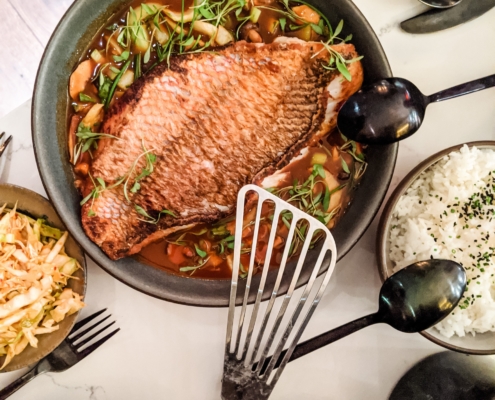
  • 1 serving of Basque-style chicken, with vegetables (fresh or frozen), rice, and salad
  • 1 slice of bread
  • 1 yogurt or 1 piece of cheese
  • A few strawberries


But don’t forget Professor Sultan’s advice, who recommends paying close attention to your hunger cues: “If you’re not very hungry, you don’t need all those starchy foods—or cut back on them!”

5 / Carbohydrate-rich snacks for periods of intense work

And since we know that exams are coming up for many of you, we asked the dietitian for his recommendations on snacks during busy periods. According to him, “You should opt for carbohydrate-rich foods, such as cereal bars or fruit compotes, which are nutritious and convenient. Swedish “Havreflarn”-style oatmeal cookies are also a good option: they don’t contain too much added sugar and are easy to make at home.” However, our dietitian reminds us: “Before you even think about snacks, the most important thing is learning how to manage your stress! Breathing exercises are very effective in helping you do that.” “And don’t forget physical activity!” the professor adds, “You can stay active no matter what the circumstances—even during lockdown! You just have to adapt your routine and adjust to the situation!”


Of course, we weren't going to leave you hanging: we've picked out a few Swedish pancake recipes for you… : 

Recipe 1 Recipe 2 Recipe 3

…and apps to help you manage stress:


We’ll be back in the next few days with more on physical activity, so stay tuned! In the meantime: get cooking! 😉


Healthcare Professionals:

We would like to thank them for their assistance in writing this article.

Ariane Sultan

Ariane Sultan

Professor of Nutrition

Ariane Sultan is a professor of nutrition on the Nutrition and Diabetes Team at Montpellier University Hospital (CHU de Montpellier), Lapeyronie Hospital. As chair of the CLAN (Food and Nutrition Liaison Committee) at Montpellier University Hospital, she teaches several courses in nutrition and diabetes care at the Faculty of Medicine.

Nicolas Sahuc

Nicolas Sahuc

Registered Dietitian

Nicolas Sahuc has been a registered dietitian since 2003 and specializes in eating disorders. He regularly gives seminars to medical residents at our faculty on eating disorders and childhood obesity.

Library article

A platform featuring scientific videos focused on health and biology is available to students with unlimited access through April 30.

A video platform for research and teaching

JoVE is a publisher of scientific articles in video format. The articles are peer-reviewed, meaning they are reviewed and approved by scientists before publication. They are indexed in PubMed and Medline, and feature experiments and protocols filmed at the world’s most prestigious universities and leading research laboratories.

To watch the videos

Simply log in to the University's digital campus portal => Click on the "Libraries" tile => Enter "JOVE" in the search bar

Your feedback will help us assess the value of this resource for the University. Please feel free to share your thoughts by emailing scd-docelec@umontpellier.fr

C3 Certification Exam

The Certificate of Clinical Competence, known as "C3" or "C-cube," is an exam designed to assess students on the skills they have acquired through clinical rotations and simulation-based training.

What is C3?

Our students receive a comprehensive education designed to help them acquire knowledge and skills. To validate the acquisition of the skills necessary for the future medical profession, the Montpellier-Nîmes Faculty of Medicine has established the C3. This exam assesses the skills that fifth- and sixth-year medical students (DFASM 2 and 3) have acquired during clinical rotations and in simulation labs.

How are students evaluated?

C3 Simulation

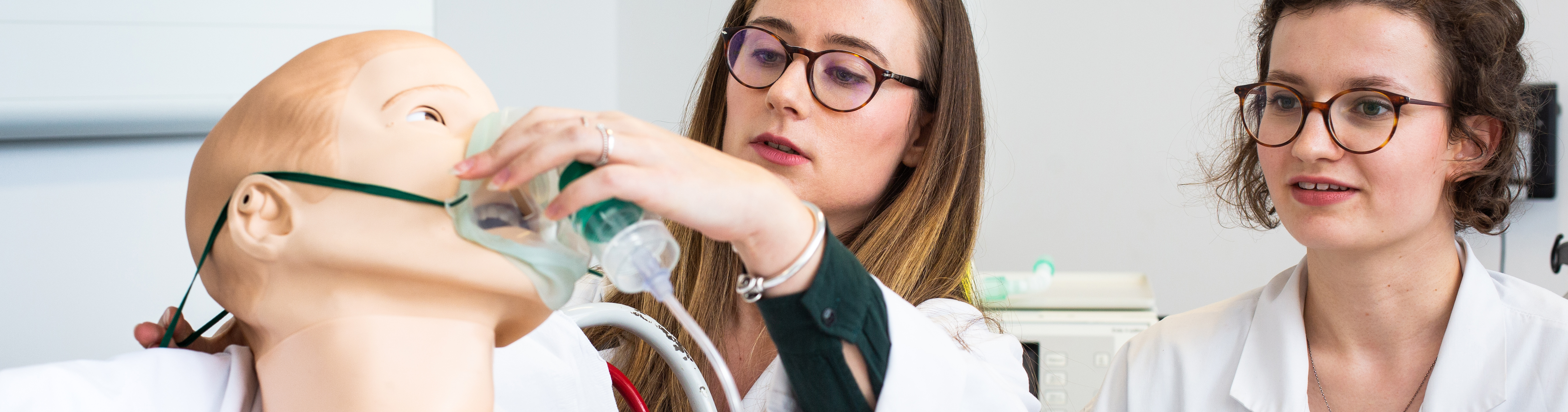
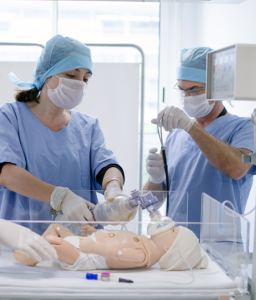
During this assessment, students are evaluated on their ability to provide an accurate diagnosis, their clinical techniques, and theircommunication skillswith patients. Delivering news of a serious illness or examining an infant requires specific knowledge and precise procedures. The C3 allows for the observation of all these aspects using high-fidelity simulation manikins, examiners playing the role of patients, and even with the collaboration of practicing nurses.

In addition to serving as an assessment for students, this exam is also a means of learning and improving. Rather than answering questions on paper, students have the opportunity to discuss and debrief with the examiners. This feedback gives them a clear picture of their skill level, strengths, and weaknesses, with the goal of continuous improvement. The School of Medicine is the only school to have implemented both a mock exam and a certification exam.

How does it work? 

This exam places significant demands on the Faculty of Medicine in terms of both material and human resources. On the one hand, the facilities must be specially adapted to accommodate the exam, both on the Montpellier campus and the Nîmes campus. On the other hand, a large number of supervisors and examiners are needed to ensure that the exam runs smoothly.

Some medical schools that need to implement this innovative type of exam as part of the reform ofgraduate medical education have already visited us to observe how we operate. This type of exam has also been implemented in Toulouse, and the rollout of the C3 at the Montpellier-Nîmes medical school is being carried out with a view to standardizing the system across the Occitanie region.

To get a clear idea of how the C3 works, watch the video below.

Every year, we open the doors of our school in Montpellier and Nîmes to give you all the information you need to study with us! So join us on Saturday, February 29, 2020, to learn all about our programs!


A day trip to Montpellier and Nîmes

As we do every year, we’ll be welcoming you to our two cities, Montpellier and Nîmes, to introduce you to our academic programs and give you a tour of our campuses!

In Montpellier, come visit our Arnaud de Villeneuve Health Campus!

641 Avenue du Doyen Gaston Giraud – 34000 MONTPELLIER

Parking will be available on site. A variety of presentations will be held throughout the day, including one on the reform of the first year of health studies. You can also learn about paramedical programs. Open from 10 a.m. to 4 p.m.

In Nîmes, come visit our Carémeau Health Campus!

186 Chemin du Carreau de Lanes – 30000 Nîmes

You will also be able to park on site. Just like in Montpellier, various presentations will be held throughout the day, including one on the reform of the first year of health studies. Please note that the Nîmes Campus does not offer any paramedical programs. Open from 10 a.m. to 4 p.m.


Come meet our students, faculty, and staff!

Throughout the day, you’ll have the opportunity to meet our students (from all programs), our faculty, and, of course, our staff. Everyone will be happy to answer your questions and provide guidance tailored to your needs. We’ll also be delighted to show you around our campuses through guided tours.

So, if you’re interested in health studies, don’t hesitate—come join us on February 29! We hope to see many of you there!


Below, you’ll find videos of the day’s presentations—perfect for watching now and again later:

Video 1 Video 2 Video 3 Video 4

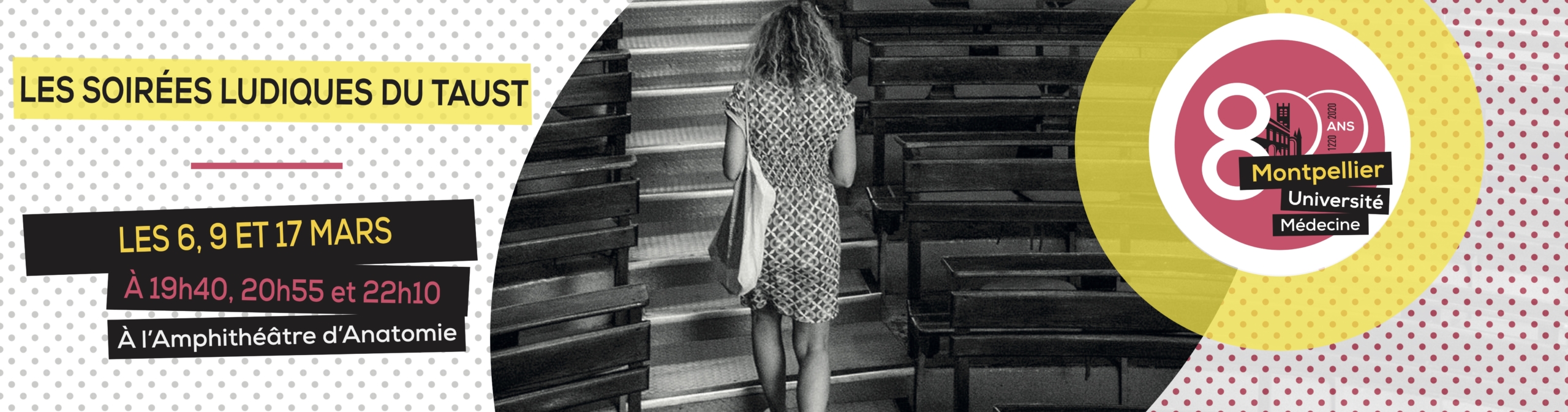
In February and March, the TAUST student association invites you to discover the history of the Faculty of Medicine through an Escape Game on February 12, 13, 21, and 26, and March 6, 9, and 17, right in the heart of the Historic Building.

Discover the history of the medical school in a new light

Four dates in February are available for you to discover or rediscover the history of the School of Medicine in a unique way. Locked in a room inside the historic building, you’ll need to use your wits and work as a team to solve the puzzles created by TAUST students.

You’ll have 45 minutes to tackle this innovative challenge—and find out who locked you in and why!
In short, plenty of puzzles to solve and a mystery to unravel await you. It’s sure to make your evening unforgettable!

Over the course of its 800-year history, the Faculty of Medicine has witnessed many significant events, and some of the leading figures in French medicine studied there.

Don't miss this extraordinary event!
We look forward to seeing you on February 12, 13, 21, and 26, and March 6, 9, and 17 at 7:40 p.m., 8:55 p.m., and 10:10 p.m.

Download the program Online registration

Our students are talented

These fun evenings are brought to you by TAUST, the University Amateur Theater Association of Montpellier.
Established in 1989, this cornerstone of student life in Montpellier organizes numerous workshops and performances. Feel free to follow their activities on their website and social media to stay informed.

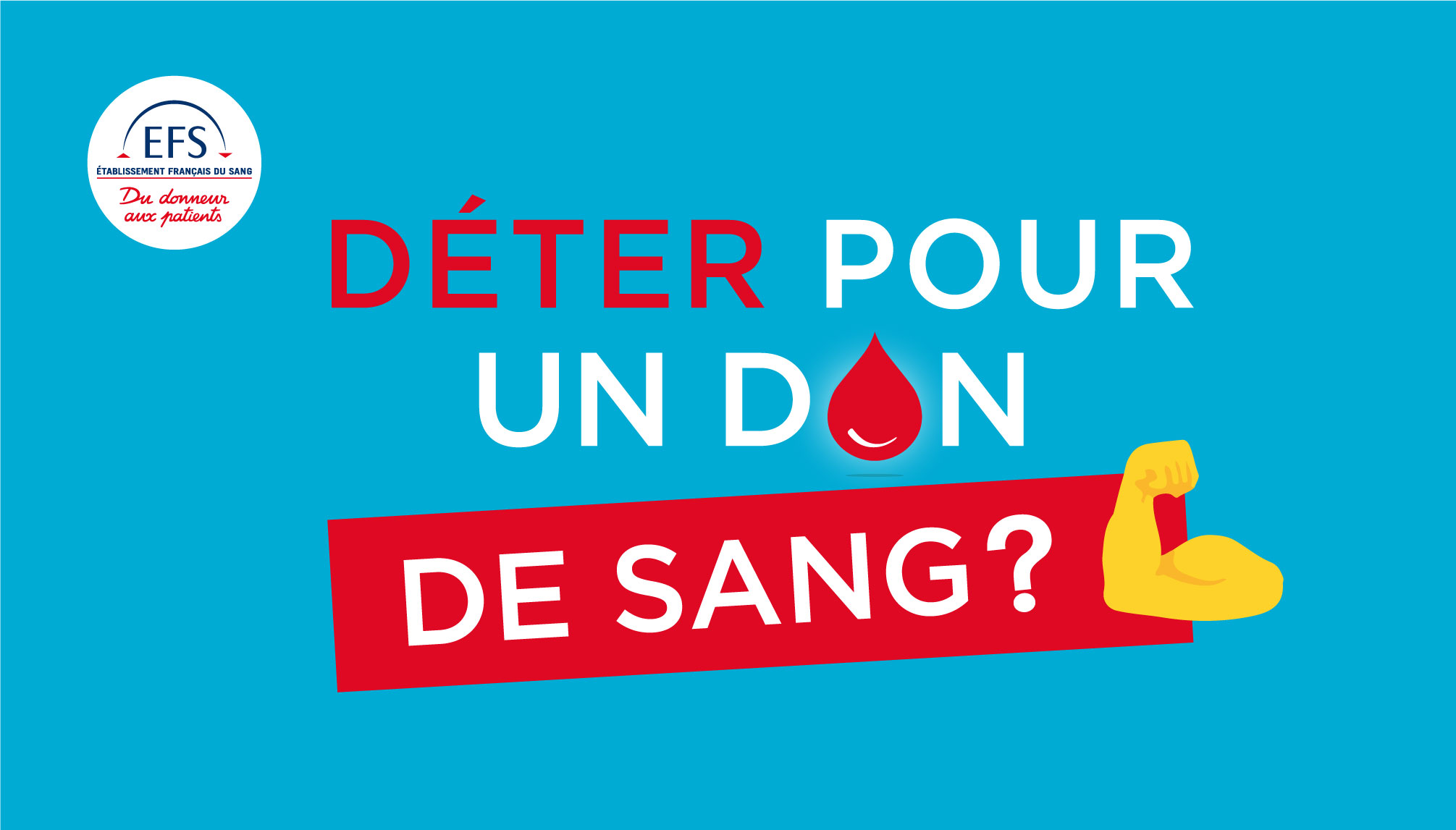
On October 1, 2, and 3, #ShareYourPower by donating blood! Come see the EFS team in the UPM lobby on the ADV Campus to make your donation!

Donating blood isn't rocket science!

October is here, fall is in full swing, and with the All Saints’ Day school break, Halloween is just around the corner. To encourage as many people as possible to get involved both leading up to and during the All Saints’ Day break, the EFS teams are playing on the stereotypes associated with this holiday to show everyone that donating blood is a piece of cake.

1,000 blood donations are needed every day in Occitanie

With school break approaching, they remind us that everyone’s participation is essential throughout October to meet the need for 1,000 blood donations every day in Occitanie. Don’t let your blood run cold for nothing: the rule is clear this October—donate or face a curse! Our friendly vampires are waiting to welcome your act of solidarity—with treats to boot. Non-donors, we invite you to take advantage of this spooky month to face your fear of needles: there’s no point in getting all worked up when you know this simple act saves lives. Don’t wait any longer! #ShareYourPower

Who can donate?

It is recommended that you do not come on an empty stomach and that you drink plenty of fluids before and after donating.

The main requirements for donating blood:

  • To be in good health,
  • Be between the ages of 18 and 70,
  • Weigh more than 50 kilograms and have never received a blood transfusion.

In the following cases, donations must be postponed by:

  • 7 days after completing a course of antibiotics;
  • 14 days after an infectious episode;
  • 4 months after an endoscopy, a piercing, or a tattoo;
  • 4 months after traveling to a country where malaria is prevalent.

Where can I donate?

It couldn't be easier—just come to the UPM lobby on October 1, 2, or 3 between 10 a.m. and 4 p.m.!

Just like the libraries, the dining facilities are switching to summer hours. Click here to see all the schedule changes for the dining facilities near the Arnaud de Villeneuve Campus.

Students and Staff

  • The CROUS cafeteria will be closed from July 1 through August 16. It will reopen on Monday, August 19.

Staff

  • The cafeteria at Lapeyronie University Hospital will be closed from July 1 to August 31, 2019, due to construction work.

The CHU card grants you access to the CHU Gui De Chauliac cafeteria, which will remain open this summer. It is located above the snack bar area at the main entrance. The common room at the ADV Health Campus remains available to administrative and teaching staff, as do the tables that have been set up outdoors on the campus.

University Library

The holidays are fast approaching, and the university libraries are switching to summer hours! Find the new hours for the Health, Medicine, and Nîmes libraries here:

UPM Health Sciences Library Summer Hours:

  • Starting Monday, June 17, closing at 7 p.m. (end of extended hours)
  • Closed on June 24 and July 2
  • Starting Monday, July 8, we will close at 4 p.m. (summer hours)

Summer Hours for the Downtown Medical Library:

  • Summer hours: 9 a.m. to 12 p.m. and 1:30 p.m. to 4 p.m.
  • Annual closure: July 20, 2019, to August 25, 2019.

Nîmes University Library Summer Hours:

  • Starting Monday, June 17, we will close at 6 p.m. and will be closed on Saturdays and Sundays
  • Closed on June 24 and July 2
  • Starting Monday, July 8, we will close at 4 p.m. (summer hours)