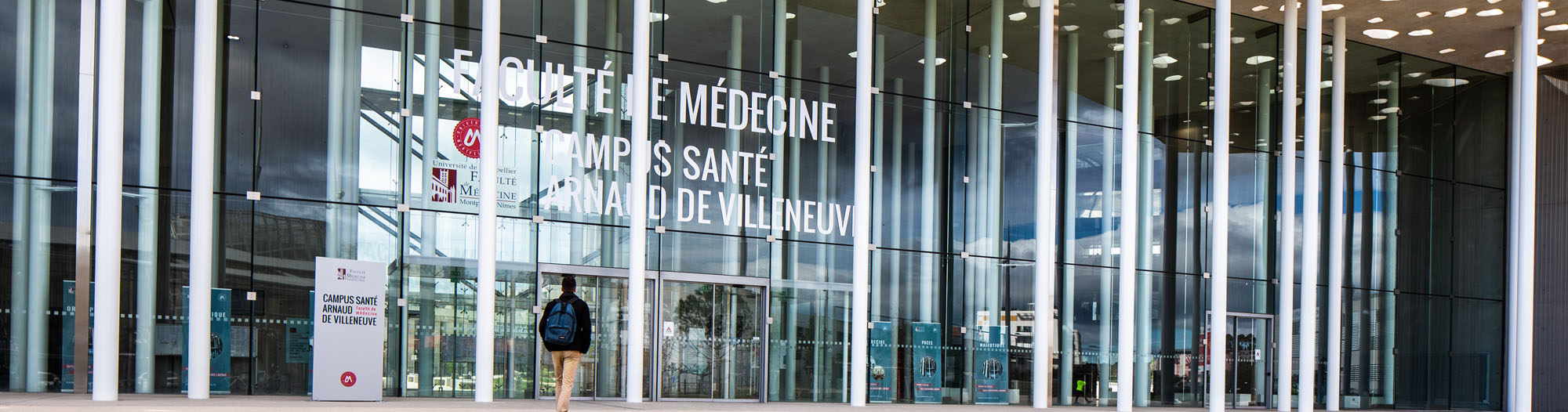
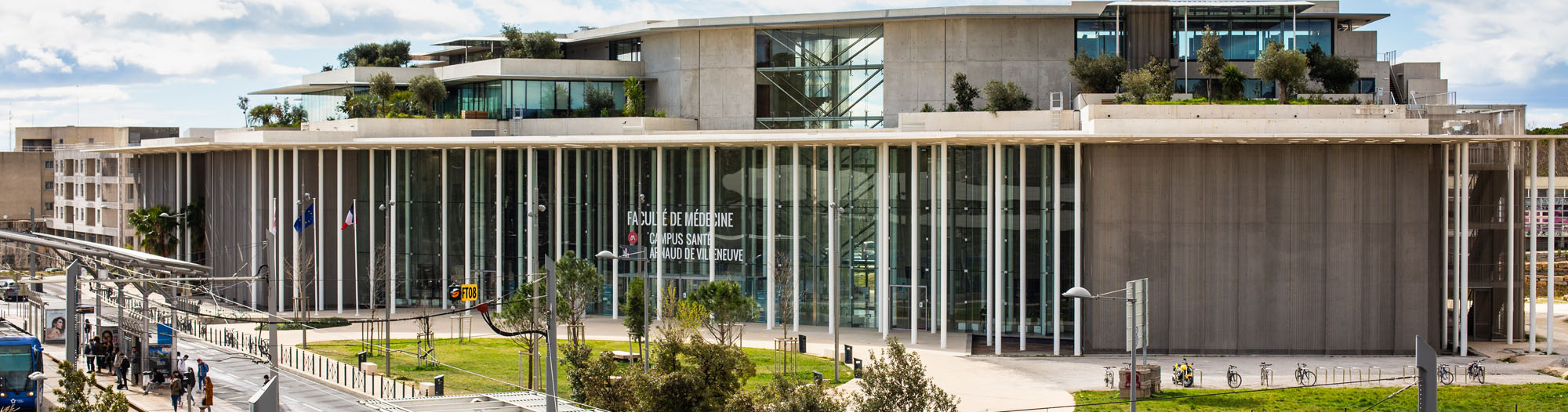
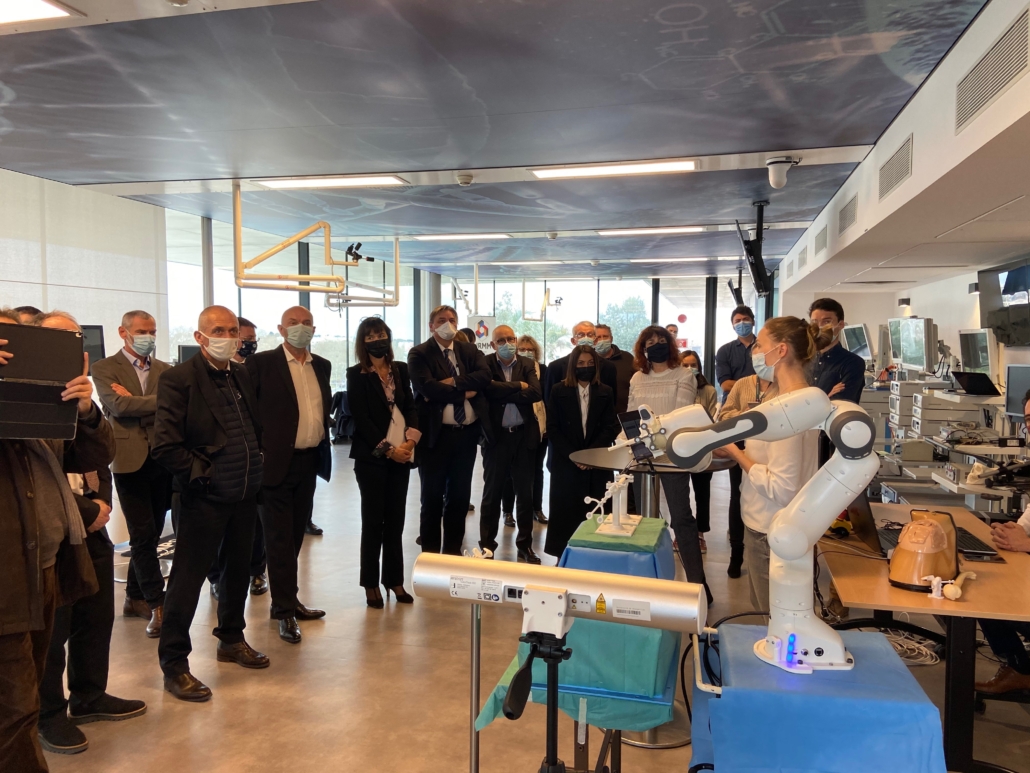
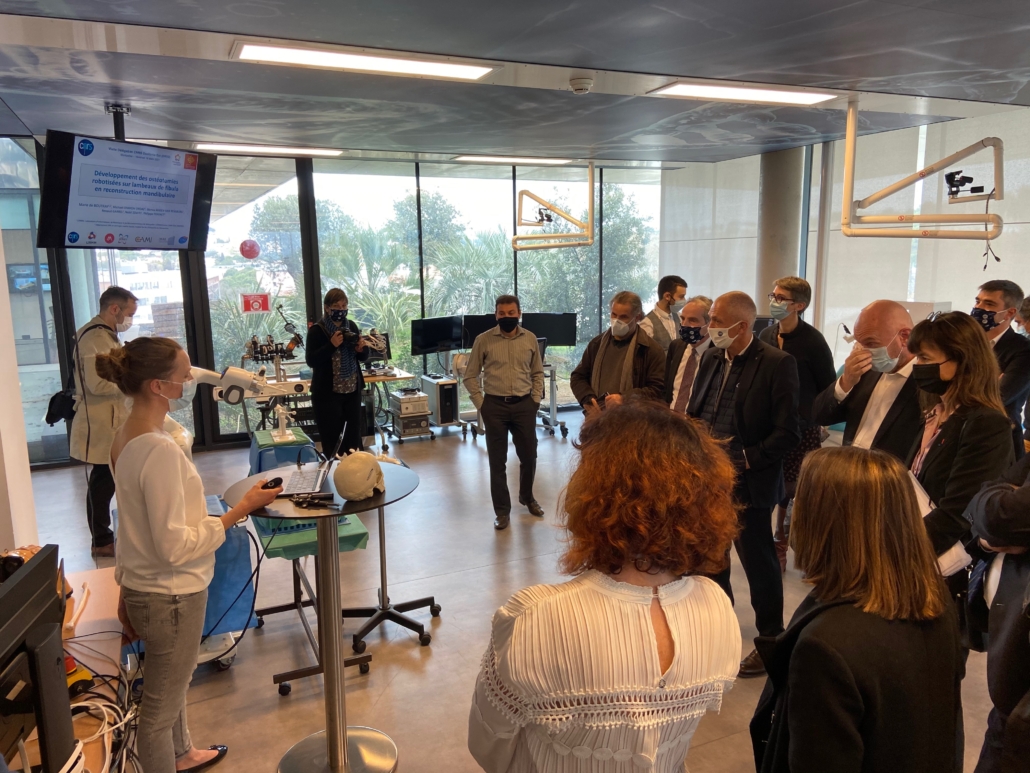
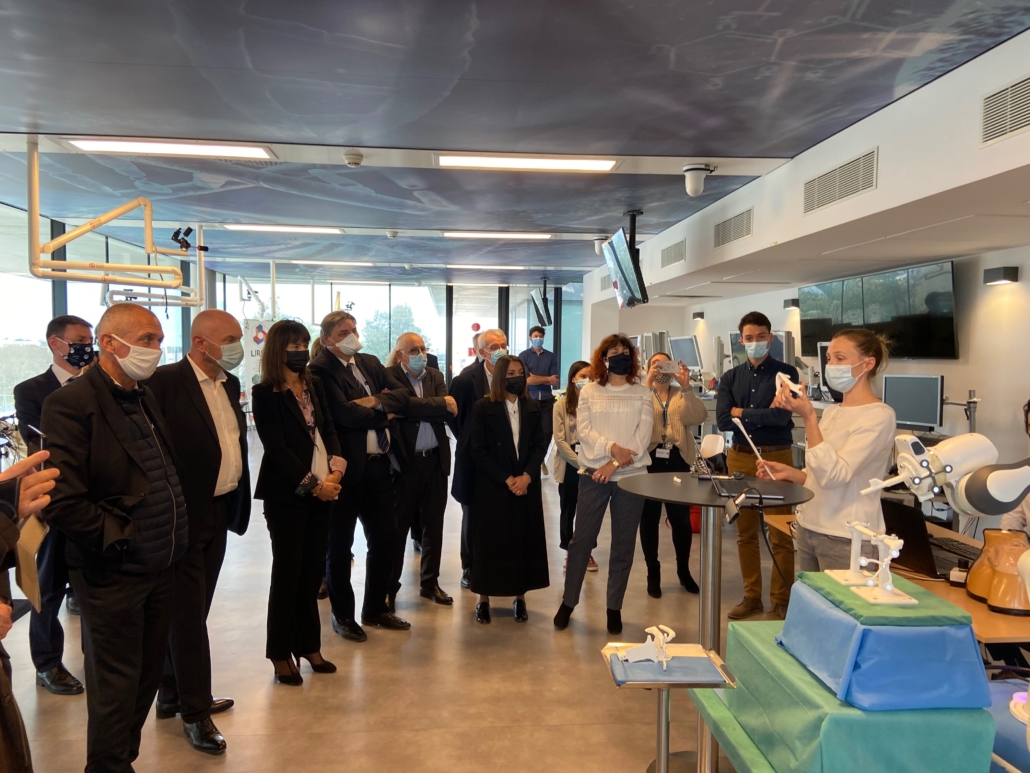
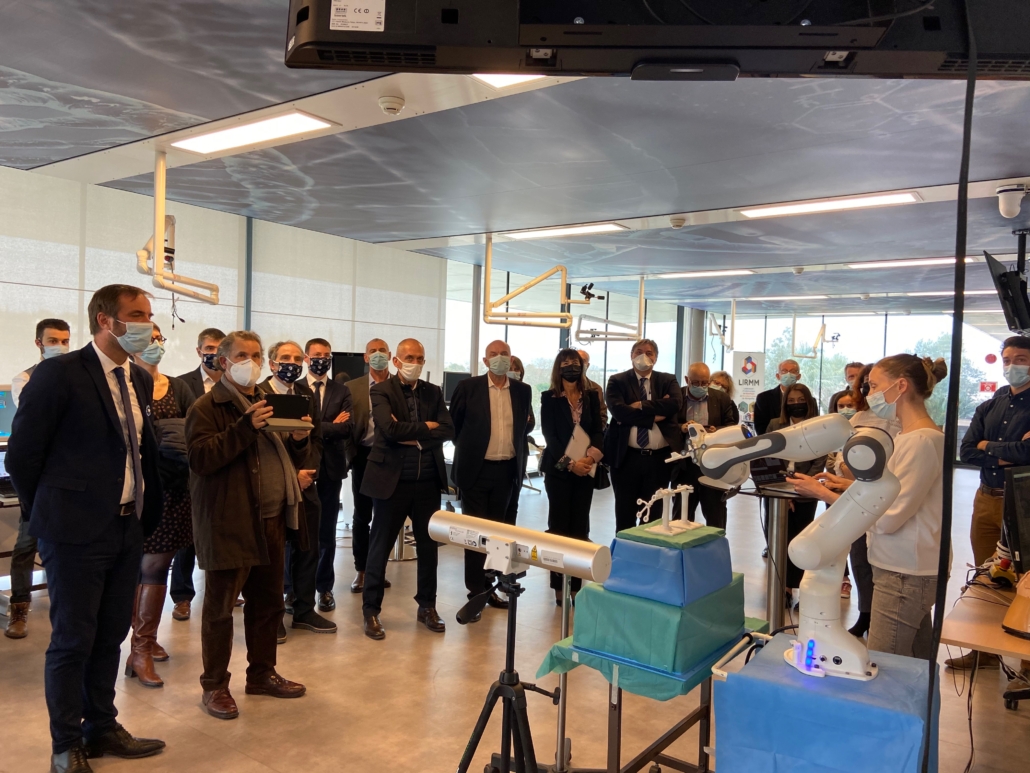
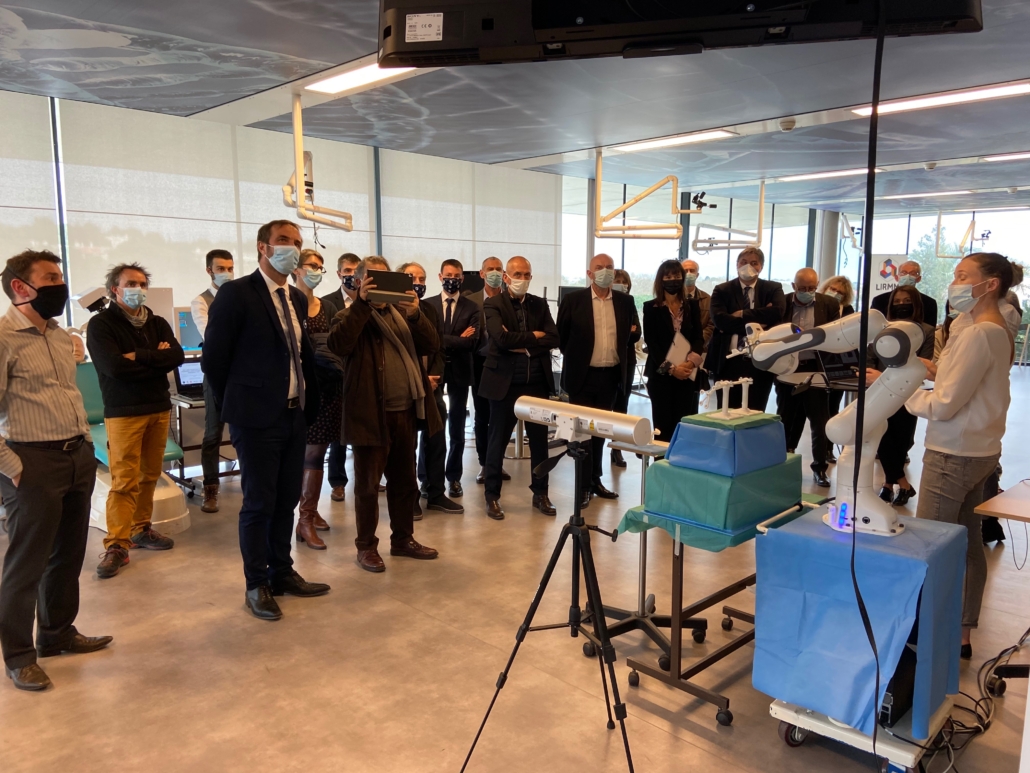
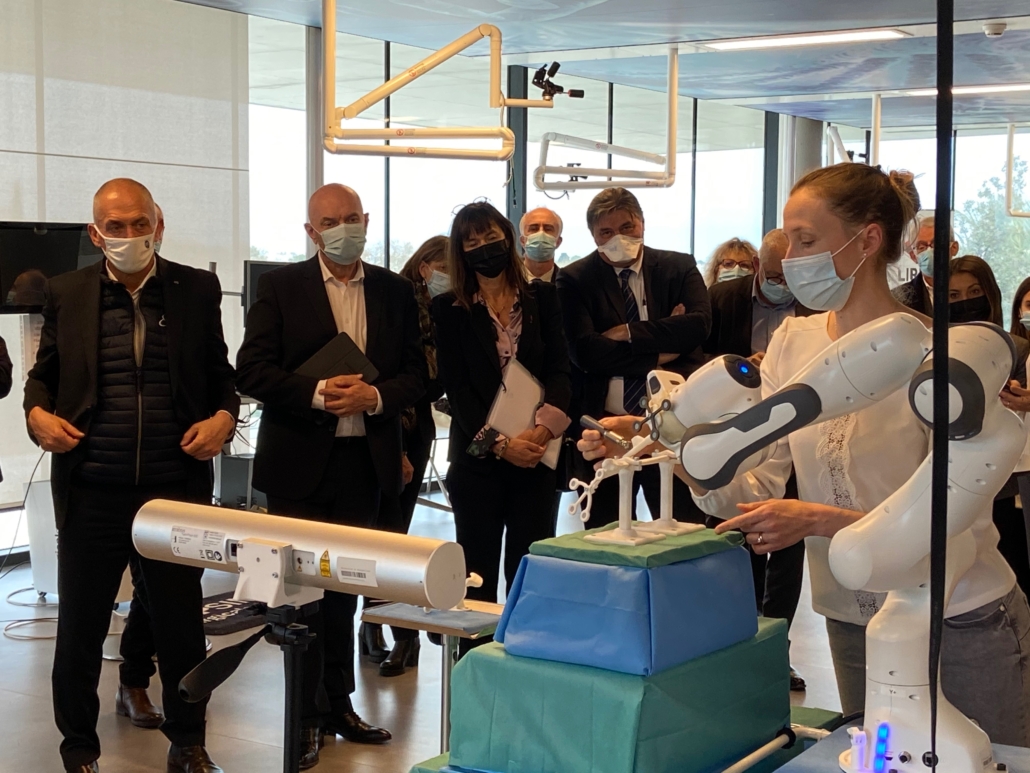
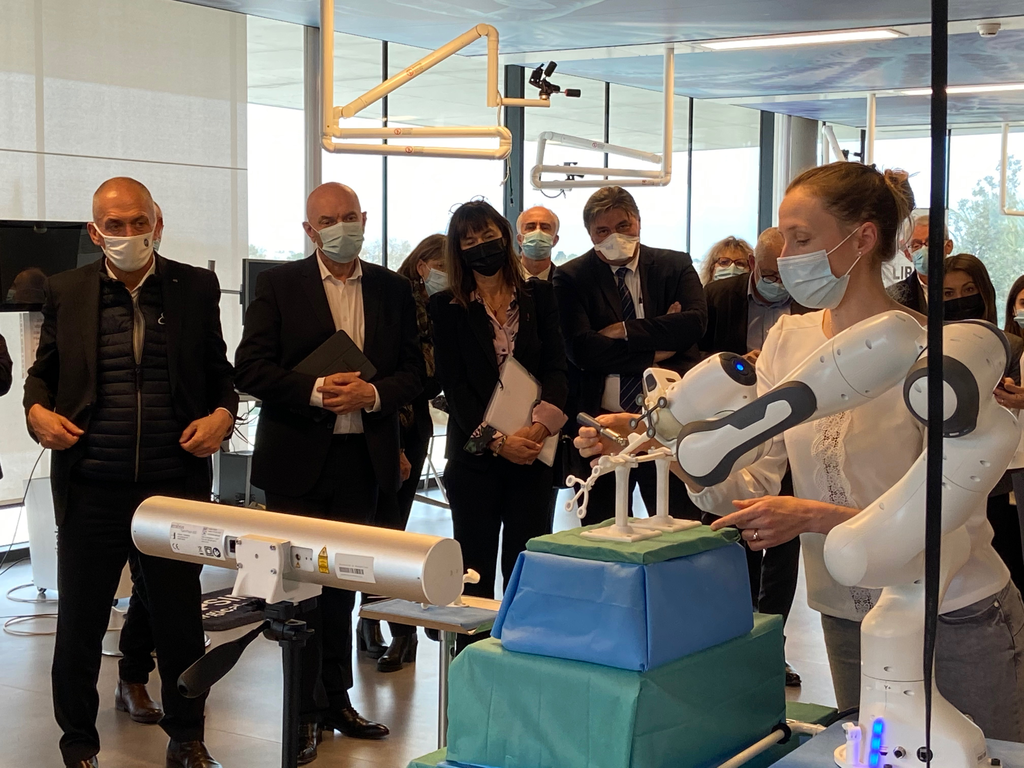
On Friday, March 19, 2021, we were pleased to welcome Antoine Petit, CEO of the CNRS (National Center for Scientific Research), to the Arnaud de Villeneuve campus for the signing of a partnership agreement with the University of Montpellier. We also welcomed Philippe Poignet, director of the LIRMM (Montpellier Laboratory of Computer Science, Robotics, and Microelectronics), who presented the surgical robotics projects being conducted at the School of Medicine.
Remarks by Philippe Poignet, Director of the LIRMM
During this event, we were visited by Philippe Poignet, director of the Montpellier Laboratory of Computer Science, Robotics, and Microelectronics. He took this opportunity to present the surgical robotics projects being conducted by the School of Medicine at the Arnaud de Villeneuve campus. These projects are led by a team at the LIRMM called DEXTER, whose goal is to design, build, and control high-performance robots capable of performing fine, rapid, and/or precise movements.
Presentation of Three Surgical Robotics Projects
-
A maxillofacial surgery project:
Project leaders: Dr. Marie de Boutray (Assistant Professor, Maxillofacial Surgery and Stomatology at Montpellier University Hospital and associate researcher in the LIRMM surgical robotics team), Dr. Nabil Zemiti (Associate Professor at the University of Montpellier), and Prof. Philippe Poignet (Full Professor at the University of Montpellier) of the LIRMM surgical robotics team.
Funding: Fondation des Gueules Cassées, Labex CAMI, Labex Numev.
Project Description: Currently, when faced with mandibular bone loss, the gold standard is to perform autologous bone reconstruction using a free fibular flap (fibular bone graft) revascularized via the cervical vessels. The main challenge of this surgery lies in reshaping the long, straight fibular bone into an angulated flap in all three spatial planes to match the shape of the mandible to be reconstructed. Currently, tools exist to help the surgical team achieve this 3D reshaping optimally, such as custom-made cutting guides and plates or 3D-printed models. However, these techniques remain very costly and extremely time-consuming, which limits their use in daily practice. The project team therefore sought to improve this fibular reshaping by using a collaborative robot to guide the surgical procedure. To this end, they developed a robot-assisted fibular reshaping technique coupled with virtual modeling of the osteotomies. This project is currently undergoing preclinical validation on cadaveric models at the Montpellier School of Medicine.
-
An orthopedic shoulder surgery case:
Project leaders: Dr. Pierre-Emmanuel Chammas (Orthopedic Surgery, Montpellier University Hospital), Dr. Nabil Zemiti (Assistant Professor at the University of Montpellier), and Prof. Philippe Poignet (Full Professor at the University of Montpellier) from the LIRMM surgical robotics team.
Project Description: The significantaging of Western populations is leading to an increase in the incidence of osteoporosis-related fractures as well as osteoarthritic conditions. Joint replacement surgery is a common treatment for these conditions affecting the shoulder (in 2010, there were 10,831 such procedures in France). The medical and economic stakes are high, given the need to operate on more patients with ever-greater safety, precision, and speed.
These conditions are necessary to ensure a return to one’s previous quality of life as quickly as possible and to maintain the individual’s independence, which is directly correlated with life expectancy in older adults.
Optimal positioning of joint prostheses is one of the most important factors in achieving the best postoperative functional outcome, minimizing complications, and extending the prosthesis’s lifespan by reducing the risk of wear over the medium and long term.
In this context—and more specifically in total shoulder replacement surgery—the proper positioning of the glenoid implant is one of the key factors determining functional outcome and implant longevity. It depends on the initial positioning of a guide pin. Conventional instrumentation is characterized by significant variability in positioning, even when performed by expert clinicians. Computer-assisted surgery solutions allow for precise and reproducible positioning, albeit with certain limitations. The project leaders proposed implementing robotic assistance to achieve precise and reproducible positioning of the glenoid pin compared to the use of conventional instrumentation. In a preclinical study conducted at the Montpellier School of Medicine, they demonstrated that this solution allows for more precise and reproducible angular positioning of the glenoid pin, regardless of the surgeon’s level of expertise.
-
An ENT surgery case:
Project leaders: Dr. Fréderic Venail (Full Professor and Physician-Researcher in ENT Surgery at the Montpellier University Hospital) and Dr. Nabil Zemiti (Assistant Professor at the University of Montpellier), Prof. Philippe Poignet (Full Professor at the University of Montpellier), and Lucas Lavenir (Ph.D. student at the University of Montpellier) from the LIRMM surgical robotics team.
Funding: Agir pour l’audition Foundation, Labex CAMI, Occitanie Region.
Project Description: Cochlear implants are the first functional neuroprostheses to have been developed for humans. They restore hearing in individuals with severe to profound hearing loss. Implantation of these devices requires the insertion of an electrode array into the cochlea, thereby enabling electrical stimulation of the tips of the auditory nerve fibers.
Today, the insertion of this electrode array is a critical step in the surgical procedure because it requires advancing this array of electrodes, each 1 mm in diameter, through a small opening (~2 mm) in the cochlea (round window). This insertion is performed manually in the clinic, “blindly,” and without the ability to monitor or correct the trajectory inside the cochlea.
The lack of visual control and the limited maneuverability of the electrode array are responsible for much of the damage caused to cochlear structures and the resulting loss of residual hearing. This risk prevents the implantation of cochlear implants in individuals with milder forms of hearing loss.
To address these issues, the project leaders are currently working (as part of Lucas Lavenir’s thesis) on the development of navigation software that guides surgical procedures for the implantation of auditory neuroprostheses using a specialized ultrasound probe….
This probe is mounted on Collin Medical's RobOtol system, which enables automatic monitoring of the insertion motion and electrode guidance.
The successful completion of this project will pave the way for safer therapeutic interventions for inner ear disorders, such as in situ drug delivery or gene therapy, which cannot be performed safely with the tools currently available to ENT surgeons.

A partnership agreement for the 2021–2026 period
The CNRS andthe University of Montpellier are renewing their partnership for a second five-year term. This agreement, which brings together the CNRS, the University of Montpellier, Paul Valéry University, the National School of Chemistry in Montpellier, and the Occitanie Academic Region, aims to define the elements of a shared scientific policy, implemented through the management of joint research units and their operational implementation, by formalizing fundamental agreements regarding their management and operation.
The partnership's five major scientific areas
A Steering and Monitoring Committee
To ensure the partnership is monitored at both the strategic and operational levels, the agreement provides for the establishment of a steering and monitoring committee. The signatories agree to share progress reports on a regular basis. The terms of this agreement were defined following negotiations guided by the goal of achieving balance and taking into account the specific characteristics of the shared units.
We would like to thank Nabil Zemiti, the lead researcher on the three surgical robotics projects, for his invaluable assistance in writing this article.