The Teddy Bear Hospital is back in 2022! To find out all about this useful and endearing awareness campaign, read this article!


LMontpellier's health students join forces for a sensitive operation

As they have every year since 2002, our students in medicine, midwifery and speech therapy (via the corpos ACM, AMESF and Dislalie), have joined forces with students from the pharmacy, dental, physiotherapy and occupational therapy streams to organize an event that is as unique in its gentleness as it is in its usefulness: the Teddy Bear Hospital.

The concept? Health students welcome kindergarten children from underprivileged neighborhoods to introduce them to the world of hospitals and health examinations in a playful setting: their cuddly toys will be the patients for the day!


A mini transdisciplinary care path for cuddly toys

Taking place this year from March 28 to April 1, the operation will feature a mini care trail for the children's stuffed animals, spread across 12 kindergarten classes. A veritable "mini-hospital"!

The program included no fewer than 15 multidisciplinary care stands! To prepare for mediation with children, the students manning the stands have received special training from a child psychiatrist from the Montpellier University Hospital.


Stands set up by medical students (ACM)

  • Pneumology - Cardiology
  • Radiology
  • Ophthalmology
  • Dermatology
  • Digestive medicine
  • General medicine
  • Anesthesia-Surgery
  • Emergencies
  • Nutrition - Sports Medicine - Environmental Medicine


Stand manned by maieutic students (AMESF)

  • Vaccination stand


Stand run by speech therapy students (DISLALIE)

  • Stand on sign language, hearing and attention training


Stands manned by students from other health disciplines: 

  • Pharmacy: medicines and lice
  • Dental: dental care
  • Occupational therapy: disability awareness
  • Physiotherapy: balance training


Objective: to play down the hospital world and educate people about health

"While white coats can sometimes be intimidating for little ones, the aim of this operation is really to play down the fear of hospital examinations that children may have to undergo in the future."explains Carlota, ISS Vice-President of of ACM Corpo.

"To complete the picture and make things more real, the students even prepared mini vitals cards and dummy health booklets says Pauline, second VP ISS of the ACM Corpo.

With a device like this, there's no doubt that our little guests' teddy bears will come out in top form!


Practical info

Where: Campus Arnaud de Villeneuve, 2nd floor

When: March 28 to April 1, 2022


Every year, the Faculty organizes the Printemps de la Médecine, an event aimed at general practitioners. Read all about it in this article!

An event for general practitioners

These days provide an opportunity to discuss all the major medical news of the year in the morning, and to tackle best practices in current medical practice topics in the afternoon, in the form of workshops. This day, like the previous ones, will be registered on the ANDPC website, and the Faculty will be responsible for registering doctors wishing to take part. In the meantime, save the date in your diary!

Should you require any further information, particularly concerning the program and registration procedures, please do not hesitate to contact the office in charge of CPD management at the Faculty at the following address: med-fmc-dpc@umontpellier.fr.


  • 8H30

    Presentation of the day

  • What's new in 2022

    with Dr Camille Roubille (8:40am - 9:10am), Pr Hubert Blain (9:10am - 9:40am) and Dr David Costa (9:40am - 10:10am)

    8H40

  • 10H10

    Consumption and cost of diabetes medications

    Dr Laurence Papinaud

  • The role of the endocrinologist

    Prof. Éric Renard

    10H30

  • 11H00

    The role of the nephrologist

    Prof. Moglie Le Quintrec

  • The role of the cardiologist

    Prof. François Roubille

    11H30

  • 12H00

    Closing of the morning session

    A word from the Dean
    Word from the Conseil de l'Ordre Départemental de l'Hérault (News from the Order by Dr Philippe Cathala)

  • 2 of 5 2-hour workshops

    • Workshop 1 - 2pm-4pm (GP): Managing sleep complaints in general practice
    • Workshop 2 (GP): Behavioral disorders in the elderly
    • Workshop 3 (GPs): Pre-Exposure Prophylaxis (PrEP)
    • Workshop 4 (GPs and interns): Medical confidentiality in cases of patient endangerment: the case of violence against women
    • Workshop 5 (GPs and interns): Practical management of wounds and pressure sores

    WORKSHOPS TO CHOOSE FROM


To register, click on the link below! The Continuing Medical Education and CPD Office is looking forward to seeing you!

The month of April 2022 will be marked by the organization of elections for the 3 councils of our UFR: the Management Council (or UFR council), the Pedagogical Council and the Scientific Council. In this article, you'll find the timetable for these elections and the various application and voting procedures.


Election agenda

  • April 12, 2021

    Elections of staff representatives to the management board, scientific council and pedagogical council

    • Voting is by ballot box
    • For Montpellier: on the ADV Campus in the Practice Excellence room from 9am to 5pm
    • For Nîmes: in building D, room D101 from 9 a.m. to 5 p.m.


Information on the election of the Board of Management

Download below all the documents related to this election:

College A

College B
College P
College BIATS


Electoral lists can be consulted at the ADV and Nîmes campus reception desks, and on the University intranet.


Information about the election for the Pedagogical Council

Download the proclamation of results below


Information on the election of the Scientific Advisory Board

Download below all the documents related to this election:

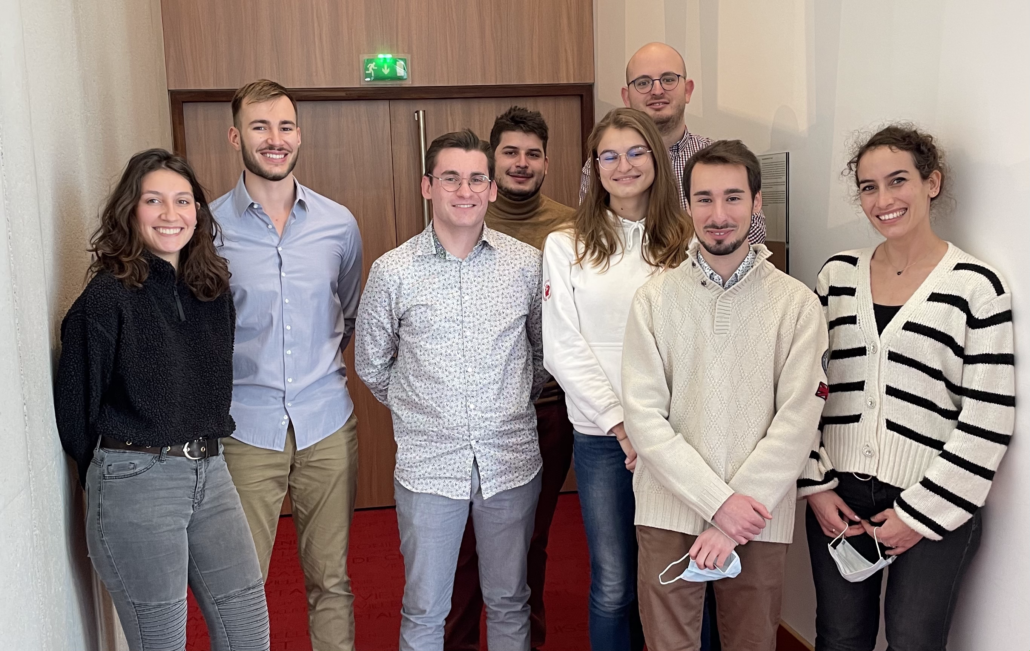
Each year, students choose an elected representative to sit on the dean's team. This year, Théo Lacoste, a 4th-year medical student on the ADV campus, has been chosen to represent you. Find out more about him and Ademmoos in this interview! Portrait.

Hello Théo, first of all, who are you? Can you introduce yourself?

My name is Théo Lacoste, and I'm a 4th-year medical student on the ADV campus. I'm also an elected member of the student council and president of Ademmoos (elected student representatives from all disciplines). I'm aiming to become a doctor, of course, but I don't necessarily have a specific specialty in mind, other than to specialize in something cross-disciplinary like emergency medicine. But I'm not closed-minded, I think you need to go through several training courses to be sure of your future!

You're chairman of Ademmoos: can you tell us about the association's role?

It should be remembered that our Faculty has several sites and several courses of study. The power to represent students on the various councils is therefore assured by elected student representatives. This work is very substantial. So in 2016 we decided to create this association to free up the elected students from the substantive work (particularly everything to do with communications, infographics, etc.) but also to develop projects with other student associations. The aim is really to bring together, federate and coordinate the associations and, through them, the students.

The association's membership is made up of students elected to the various representative councils, but we also have non-elected members. They often bring very interesting ideas and a different perspective to our monthly meetings.

Can you give us some examples of projects coordinated by Ademmoos and other associations?

Yes, for example MAP (Montpellier Artistic Project), an association focused on the arts. With them, we organized an Art-Therapy workshop for students, in the presence of a professional in the field, with the aim of combating the stress of studying. But the projects we coordinate can also take place outside our associations. I'm thinking in particular of the "Dry January" challenge (see instagram post below) that we ran in collaboration with the ICM recently, or the "Mois Sans Tabac".


See this post on Instagram


A publication shared by ADEMMOOS (@ademmoos)

More than just President of Ademmoos, you are now Vice-Dean of Students. Can you tell us more about your role in this position?

I have 3 main missions: Firstly, an academic mission, which is very institutional. I'm in close contact with the dean's team, in particular Dean Isabelle Laffont, but also with the teaching and administrative teams, to represent the student voice. This involves taking part in meetings on a regular basis, as well as keeping abreast of what's going on at both student and faculty level. I'm a bit of a "shuttle", passing information up and down. I pass on this information to the student representatives, who then pass it on to the various departments, sites and classes.

The second mission focuses on the Ademmoos association. I have to give a "line of conduct" in terms of the policy of our mandate. I'll come back to this later, but the idea is to divide up the most important issues among the 40 students in the association: some will deal with reforms, others with welfare or coordination with other associations.

My third mission is really to be in direct contact with the students. I can be contacted for this purpose by the class reps, but that's not enough, as information can get lost. So I make a point of organizing as many face-to-face meetings as possible, with the different classes, to discuss, "take the temperature" and gather their needs and feelings directly from the students. This information is then useful to me as part of my first academic mission, in order to convey the students' wishes as accurately as possible.

What are the priorities of your mandate?

There are several priority areas. Firstly, a slightly more academic and administrative aspect, which mainly involves continuing the work of my predecessors: Salomé Duteurtre and Florian Mary. They both worked on what I call the "Pedagogical Alliance". In other words, the co-construction of our student life-course, with all our contacts: teachers, students and the Faculty's administrative body.

It may look simple from the outside, but it's actually quite complex, because you have to reconcile everyone's opinions; in the end, you manage to find agreements out of disagreements! And yet, it's all done with the goodwill of all concerned, in a spirit of mutual understanding. We have to work together, and look at the issues to be resolved through everyone's prism, so that the solutions we come up with are beneficial for everyone. This duty to live together is truly paramount, and we repeat it regularly to the whole team, most recently to the newly elected student members of the Board of Management and the Pedagogical Council.

Then there's the whole issue of student well-being. It's something quite new, something that wasn't talked about too much a few years ago, and which was brought to light by the health crisis. Today, more than ever, this subject has become our top priority.

But we can't act without knowing the extent of the problem! We therefore set ourselves the primary objective of gathering the opinions and experiences of students through surveys. As a result, we were able to collect over 1,000 responses to our first questionnaire on mental health, distributed over the winter - and I'd like to take this opportunity to thank all those who took part! - . The results of this survey are currently being processed. In addition, a few weeks ago we began circulating a new survey on sexist and sexual violence to which students may be subjected at university, in the evenings or at their place of work/internship, in order to delimit the contours of the problem and thus envisage corrective action to limit incidents or even punish them where necessary.

In practical terms, are you taking steps to promote student well-being?

Yes, from a practical point of view, this year we set up a wellness center with two project managers who are medical students (Ulysse Godin and Maribelle Dossou-Yovo). Their mission is to organize awareness-raising events. For example, there was the conference on addictions with Pr Hélène Donnadieu-Rigole, the Month Without Tobacco, Dry January... In March, we'll be holding a conference on psycho-social risks and "workaholism". These events are very popular with students.

There are also other practical projects outside the "well-being" theme, such as the Forum du Futur Interne, which is piloted by former Vice-Dean Florian Mary, and aims to put 5th and 6th year students in touch with interns to share their experience.

What motivated you to take on this role of elected representative and Vice-Dean?

My motivation came from my previous commitments, both to Ademmoos and to ANEMF (Association Nationale des Etudiants en Médecine de France), because last year I was heavily involved in the issues surrounding the R2C (reform of the second cycle of medical studies) at national level. This made me want to get even more involved at local level, with the issues we encounter on a daily basis.

Of course, discussions with my predecessors also strongly influenced me. After that, it all came very naturally, with the desire to help the graduating classes guiding me in my choices. I wanted to look at my studies from a different angle.

After that, yes, it's very time-consuming. It's sometimes hard to juggle everything! So it's important to surround yourself with the right people and know how to delegate. In this respect, I'd particularly like to thank Florent Benoist, who is General VP of Ademmoos and representative on the Pedagogical Council, and who really helps me a lot and keeps me well organized.

How do you get elected Vice-Dean?

The Vice-Dean is proposed by the students elected to the Board of Management. He or she is often on the list of elected students. The Board then votes for or against the proposed student. This proposal is discussed in advance within Ademmoos. Once elected, the Vice-Dean is in place for 2 years, but we often resign after a year to devote ourselves to our studies.

Thank you very much for this exchange: do you have any final words?

Yes, about one of the priorities of my mandate, well-being. I'd like to get the following message across: it's okay not to feel well. Health students come from a highly selective system, where you always have to be the best. So, culturally, it's hard for us to say when things aren't going well, and we tend to keep our weaknesses to ourselves. But it's not abnormal to feel bad! There are a number of ways to help, which can be found on the Faculty website.. We need to break the silence on this taboo and take advantage of the devices developed jointly by students and faculty to feel better. Alone we go faster, but together we go further!

For the second year the Agnes McLaren Association is organizing a medical prize of €4,000! Applications are open to students at the Montpellier-Nîmes Faculty of Medicine who will be defending their thesis between September 2021 and March 2023. Find out more about how to apply and the eligibility criteria for your thesis below.


This prize is awarded for a thesis in medicine on the health of women and/or children in precarious or vulnerable situations, and finances work based on this thesis.

L'association Agnes McLarencreated in 2018, works to preserve the memory ofAgnes McLarenthe first female doctor to graduate from Montpellier's Faculty of Medicine, in 1878. It is in honor of this woman doctor, who dedicated her life to caring for the most disadvantaged or excluded women in society, that the association wishes to award a medical prize for the first time.

To mark the Faculty's 8th centenary in 2020, the association has set up the Agnès McLaren Prize for Medicine. Every two years, this prize is awarded to a thesis and a post-thesis work or projecton the health of women in precarious/vulnerable situations or on the health of children exposed to precarious and/or vulnerable situations. It also finances a work based on this thesis. The €4,000 prize will be awarded in June 2023 after pre-selection by a committee and review by a jury of healthcare professionals.

For the first edition, Justine Allouche won a prize for her knowledge and practice of cervical cancer screening.

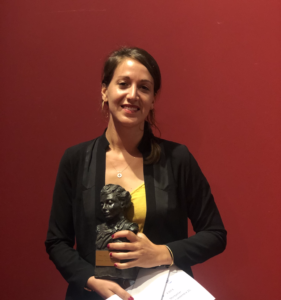
In 2021, the prize was won by Justine Allouche for her work on assessing Knowledge and Practices in relation to Cervical Cancer Screening among Women in Prostitution in the Gard and Hérault Departments. On this occasion, Justine was the subject of an article in Midi Libre!


Eligibility criteria

To compete for this medical prize, candidates must meet a number of eligibility criteria:


  • Open to our students

    Criteria 1: Be a student at the Montpellier-Nîmes Faculty of Medicine

  • Year 2021-22-23

    Criteria 2: Defend thesis between September 2021 and March 2023

  • Thesis subject

    Criterion 3: Support a thesis on the health of the most disadvantaged or excluded women or on the health of children exposed to precariousness and/or situations of vulnerability.

  • Post-thesis project

    Criterion 4: Thesis leading to an operational project

How do I enter the competition?

The second edition of the McLaren Medicine Award will take place in 5 phases, as follows:

  • before March 15. 2023

  • Pre-selection phase

    Pre-selection of theses received by the pre-selection committee. 5 theses pre-selected.

    April 15, 2023

  • May 15, 2023

    Selection notice

    Selection notice sent to the 5 shortlisted candidates.

  • Final selection phase

    Examination of the 5 pre-selected theses by the jury. Candidates must submit their theses and post-theses by January 24, 2021.

    June 2023

  • sept. 2023

    Award ceremony

    Presentation of the Agnes McLaren Award at the official ceremony.

Prize regulations Pre-Application File Application form

We hope to see many of you competing for this new prize! So get writing, and good luck with your theses!