For the first time, the School of Medicine had the honor of conferring degrees on the 2020 and 2021 IPA graduates.

Graduation Ceremony

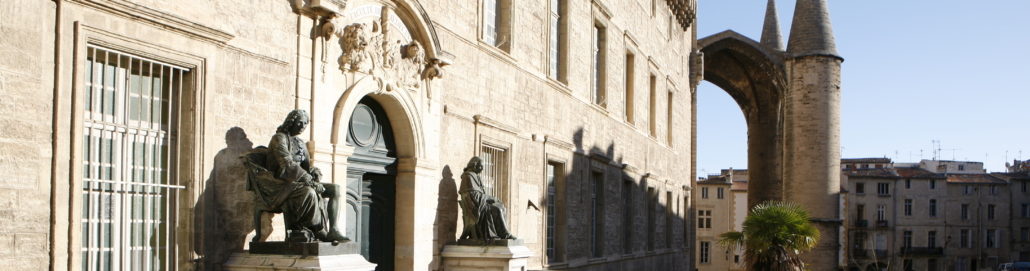
The ceremony took place on July 12, 2021, in the Faculty’s Historic Building. A total of 36 students from the classes of 2020 and 2021 received their diplomas.

ON THE PROGRAM: 

  • 5:00 PM SPEECH

    This was an opportunity for the Dean of Mondain and the President of the University of Montpellier to address the audience, congratulating the new graduates and thanking the program’s partners. Isabelle Laffont, the academic director of this DE IPA program, also said a few words.

  • 6:00 p.m. Graduation Ceremony

    The speeches were followed by the graduation ceremony. This provided an opportunity for the academic director to reflect on the 36 different academic paths taken by the new graduates and to congratulate them personally.

  • 7:00 p.m. Group photo

    Group photos of the two graduating classes, attended by the Dean, the University President, the Academic Director, and the instructors of this diploma program.

  • 7:30 PM Social gathering

    The new graduates enjoyed a relaxed get-together over a buffet.

Check out our selection of photos from the day!

To help students prepare for their first year in the PASS and LAS programs, the health tutoring associations at the University of Montpellier (the Montpellier Health Tutoring Association, Nîmes Health Tutoring, and the Association of Pharmacy Tutors) are organizing a pre-semester orientation workshop to help students adjust to university life and gain a clear understanding of the year ahead.


The objectives of this internship

This workshop provides an opportunity to familiarize yourself with the key topics that will be covered in the first semester, to start finding your own work rhythm, and to gradually immerse yourself in a PASS or LAS program.

As a result, two separate SPRs will be organized:

  • FOR PASSES

    A review course for PASS students, which will begin on August 23 and end on September 4 with a group exam.

  • FOR THE LAS

    An orientation session for LAS students, scheduled for August 30 and 31, providing an introduction to the health minor.

The Pre-Semester Workshop for PASS Students

Registration for the PASS Pre-Semester Workshop costs €15, which covers the cost of printed handouts for the presentations. You must first register for the tutoring program; registration is free and open year-round (available here).

This SPR will take place from August 23 to September 4. It will be held in person at the respective locations of the three associations, namely:

ATSM

Arnaud de Villeneuve Site,

641 Doyen Gaston Avenue GIRAUD

34090 Montpellier

TSN

Carémeau Site,

186 Chemin du Carreau de Lanes

30,900 Nîmes

ATP

School of Pharmacy,

15 Charles FLAHAULT Avenue

34090 Montpellier


This in-person orientation is designed to help students get acquainted with the university environment, build connections with one another, and meet the tutors they will be working with throughout the year.

Here is the registration link:

ATSM Pre-School Year Workshop ATP Pre-Season Training Camp TSN Pre-School Re-entry Workshop

The Pre-Semester Workshop for LAS Students

This SPR will take place on August 30 and 31. To ensure equal opportunities for students from different faculties, it will be held online via the Zoom platform.

Here is the link to register (the LAS Pre-School Year Workshop is the same for all three locations):

In 2020, Dr. Valentin FAVIER, in collaboration with Dr. Antoine Debourdeau, once again submitted a proposal to the MUSE call for projects, which aims to support the pedagogical transformation of educational programs. His project, titled “Application for Monitoring Learning Progress and the Execution of Technical Procedures in Medicine,” was selected as a winner.

The origins of the project

The quality of medical training is a public health issue that is essential to provide the population as effectively as possible for years to come. Medical competence takes a long time to acquire, during which students must master theoretical and technical skills. Medical residents must learn the skills and procedures that will form the foundation of their medical practice during the 4 to 6 years of their residency. Their theoretical knowledge is frequently assessed through written exams. 

Currently, medical residents complete their clinical rotations according to a predefined educational curriculum, divided into semesters, and receive their residency degree upon completion of their program after defending a thesis. 

Nevertheless, during their residency, medical students work full-time at the hospital, and their university-based training on campus is reduced to just a few days a year. 

However, the medical curriculum does not take into account the technical skills of medical residents, and there are few tools available to track their acquisition and monitor the learner’s progress throughout their rotations.

It was against this backdrop that Drs. Favier and Debourdeau decided to develop an app to track the progress of healthcare students in terms of their technical skills.

The Birth of SPART APP

SPART-App is a project that aims to provide medical residents, their trainers, and the educational coordinator with a mobile app to record every procedure performed throughout their residency (e-logbook). This pilot project covers the specialties of anesthesiology and critical care, gastroenterology, otolaryngology, and maxillofacial surgery. Here are its objectives:


  • For the learnerFor the learner, this digital notebook will allow them to track their progress in real time (success rate, learning curve), identify areas for improvement, and alert their instructor if their practice is insufficient.

  •  For the instructor, this tool will help identify the challenges faced by the learner, clarify and find solutions to roadblocks, and facilitate a debriefing. 

  • For the academic supervisor, it will enable them to tailor educational objectives on a case-by-case basis according to the challenges students face, identify training gaps (particularly in the number of procedures performed) so that supervisors can be alerted, and propose concrete, personalized solutions to the student and their supervising team. 

The app: a strategic choice

The digital, via an app that can operate offline, eliminates the need for procedure logs that are not regularly updated. The resident will be able to evaluate their procedure immediately after performing it, on their smartphone.

Each resident will be provided with a student account specific to their specialty. In this account, the resident can record every procedure performed over time, detailing the procedure itself, whether it was successful or unsuccessful, and any difficulties encountered. Using the data entered into the application, it is possible to track their learning curve.

The supervisor of the procedure may, if they wish, approve the intern’s assessment of the procedure and use it as a basis for a technical debriefing . The instructor will have access to the data for each of the residents they supervise. This will allow the head of education (department head) to ensure that each resident performs a sufficient number of procedures and to identify residents who are struggling so they can provide them with additional support. 

The Impact of START APP

Through this project, Dr. Favier hopes to advance the development of technical skills and generate short-, medium-, and long-term impacts.

  • In the short term, SPART-app will provide an overview of the current state of technical training in medicine and surgery. At present, this training is subjective and varies depending on the instructors. This project would serve as a tool to standardize and streamline the monitoring of students.

  • In the medium term, this program will enable students to track their progress and tailor their course of study based on their areas of weakness and strengths. The project could also be expanded to include programs other than those mentioned above. This educational innovation could then be rolled out nationwide under the leadership of the University of Montpellier.

    From a scientific perspective, the data collected through this app will be used to conduct educational studies in each of the relevant specialties, with the aim of evaluating the impact of interventions (including simulation, a component also studied by Dr. Favier) on the acquisition of technical skills to guide changes in teaching practices in a rational manner. 

  • In the long term,this educational transformation will lead to improved practices at the local and national levels, with a tangible impact on enhancing patient safety by reducing the risk of technical errors.

Currently, the project led by Dr. Favier and Dr. Debourdeau is moving forward and is expected to be launched soon.

Julie Bay, a first-year orthoptics student, will be heading to Kenya on a humanitarian mission from October 30 to November 14, 2021. The goal of this mission is to provide free vision screenings for children in schools in Taïta.

A project by the Eye Need View association

Eye Need View is a nonprofit organization established in 2014 by three orthoptists. Its mission is to organize vision screening, refraction, and training initiatives in the field of eye health in developing countries.

For the first time, Eye Need View is calling on visual health students to help carry out its next humanitarian mission in Kenya. Five students from the fourteen orthoptics departments across France are participating in this project.

The School of Medicine, represented by Julie Bay

And this year, a first-year orthoptics student at the Montpellier-Nîmes Faculty of Medicine was selected for this assignment. She was chosen after submitting her resume and cover letter, and she will represent the Faculty and the University of Montpellier throughout the assignment. We had the opportunity to meet her:

Hi Julie, could you tell us a little bit about yourself?

My name is Julie Bay, I’m 29 years old, and I’m originally from Réunion Island. After earning my associate’s degree in optometry and gaining several years of professional experience in the field, I decided to switch careers and become an orthoptist. I am currently a student at the Montpellier-Nîmes School of Medicine.

How did you hear about the Eye Need View project?

With a strong interest in the field of vision health and humanitarian work, I regularly kept up with the latest news on these topics. One day, I saw the call for proposals from the FFEO (French Federation of Orthoptic Students) regarding the Eye Need View mission, and I decided to apply because the project perfectly matched my expectations.

Why did you want to take part in this humanitarian mission?

First of all, humanitarian work has always appealed to me; I’ve always been committed to using my skills to help others. The people around me have always encouraged me to get involved in charitable causes. Even back in Réunion, I was part of an organization with my family that helped disadvantaged people. What’s great about this project is that it allows me to combine my work with my desire to help others. I’ve already carried out humanitarian screening missions in Paris with Vision For Life for disadvantaged people. This helps me grow both personally and professionally.

People aren’t always aware of this, but 10% of children have a vision problem by age 6 and aren’t receiving treatment. Vision problems have a significant impact on children, particularly when it comes to learning. That’s why this mission is so important to me.

How did you fund your humanitarian mission?

The cost of the trip is estimated at €9,000 for all participating students. We received €6,000 in support from our partners. I also received funding from the University of Montpellier’s Fund for Solidarity and Development of Student Initiatives (FSDIE), which aims to support students with projects in various fields.

Finally, we will set up an online fundraiser to raise the remaining funds needed.

The course of the mission

The goal during the two-week mission is to screen 2,500 children in schools in the village of Taïta, in southern Kenya. To make this possible, the mission is divided into several stages:

  • The Glasses Drive

    The first step of the mission is to collect as many children’s eyeglasses as possible. The goal is to collect at least 500 pairs before the mission begins, so that a wide range of prescriptions will be available on site.

  • Sorting glasses

    Once all the eyeglasses have been collected, the students will need to clean, sort, and label them so that distribution during the mission can be as quick and easy as possible.

  • Departure for the mission

    After completing these two crucial steps, the students will finally fly from Paris to Nairobi, Kenya.

    For two weeks, they will travel throughout the village of Taïta to visit schools and conduct vision screenings. Children who need corrective lenses will be provided with glasses immediately.

  • Return to France

    After completing their mission, the students will return to France to attend the FFEO conference in Paris and present the results of this initiative. In this way, they hope to raise the profile of their respective universities and inspire other students to get involved in humanitarian missions.

Support Julie's project

The Eye Need View organization and the students participating in this humanitarian project are committed to making this mission a success. You can support them in two different ways:

  • Donate eyeglasses: Collection boxes are available on the Arnaud de Villeneuve Campus to collect children’s eyeglasses.
  • By making a financial donation: You can make a donation to help fund this humanitarian mission by clicking this button.

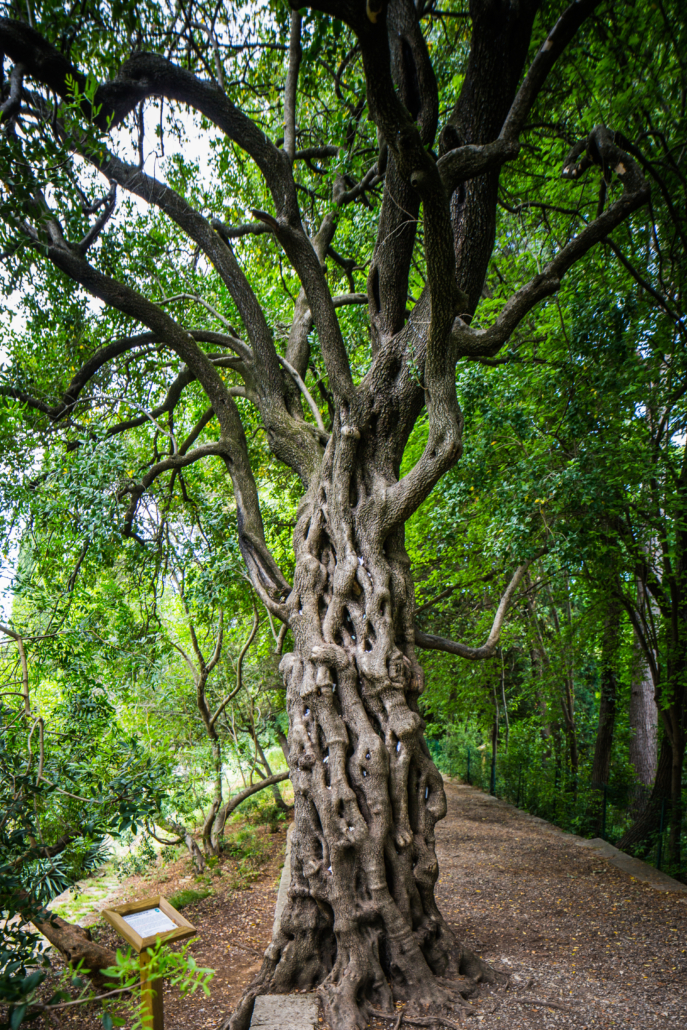
As part of the 800th anniversary celebrations, a photography exhibition will be held from July 10 to October 10. Curated by renowned photographer CédricMATET, it will be held at the Jardin des Plantes. In 2020, this photographer also curated the exhibition “Behind the Masks,” whichfeatures200 portraits of medical personnel.

Practical Information


“People in Their Gardens”

The title of the exhibition is intrinsically linked to itscontent. In fact, for this occasion, the artist chose to work with anatomical specimens from the Faculty’s anatomy museum. To better understand his project, we interviewed the photographer.


What is your background?

I’m originally fromSète. I attended a design school in Montpellier that is now called ESMA. After that, I enrolled at the Gobelins School of Visual Arts in Paris. Later, I went back to school to earn a master’s degree in Urban Planning and Sustainable Development because I’m interested in cities. In the meantime, I’ve been working in art direction and design at various communications agencies.

What interests me is connecting art to the city, to maps, to cartography, and to people. In my view, an artist must be rooted in their context: urban, political, and human.


Can you tell us about the "Behind the Masks" project?

It was GéraldCHANQUES, a professor at the faculty and a doctor atSaint EloiHospital, who contacted me and proposed this project. I wanted to convey a vision ofwhat healthcare providers and their commitments can be. 


How would you describe yourself?

If I had to describe myself and my work, I would talk abouttransdisciplinarity. Indeed, I am a photographer, but I am also a visual artist; I enjoy working with various materials and collaborating with people from different fields.


Can you tell us about your new exhibition, “Man in His Garden”?

It’s been a long time since I first thought of focusing on the Jardin des Plantes, but I’ve always had a real passion for the anatomy museum I visited when I was a student. Being able to discuss botany through the garden, but also the human body and research on it—I think that’s fabulous. The project was developed by the two of us, once again with ProfessorCHANQUES.

This project is interesting becauseit pushes me out of my comfort zone;I usuallytake portraits, but that’s not the case here.
Moreover, since all the rooms are designated as heritage sites, I have a special relationship with the curator. She is the third subject of this project; I can’t work without her. Usually, I direct my model,but here I can’t because of the room’s fragility; every movement must be guided by the curator.
It’sinteresting becausethe room and the garden exist independently of me. 

There are three of us working on this project: Jane, who does digital art and is a videographer; Luc, who does motion design, among other things; and me, who works with visuals and handles the artistic direction for the whole project. None of us knows what the final result will be.


How did you choose the anatomical parts?

I first sought advice from ProfessorCHANQUES and the curators to find out which pieces are emblematic of the conservatory. I didn’t choose the pieces based on their aesthetic appeal, since the goal of this exhibition is to tell a story and convey meaning.
The only exception to this is a bust we found, whose identity, history, or era is unknown to anyone. I found it fragile and touching, so I decided to include it. It’s the only piece I chose based on a gut feeling.

Unfortunately, there were some pieceswe couldn’t include because they were too fragile. I was also drawn to other pieces, but they didn’t depict the human body and therefore strayed from the subject. I’ll address those later in another, more personal project.

Some pieces are also too heavy to move. However, this is part of the exhibition’s story.
For certain pieces that we couldn’t bring out to the Jardin des Plantes, we brought the Jardin to them by bringing branches and foliage.


In 2018, Dr. Valentin FAVIER submitted a proposal to the MUSE call for projects, which aims to support educational reform in training programs. His project, titled “Learning Anatomy and Surgery Through Simulation and 3D Printing,” was selected as a winner.

MUSE “Take-Off”—what is it?

The MUSE project “ Montpellier University of Excellence brings together 16 institutions toward a shared goal: to establish in Montpellier a research-intensive, thematically focused university, internationally recognized for its impact in fields related to agriculture, the environment, and health, capable of becoming, for all members of the consortium, a close academic partner with which they will be strongly connected and of which they can be proud.

Through these “Take Off” calls for proposals, it supports the educational transformation strategy of the institutions and components of the MUSE consortium. Over the past three years, I-SITE MUSE has raised €6 million to support educational innovations through this program. The “Learning Anatomy and Surgery through Simulation and 3D Printing” project is one of the projects selected for Take-Off #1. Learn more about it in this article!


Enhancing Learning Through Simulation: Dr. Favier’s Challenge

Healthcare simulation is a key focus of medical education in the 21st century. To improve the safety of clinical practice and education, the French National Authority for Health (HAS) released a report in 2012 outlining the prospects for the development of healthcare simulation in France.

So what exactly are surgical simulators?

Surgical simulators are educational tools that are an integral part of this concept. They enable the training of young surgeons, helping them to familiarize themselves with surgical equipment, anatomy, and surgical techniques, but they are also useful throughout continuing medical education for refresher training. Another major benefit lies in the ability to develop new surgical techniques, allowing more experienced surgeons to perform innovative approaches or test new instruments.

The project's objectives

The project is intended for surgical residents, who will have the opportunity to practice on these simulators. The work currently underway is now focused on several objectives:

  • Improving the segmentation of bone structures and pathological processes from CT images to generate 3D objects.

  • Improving the biomechanical characterization of human skull base bone using innovative mechanical tests designed specifically for this purpose. A better understanding of biomechanics will enhance the realism of the materials used in simulation.

  • Conduct large-scale simulator testing with the target audience (ENT surgery residents) using the simulation facility at the School of Medicine, in collaboration with the Nancy-Lorraine School of Surgery.

A project made possible by MUSE

As the winner of the project, Dr. FAVIER received a €10,000 grant from MUSE. This grant was used to advance his project on surgical simulators. Specifically, it was used to:

  • Compensation for a Master’s 2 intern in computer science for research and algorithm development to implement the simulation.
  • Perform mechanical testing of the simulation platform.
  • The purchase of materials needed to conduct the simulation and produce 3D prints.