April 2022 will see elections held for the three councils of our UFR: the Management Council (or UFR Council), the Academic Council, and the Scientific Council. This article provides the schedule for these elections and details on how to run for office and vote.


Election Schedule

  • April 12, 2021

    Elections of Staff Representatives to the Management Council, Scientific Council, and Academic Council

    • Voting takes place at the ballot box
    • For Montpellier: at the ADV Campus in the Excellence in Practice Room from 9 a.m. to 5 p.m.
    • For Nîmes: in Building D, Room D101, from 9 a.m. to 5 p.m.


Information Regarding the Election for the Management Board

Download all documents related to this election below:

Middle School A

Middle School B
P Middle School
BIATS Middle School


The voter rolls are available for review at the reception desks on the ADV campus and the Nîmes campus, as well as on the university’s intranet.


Information Regarding the Election for the Pedagogical Council

Download the announcement of the results below


Information Regarding the Election for the Scientific Council

Download all documents related to this election below:

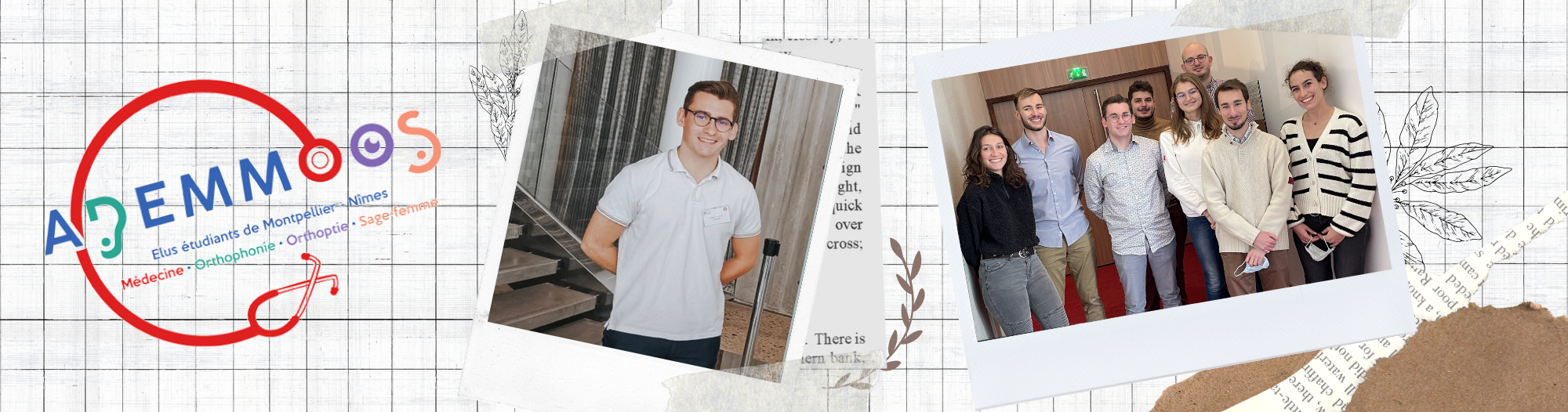
Every year, students elect a representative to speak for them on the dean’s office team. This year, Théo Lacoste, a fourth-year medical student at the ADV campus, was chosen to represent you. Learn a little more about him and Ademmoos’s initiatives in this interview! Profile.

Hi, Théo. First of all, who are you? Can you introduce yourself?

My name is Théo Lacoste; I’m a fourth-year medical student on the ADV campus. I’m also a student representative on the Academic Council and president of Ademmoos (a student council representing all programs). I’m planning to become a doctor, of course, but I don’t necessarily have a specific specialty in mind—other than perhaps something interdisciplinary like emergency medicine. But I’m keeping my options open; I think it’s important to complete rotations in various fields to secure your future!

You're the president of Ademmoos: can you tell us about the role of this organization?

It’s important to note that our Faculty has several campuses and several academic programs. Student representation on the various councils is therefore provided by elected student representatives. This is a very substantial undertaking. So in 2016, we decided to create this association to relieve elected student representatives of the administrative workload (particularly everything related to communication, infographics, etc.) but also to develop projects with other student associations. The goal is truly to bring together, unite, and coordinate the associations—and, through them, the students.

The association’s members consist of students elected to the various representative councils, but we also have non-elected members. They often contribute very interesting insights from a different perspective during our monthly meetings.

Can you give us some examples of projects coordinated by Ademmoos and other organizations?

Yes, for example, the MAP (Montpellier Artistic Project), which is an arts-focused nonprofit. Together with them, we organized an art therapy workshop—led by a professional in the field—for students, with the goal of helping them cope with the stress of school. But the projects we lead or coordinate can also take place outside of our organizations. I’m thinking in particular of the“Dry January”challenge (see Instagram post below) that we recently ran in collaboration with the ICM, or“Smoke-Free Month.”


View this post on Instagram


A post shared by ADEMMOOS (@ademmoos)

In addition to being the president of Ademmoos, you are now the student vice-dean. Can you tell us more about your role in this position?

I have three main responsibilities: First, an academic role, which is very institutional in nature. I work closely with the dean’s office—particularly Dean Isabelle Laffont—as well as the teaching and administrative staff to represent the students’ perspectives. This involves regularly attending meetings, but also staying attuned to what’s happening among students and within the faculty as a whole. I act as a sort of “shuttle” to pass information up and down the chain. I relay this information to the student representatives, who then share it with the various programs, campuses, and graduating classes.

The second task focuses on the Ademmoos association. I need to establish a “guiding principle” for our term’s policy. I’ll come back to this, but the idea is to divide up the key issues among the association’s 40 students: some will handle reforms, others will focus on well-being or coordination with other associations.

My third responsibility is really to maintain direct contact with the students. Class representatives may reach out to me for this purpose, but that’s not enough—information can get lost along the way. So, I make it a point of honor to organize as many in-person meetings as possible with the different classes to discuss issues, “gauge the mood,” and gather feedback directly from students about their needs and feelings. This information is then useful to me in carrying out my primary academic role, so that I can represent the students’ views as accurately as possible.

What are the priorities of your term in office?

There are several priority areas. First, there is a somewhat more academic and administrative aspect, which mainly involves continuing the work of my predecessors: Salomé Duteurtre and Florian Mary. They both worked on what I callthe “Pedagogical Alliance.” That is, the collaborative shaping of our student experience, together with all stakeholders: faculty, students, and the Faculty’s administrative staff.

It seems simple from the outside, but it’s actually quite complex, because we have to reconcile everyone’s opinions; ultimately, we have to succeed in reaching agreements based on our disagreements! Nevertheless, this is achieved through everyone’s goodwill and mutual understanding. We must work together and view the issues to be resolved through each person’s perspective, so that the solutions we adopt benefit everyone. This commitment to living together is truly essential, and we regularly emphasize this to the entire team—most recently to the newly elected student representatives on the Administrative Council and the Academic Council.

Then there are all the discussions surrounding student well-being. This is a relatively new issue—one that wasn’t talked about much a few years ago and that was brought to light by the health crisis. Today more than ever, this topic has become our top priority.

But we can’t take action without understanding the full scope of the problem! So we set our first goal to gather students’ opinions and experiences through surveys. We were able to collect more than 1,000 responses to our first questionnaire on mental health, which was distributed over the winter— and I’d like to take this opportunity to thank all the respondents! The results of this survey are currently being analyzed. In addition, a few weeks ago we began distributing a new survey regarding gender-based and sexual violence that students may experience at the university, at parties, or at their workplace or internship, in order to define the scope of the problem and thus identify corrective actions to limit such incidents or even impose sanctions where appropriate.

In practice, do you implement any initiatives to promote student well-being?

Yes, from a practical standpoint, this year we created a wellness center staffed by two project coordinators who are medical students (Ulysse Godin and Maribelle Dossou-Yovo). Their mission is to organize awareness-raising events. For example, we held a conference on addiction with Professor Hélène Donnadieu-Rigole, as well as Tobacco-Free Month and Dry January… In March, we’ll host a conference on psychosocial risks and “workaholism.” These events are quite popular with students.

There are also other practical projects outside the “well-being” theme, such as the Intern Forum, which is led by former Vice Dean Florian Mary and aims to connect 5th- and 6th-year students with interns so they can share their experiences.

What motivated you to take on this role as an elected official and Vice Dean?

My motivation grew out of my previous commitments, both with Ademmoos and with the ANEMF (National Association of Medical Students of France), because last year I was very involved in issues surrounding the R2C (reform of the second cycle of medical studies) at the national level. This made me want to get even more involved at the local level, addressing the issues we face on a daily basis.

Of course, my discussions with my predecessors also had a strong influence on me. Everything fell into place very naturally after that, with my desire to help the incoming classes guiding my decisions. I wanted to look at my studies from a different perspective.

That said, yes, it’s very time-consuming. It can sometimes be a little hard to juggle everything! So it’s important to surround yourself with the right people and know how to delegate. In that regard, I’d like to give special thanks to Florent Benoist, who is Ademmoos’s Executive Vice President and a representative on the Pedagogical Council; he really helps me a lot and enables me to stay organized.

How is someone elected as Vice Dean?

The Vice Dean is nominated by the student representatives on the Management Council. He or she is often part of the list of elected students. The Council then votes in favor of or against the nominated student. This nomination is discussed internally within Ademmoos beforehand. Once elected, the Vice Dean serves a two-year term, but we often resign after one year so that we can focus fully on our studies.

Thank you so much for this conversation: do you have any closing remarks?

Yes, regarding one of the priorities of my term: well-being. I’d like to get this message across: it’s okay not to feel well. Health sciences students come from a highly selective system where you’re expected to always be the best. Culturally, it’s therefore difficult for us to admit when we’re not doing well—we tend to hide our weaknesses. But that doesn’t mean it’s abnormal to feel bad! There are support resources available on the Faculty’s website. We need to break the silence surrounding this taboo and take advantage of the resources developed jointly by students and the faculty to feel better. Alone, we go faster, but together, we go further!

For the second year the Agnes McLaren Association is organizing a medical award worth €4,000! Applications are open to students at the Montpellier-Nîmes School of Medicine who will defend their clinical thesis between September 2021 and March 2023. See below for registration details and the eligibility criteria for your thesis.


This award recognizes a doctoral dissertation in medicine that focuses on the health of women and/or children in precarious or vulnerable situations and provides funding for research based on that dissertation.

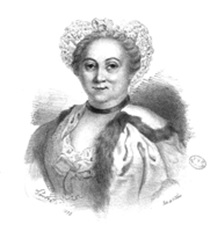
TheAgnes McLaren Association, founded in 2018, works to preserve the memory ofAgnes McLaren, a Scottish woman and the first female doctor to graduate from the Montpellier School of Medicine in 1878. In honor of this physician, who dedicated her life to caring for the most disadvantaged women and those excluded from society, the association wishes to award a medical prize for the first time.

Thus, to mark the Faculty’s 8th centennial in 2020, the association established the Agnès McLaren Prize in Medicine. Every two years, this prize is awarded for a thesis and a post-thesis project, focusing on the health of women in precarious or vulnerable situations or the health of children exposed to precariousness and/or vulnerable situations. It also funds a research project based on this thesis. The prize, in the amount of €4,000, will be awarded in June 2023 following a preliminary selection by a committee and review by a jury composed of healthcare professionals.

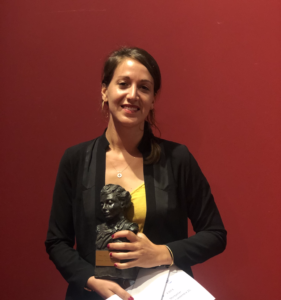
In the first edition, Justine Allouche won an award for her knowledge and expertise in cervical cancer screening.

In 2021, the award was won by Justine Allouche for her work focused on assessing knowledge and practices regarding cervical cancer screening among women engaged in prostitution in the Gard and Hérault departments. Justine was featured in an article in Midi Libre on that occasion!


Eligibility Criteria

To be eligible for this medical award, candidates must meet several eligibility criteria:


  • Open to our students

    Criterion 1: Be a student at the Montpellier-Nîmes School of Medicine

  • Year 2021-22-23

    Criterion 2: Defend one’s thesis between September 2021 and March 2023

  • Thesis Topic

    Criterion 3: Support a dissertation whose topic addresses the health of the most disadvantaged or even marginalized women, or the health of children exposed to precarious circumstances and/or situations of vulnerability

  • Post-doctoral project

    Criterion 4: Thesis Leading to an Operational Project

What are the steps to enter the contest?

The second edition of the McLaren Medical Award will take place in five phases, as follows:

  • before March 15, 2023

  • Pre-selection phase

    Pre-selection phase for the dissertations received by the pre-selection committee. 5 dissertations were pre-selected.

    April 15, 2023

  • May 15, 2023

    Selection Notice

    Notification of selection sent to the 5 shortlisted candidates.

  • Final Selection Phase

    Review of the five dissertations preselected by the jury. Candidates must submit their dissertations and post-dissertation work by January 24, 2021.

    June 2023

  • Sept. 2023

    Award Ceremony

    Presentation of the Agnes McLaren Award at the official ceremony.

Award Rules Pre-Application Package Application Package

We hope many of you will enter this new contest! So get writing, and good luck on your theses!


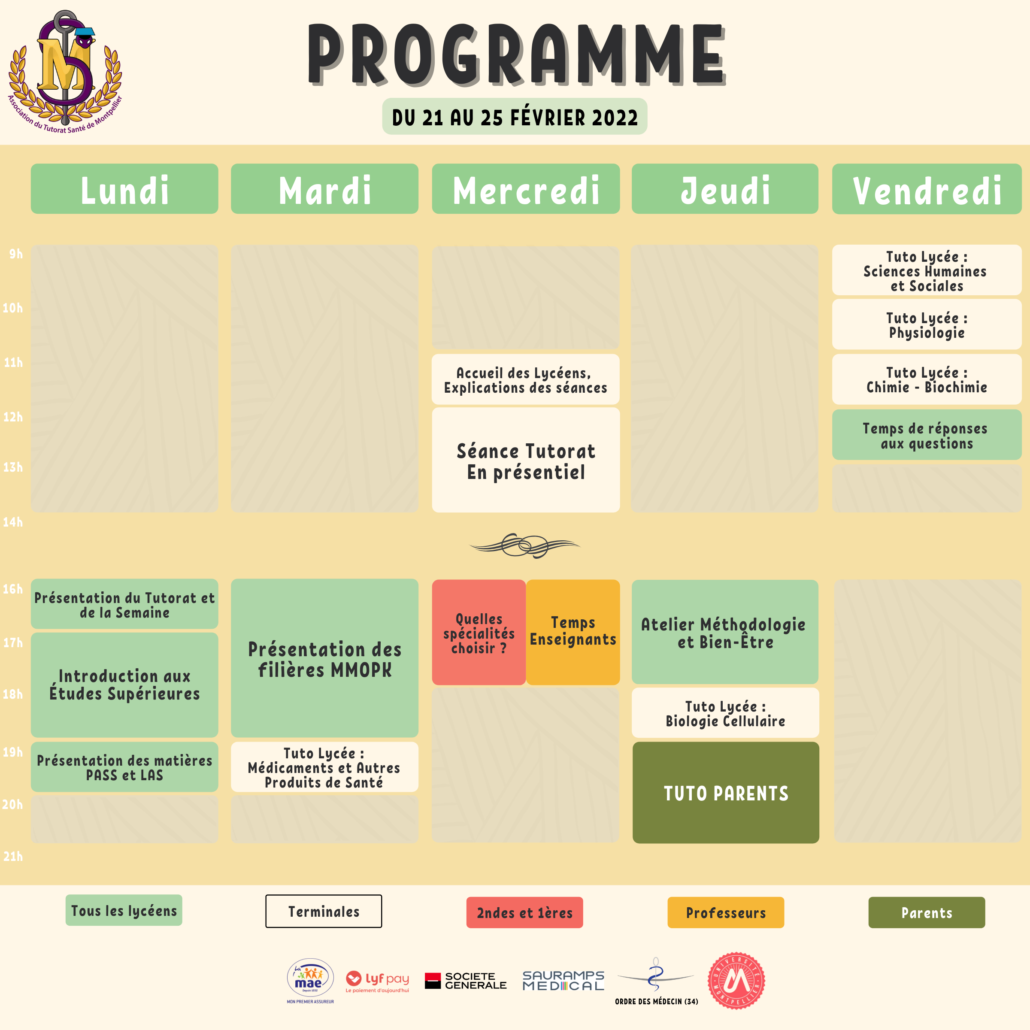
The Montpellier Health Tutoring Association is once again hosting its High School Students’ Week, from February 21 to 25, 2022! This week is dedicated to all high school students, their parents, and teachers, with the aim of addressing any questions they may have about the REES (Reform of Admission to Health Studies), better known as the PASS-LAS program.


An event hosted on Zoom, so that as many people as possible can participate

This week, intended for all high school students (10th, 11th, and 12th graders) as well as their parents and teachers, will consist of various sessions dedicated to explaining the REES program, thePASS/LAS tracks, and the upper-level years. The sessions will take place on Zoom from February 21 to 25, 2022, except for those on the morning of Wednesday, February 23, which will be held at the Arnaud de Villeneuve Campus of the Faculty of Medicine (641 Avenue du Doyen Gaston Giraud, 34090 Montpellier).

Participation in this event is completely free, and requires prior registration using the form below:

A program packed with lectures, tutorials, and Q&A sessions

See below for the full schedule for the week:

  • Monday, February 21 – 4:00 p.m.: The first session will be dedicated to presenting the Tutoring Program and the ATSM association. The role of the Tutoring Program within the reform and the free services provided by the ATSM will be explained in detail to reassure students about the academic and psychological support they will receive throughout the year. By the end of the week, high school students will be familiar with the new system established under the Reform of Admission to Health Studies and how the PASS and LAS programs operate. The various subjects covered during the academic year will also be explained in detail.
  • Wednesday, February 23 – 2:00 p.m.: A session has been scheduled for 10th and 11th graders to help them choose their specializations for their final year of high school.
  • Wednesday, February 23 – 2:00 p.m. and Thursday, February 24 – 7:00 p.m.: Two sessions will be held specifically for parents and teachers to involve them in the Health Studies Introductory Reform and to explain how it works, as well as the tutoring program.
  •  Thursday, Feb. 24 – 4:00 p.m.: The tutors will lead a study skills workshop to help students get a good grasp of the year ahead and plan accordingly, while also including a short wellness break.
  •  New this year:The ATSM is organizing an in-person morning session at the university for high school seniors who wish to observe a tutoring session for PASS students. They will first be welcomed at the ADV campus and then taken to attend a session in a lecture hall.
  • Students in their senior year will have the opportunity to attend five Tuto Lycée sessions, which will cover some of the course material they will encounter during the first semester of the PASS/LAS program.
  • The week will finally conclude with a discussion session, during which the tutors will be available to everyone to review the week and answer any remaining questions.

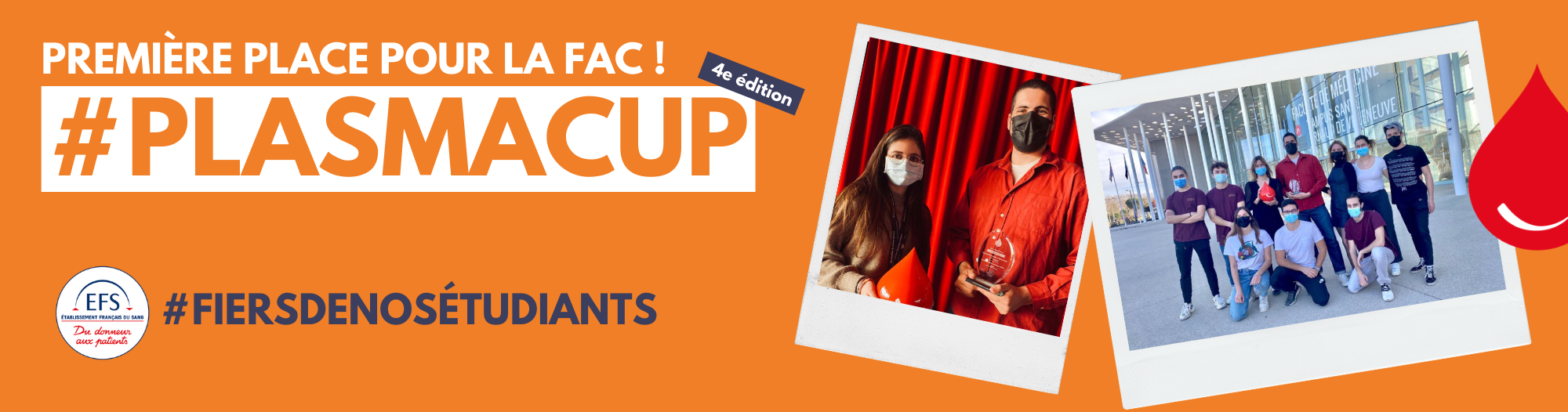
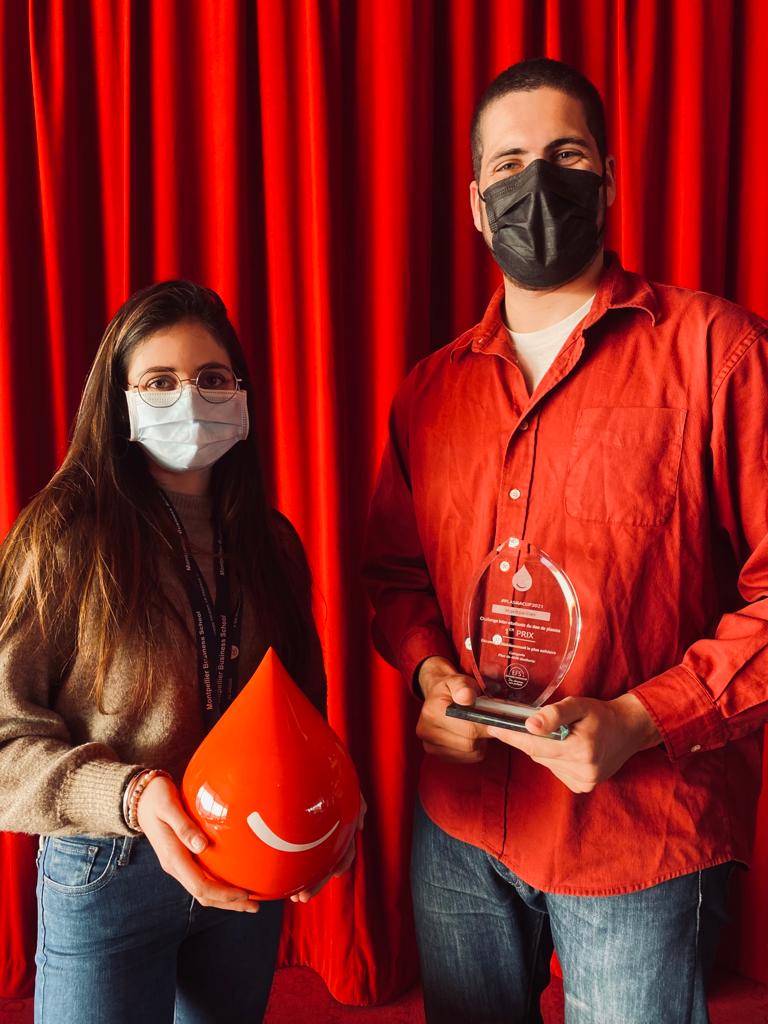
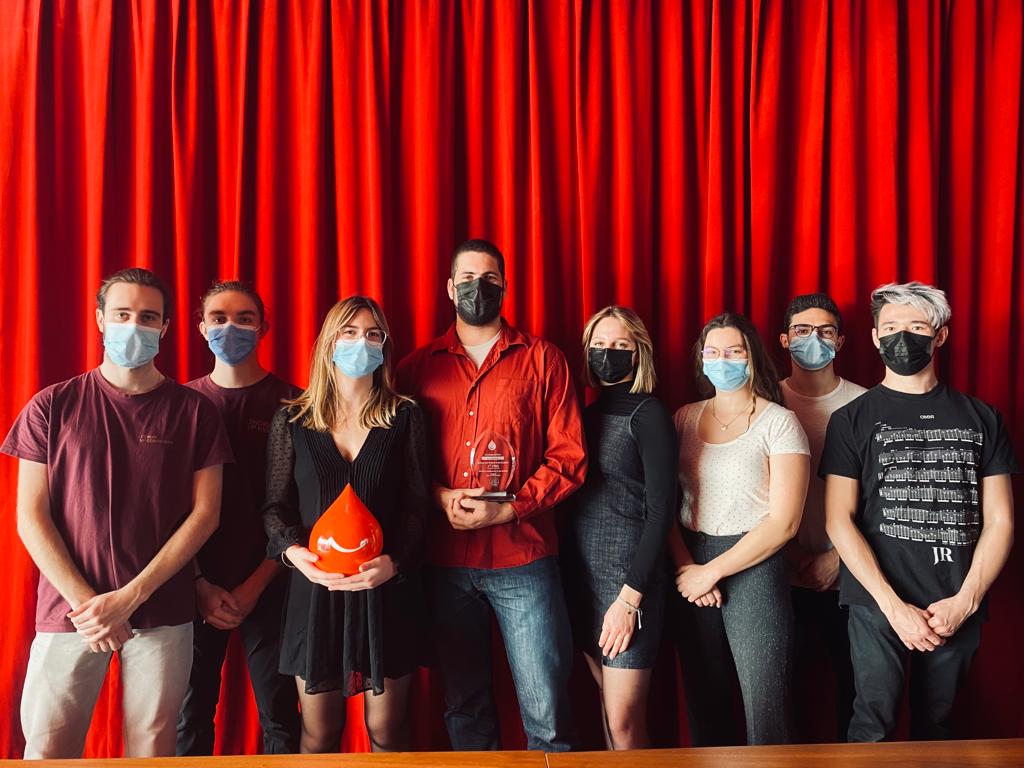
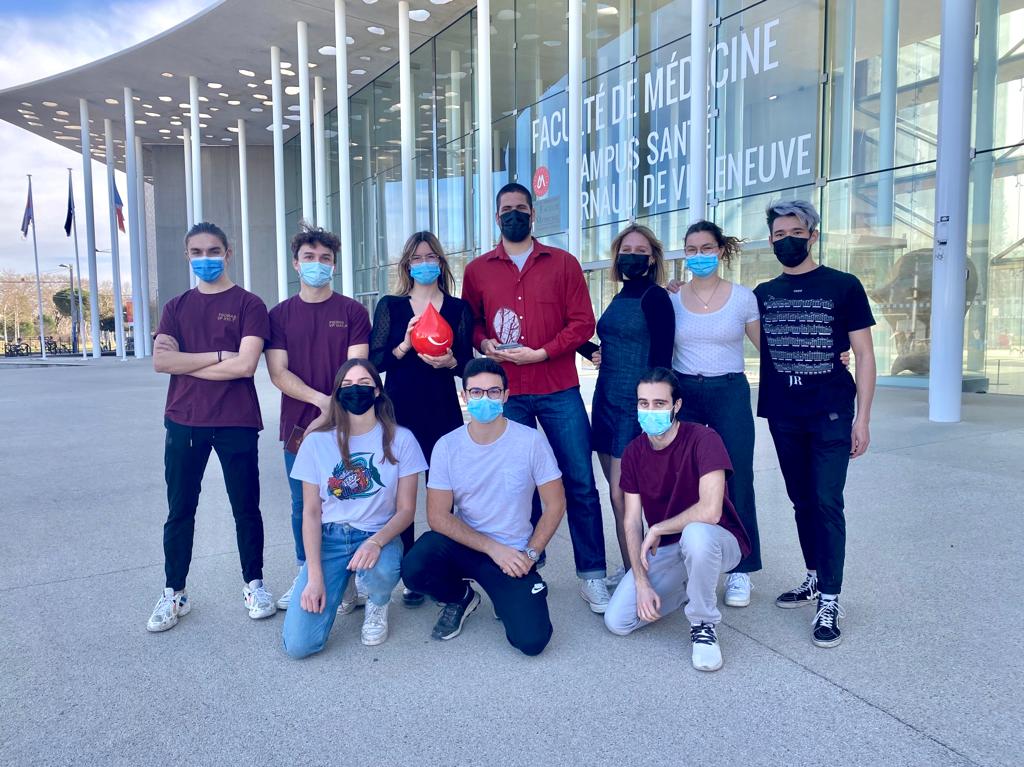
After finishing in second place in 2017, our students are back in full force this year and took first place in the PlasmaCup, an intercollegiate challenge organized by the EFS to raise awareness about the importance of plasma donation. Here’s a look back at the challenge and the experience of our student coordinators for the Faculty of Medicine—Esteban, Pauline, and Carlota, members of the ACM association.


The PlasmaCup, an inter-school challenge

Every year, the PlasmaCup is organized by the EFS (Etablissement Français du Sang) in several university towns across France. What is the goal of this challenge? To raise awareness among as many students as possible about the importance of plasma donation.

In Montpellier, the Maison du Don is where it all happens. Located in the Euromédecine neighborhood and accessible by tram (Line 1), the Maison du Don welcomes donors of blood, plasma, and platelets.

As part of the PlasmaCup, a box was set up so that each student donor could indicate their home institution. Each donation earned the institution 1 point.


The School of Medicine, champion in the Grandes Écoles category!

With a total of 17 donations, the Faculty of Medicine has taken the top spot in the “Grandes Écoles” category. This ranking is a source of great pride for Esteban, Pauline, and Carlota, who serve as President and Vice Presidents, respectively, of the ACM’s ISS (Health and Social Innovation)division. “The EFS Solidarity Trophy will join the 2017 trophy in the student union office!” says Esteban. In fact, the ACM had previously coordinated the Faculty of Medicine’s participation as well. That year, we took second place.

To reward our students, Emilie Moral, the EFS promotions coordinator, presented the trophy to Esteban on Friday, February 4, along with tickets to an escape game, tickets to the MHR vs. Stade Français rugby match, and other goodies. “The prizes will be redistributed to the donors,” Carlota emphasizes.


Plasma Donation: 1 Hour to Save Lives—A Painless and Informative Experience for Healthcare Students

Esteban and Carlota wanted to share their experience with us. ““After confirming my participation in the PlasmaCup by placing my ballot in the box, I met with the EFS doctor to verify that I was indeed eligible to donate plasma. Then, for about 45 minutes, I went through the donation process, which is essentially the same as donating blood, except for the machine that separates the blood from the plasma,” explains Carlota.

“As a healthcare student, I found the process really interesting. Compared to a typical blood donation, you interact with the healthcare professionals overseeing the donation for much longer, and it’s a real opportunity to talk with them. The equipment used is also impressive. It really helps us connect what we’re learning in class to real-world practice,” says Esteban.

When asked if donating was tiring, Carlota is quick to reassure: “Not at all! Unlike donating blood, the red blood cells are reinfused into us. There’s no anemia, so there’s no fatigue.”


PlasmaCup 2022: The Faculty will be out in full force!

With all this in mind, there’s no reason to be afraid of donating plasma! Emilie Moral tells us that the PlasmaCup will return in the fall of 2022.

“The ACM will be back!” says Esteban. But that’s not all: The Plasma Cup is open to all members of the university community. So we’re counting on our students, as well as faculty and staff, to contribute to the 2022 challenge! Stay tuned for more updates 🙂


Focus: Where and how can you donate blood, plasma, or platelets in Montpellier?

In addition to the blood drives organized on our campuses by student associations (in Montpellier by the ACM in October, February, and April), you can donate blood, plasma, or platelets at the Maison du Don in Montpellier: 

  • Address : Parc Euromédecine, 392 Av. du Professeur Jean Louis Viala (Parc Euromédecine)
  • Directions : Tram 1 (Euromédecine)
  • Hours :
    • Monday / Thursday: 11:00 a.m. – 6:30 p.m.
    • Tuesday / Wednesday / Friday: 8:30 a.m.–4:30 p.m.
    • First and third Saturday of the month: 8:30 a.m. – 4:30 p.m.


On January 30, 2022, the France 3 program *Ô la belle vie* featured the Montpellier Faculty of Medicine in a special episode. Available for replay, you can learn about the history of this renowned center of learning, which dates back 800 years, and its latest news.

Join Professor Gérald Chanques and Sophie Jovillard as they take you on a tour to discover the treasures of our Faculty!

As part of the show *Ô la Belle Vie*, join Professor Gérald Chanques as he takes you on a journey to discover the inner workings of the world’s oldest medical school still in operation. Rabelais, Rondelet, and the school’s iconic locations will hold no more secrets for you. Blending art and technological innovation, the show will explore topics such as robotics and the work of ceramic artist Isabelle Doblas Coutaud, who depicts anatomy through her art. You’ll also have the chance to take a brief detour to the Jardin des Plantes with Cédric Matet, creator of the exhibition“L’Humain dans son Jardin.” 


Ô la Belle Vie – Medicine in Montpellier: A True Art, produced by Grand Angle Production and France Télévisions.

Hosted by Sophie Jovillard. Aired on Sunday, January 30, 2022, and available for replay here


On Thursday, January 27, 2022, Dr. Catherine Alix-Panabières received the prestigious Savchuk Prize at the 15th Oncology Biennial for her work on “liquid biopsies.” A look back at 23 years of research in the field of oncology.

A career focused on the development of liquid biopsy

Dr. Alix-Panabières, director of the Rare Human Circulating Cells (CCRH) laboratory at Montpellier University Hospital, has been dedicated to her research for 23 years. Coined by her in 2010 in collaboration with her German colleague, Professor Klaus Pantel of Hamburg, the term “liquid biopsy”—which complements tissue biopsy—refers to a blood test that is performed repeatedly throughout a patient’s treatment.


A noninvasive procedure

A liquid biopsy provides access to circulating cells or particles released by the primary tumor or metastases. The advantage? It offers the ability to repeatedly study tumors located in inaccessible areas, all while being noninvasive. After the blood sample is collected, it provides information on the tumor’s progression and, consequently, the effectiveness of treatment.

His research focuses on three fundamental aspects:

  1. Understanding the biology of the tumor and its prognosis.
  2. Technology: Dr. Alix-Panabières is working on a patent related to this new technique for detecting circulating tumor cells.
  3. A translational clinical study. Liquid biopsy makes it possible to tailor treatment to each patient’s stage, particularly when initiating treatment.

We extend our heartfelt congratulations to Dr. Catherine Alix-Pananières on winning this award!


The Dean of the School of Medicine and all the administrative and teaching staff at our institution extend their best wishes to you for 2022. To mark the occasion, watch the video message from our Dean, Isabelle Laffont.


"I would like to take this opportunity to commend the exceptional dedication of our teams and the adaptability you have all demonstrated in dealing with these challenging circumstances."

“2021 was an eventful year, a positive year, and a successful year—and yet it unfolded against the backdrop of a challenging pandemic. I would like to take this opportunity to commend the exceptional dedication of our teams and the adaptability you have all demonstrated in dealing with these difficult circumstances.”


“We are kicking off 2022, a year I hope will be marked by calm, cooperation, and responsibility.”

“I wish for us all—and for each of you—a peaceful 2022, one that sees a return to a sense of calm on the COVID front, with the end of this pandemic and its health and societal consequences. I wish you a peaceful 2022, one that also sees the stabilization of the many reforms to medical education that have taken place in recent years. It is time to take a step back and focus on all the programs offered by this faculty. ”

“I wish for us all—and for each of you—a productive 2022. Productive, first and foremost, in the area of medical education reform, with the implementation of thepostgraduate reform, which will require our time and energy over the next two years. We will also be developing and finalizing the Faculty of Medicine’s health-related master’s programs. And finally, still in the realm of education, the rollout and organization of health simulation, which will play an increasingly important role in our faculty organizations.”

“Finally, I hope that 2022 will be a year of responsibility. I’ve spoken about social responsibility in the context of territoriality, but I’m also referring to social responsibility: the university must continue to take care of itself and its community. It must help further strengthen staff members’ sense of belonging to the university’s initiatives.”


"I also hope you'll continue to maintain the enthusiasm and creativity that define you."


Here you’ll find the presentation and video recording of the information session on the second semester of the PASS program, admissions to MMOP programs, and continuing your studies.


Meeting on January 17, 2022

Below you will find the presentation and video from the meeting on January 17, 2022


Are you a PASS or LAS student? Check out Pep’s Week, organized by your awesome student organization, Tutorat Santé Montpellier! Dates, program, and registration—find all the information you need in this article!


A Week of Wellness for PASS and LAS Students

To wrap up the exams for the first semester and help students better prepare for the second, the Montpellier Health Tutoring Association (ATSM) is organizing the 2022 edition of Pep’s Week for PASS and LAS students!

Winner of the Montpellier Student Initiatives Award in 2018–2020 and highly appreciated by students, “Semaine Pep’s” is a project that is very close to our hearts, and we hope to bring it back this year under the name “Pep’s Week.”

This week is dedicated to the well-being and relaxation of PASS and LAS students. To this end, the ATSM is organizing numerous activities in partnership with students from various programs to best support first-year students by providing them with psychological and academic support. Promoting this sense of well-being is a key objective that has become essential since the start of the health crisis.

The 2022 edition, January 24–28

Pep’s Week will take place from January 24 to 28, 2022. During the event, the ATSM will offer a variety of activities every day at lunchtime at the Montpellier School of Medicine on the ADV Campus (641 Avenue du Doyen Gaston Giraud), featuring qualified speakers and opportunities for students and tutors to interact and share ideas.

For this new edition, the theme is “Japan”; participants will receive a Welcome Pack filled with lots of special goodies related to the ATSM’s partnerships.


Here is the detailed schedule for the week:


Registration

Pep’s Week is free, but you must register in advance. It’s easy! Just click the button below to register: