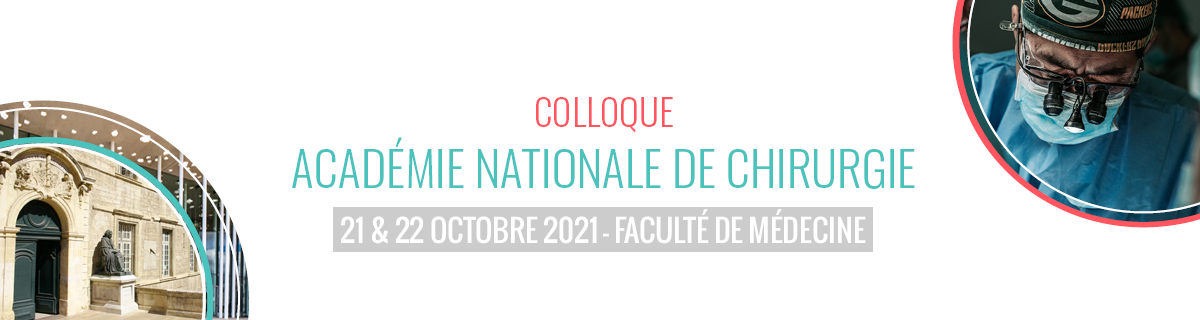
As part of the 800th anniversary celebrations of the Faculty of Medicine, in partnership withthe National Academy of Surgery, we will host the Academy of Surgery’s annual conference at our Arnaud de Villeneuve campus.


A symposium organized to mark the 800th anniversary of the School of Medicine.

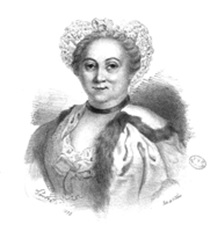
Members of the National Academy of Surgery will gather to discuss the role of robotics and AI in 21st-century surgery and to explore the future of surgical training. A tribute will be paid to François de Lapeyronie, one of the founding fathers of modern surgery and founder of the Royal Academy of Surgery.

Open to all healthcare professionals (free registration required), this event will feature members of the National Academy of Surgery.

Conference Program, October 21, 2021, at the Historic Building

  • 4:00 p.m.

    Home

    The meeting will be held in the anatomy lecture hall of the historic building of the School of Medicine.

  • Introduction

    Henry Coudane, Michel Chammas

    Dean Michel Mondain, Montpellier-Nîmes School of Medicine

    4:20 p.m.

  • 4:30 p.m.

    History

    • History of the Montpellier School of Medicine – Thierry Lavabre-Bertrand (Montpellier)
    • Gui de Chauliac – Henri Judet (Paris)
    • François Gigot de Lapeyronie – Hubert Johanet (Paris)
    • The Three Faculties: Paris, Montpellier, Strasbourg –Jean Marie Le Minor (Strasbourg)
    • The History of Anatomy Lecture Halls – Philippe Marre (Paris)
    • A History of Surgical Education in Montpellier – Michel Chammas, Thierry Lavabre Bertrand, Etienne Cuénant (Montpellier)
    • Georges Marchal: A 20th-Century Surgeon from Montpellier – Joël Marchal (Montpellier)


Conference program, October 22, 2021, at the Arnaud de Villeneuve Campus

  • 8:00 a.m.

    Home

    The conference will take place at the Arnaud de Villeneuve Campus, in the Rondelet Auditorium.

  • Surgical Robotics: Current Status and Future Prospects

    Moderators: Philippe Rouanet (ICM), Leonor Benaim (IGR), Rodolphe Thuret (Montpellier)

    • Conclusions of the report on “Robotization in Surgery: Current Status” – Xavier Martin, Jean-Claude Couffinhal
    • Surgical Robotics: What Does the Future Hold?
      • The researcher's perspective: Philippe Poignet (LIRMM)
      • The CEO's Perspective: Bertin Nahum, Quantum Surgical (Montpellier)
      • The Surgeon's Perspective: Jacques Hubert (Nancy)
    • Discussion

    8:30 a.m.

  • 10:00 a.m. – 10:30 a.m.

    Pause

    Break, visit the exhibitors

  • Surgical Education: Simulation, Benefits, and Methods. What Underpins Its Application in Surgery.

    Moderators: Jean-Michel Fabre (Montpellier), Renaud Garrel (Montpellier)

    • How can simulation add value? What are the benefits of simulation? In which fields should it be used? – Daniel Chevallier (Nice)
    • Tools for simulation-based learning: benefits, limitations, and costs
      • Medium- and high-fidelity simulators.
        • In laparoscopy and endoscopy. Astrid Herrero (Montpellier)
        • In arthroscopy. François Sirveaux (Nancy)
      • SimLife: Jean Pierre Faure (Poitiers)
      • Simulation and Training in Microsurgery. Sybille Facca (Strasbourg), Michel Chammas (Montpellier)
      • Funding, academic solutions. Michel Chammas
    • School of Surgery. A simulation program as part of the training of young surgeons. – Laura Beyer Berjot (Marseille), Regis Souche (Montpellier)

    10:30 a.m.

  • 12:30 PM – 2:00 PM

    Lunch break

    Tour of the Anatomy and Simulation-Based Learning booths

  • Surgical Education: Assessments and Other Approaches

    Moderators: Michel Prudhomme (Nîmes), Francis Navarro (Montpellier)

    • Is simulation the only way to train a surgeon? – Patrick Baque (Nice)
    • Teaching Anatomy to Support Simulation-Based Learning – Fabrice Duparc (Rouen)
    • Surgical simulation program.
      • How Should a Surgeon's Training Be Evaluated? – Louis Sibert (Rouen)
      • Montpellier’s Experience in Implementing an Educational Program: Results One Year Later. Astrid Herrero (Montpellier)
    • Simulation-based learning: technical skills, interpersonal skills, stress management, burnout prevention – Laurent Obert (Besançon) 15’

    2:00 p.m.

  • 4:00 p.m.

    End of the day

    Henry Coudane, Hubert Johanet, Michel Chammas

As it does every year, the Faculty is hosting the fascinating and informative lectures organized by the Montpellier Society for the History of Medicine. Whether you’re a culture buff or a history enthusiast, these free, themed lectures are just for you! See the program below.


2021–22 Season Schedule

  • Friday, October 15, 2021

    6:00 p.m. - Rabelais Lecture Hall (ADV Campus)

    François Bonnel
    The Golden Age of Anatomy in Montpellier with Professor Paul Gilis (1857–1929).
  • 6:00 p.m. - Rabelais Lecture Hall (ADV Campus)

    Michel Billiard
    The Emergence and Development of a New Medical Specialty: Sleep Medicine

    Friday, November 5, 2021

  • Friday, December 10, 2021

    6:00 p.m. - Rondelet Lecture Hall (ADV Campus)

    Thierry Lavabre-Bertrand, Gérald Chanques
    A Look Back at the 800th Anniversary of the Founding of the University of Medicine in Montpellier
  • 6:00 p.m. - Rondelet Lecture Hall (ADV Campus)

    Philippe Courtet, Hélène Lorblanchet
    Atger in the 21st Century: The Benefits of Observational Skills in the Arts for Medical Students.
    Due to the current health situation, the conference has been postponed to a later date.

    CANCELLED: Friday, January 14, 2022

  • CANCELLATION - Friday, February 11, 2022

    6:00 p.m. - Rondelet Lecture Hall (ADV Campus)

    Nicole Buresi
    Théophraste Renaudot (1586–1653), physician: from Loudun to Paris, after studying at the Faculty of Medicine in Montpellier.
  • 6:00 p.m. - Rondelet Lecture Hall (ADV Campus)

    Caroline Debladis
    Agnès McLaren (1837–1913), the first woman to earn a medical degree in Montpellier.

    Friday, March 11, 2022

  • Friday, April 8, 2022

    6:00 p.m. - Ziegelmann Lecture Hall (ADV Campus)

    Nicole Buresi
    Théophraste Renaudot (1586–1653), physician: from Loudun to Paris, after studying at the Faculty of Medicine in Montpellier.
  • 6:00 p.m. - Rabelais Hall (Montpellier)

    Champollion Bicentennial Symposium
    Organized by the Montpellier Academy of Sciences and Letters, Rabelais Room
    Friday morning is devoted to contributions from the field of medicine
    • 9:20–9:55 a.m.: The Montpellier School of Public Health and the Egyptian Expedition: Focusing on R. Desgenettes and the Plague. Thierry Lavabre-Bertrand
    • 9:55–10:35 a.m.: D.-J. Larrey (1766–1842), founder of the modern healthcare system and pioneer of the Red Cross. Dominique Larrey,
    • 10:55–11:30 a.m.: The Human Cost of the Egyptian Campaign: J.-B. Curto, J.-G. René, F. Mireur, F. Vigo-Roussillon. Christian Nique

    Friday, May 13, and Saturday, May 14, 2022

  • Friday, June 10, 2022

    6:00 p.m. - Rabelais Lecture Hall (ADV Campus)

    Daniel Le Blevec
    Raymond Chalmel and his treatise on the plague (14th century)

Students at the School of Gerontology, don’t wait to register for CIPEG. This annual conference on gerontology and geriatrics brings together healthcare professionals working in this field. 


Announcement of the upcoming CIPEG


The next CIPEG will take place on May 18 and 19, 2022. The School of Gerontology will be represented there by Professor Claude Jeandel, Myriam Taroudjit, and Marie-Laure Portalez.

Current students and alumni of the Master’s program in Gerontology, please contact Myriam TAROUDJIT to register.

As part of the 800th anniversary of the Faculty of Medicine, in partnership with the Occitanie Center for Ethical Reflection and under the patronage of the National Academy of Medicine, we will host the symposium “Man and Science” at our Arnaud de Villeneuve campus.


A symposium organized to mark the 800th anniversary of the School of Medicine.

Healthcare is evolving, and ethical and societal questions are emerging.

Topics such as the ethical challenges of predictive biotechnology, innovation in the context of a health crisis, and ethical guidelines for innovation in neuroscience will be addressed at this conference, organized in partnership with the Occitanie Regional Ethics Center.

Open to everyone (free registration required), this event will welcome members of the Academy of Sciences as well as the National Academy of Medicine, which is sponsoring the event.


Conference Program, October 7, 2021, on the ADV campus

  • 8:30 a.m.

    Home

  • Opening Remarks

    Jean-François ALLILAIRE – Philippe AUGE – Michel MONDAIN

    9:00 a.m.

  • 9:20 a.m.

    When does opposition to medical and scientific facts become unreasonable?

    Jean-François MATTEI

    Introduction by Jacques BRINGER

  • Challenging Expert Consensus in an Era of Scientific Uncertainty and the Health Crisis

    Virginie Tournay

    Host: Claude JAFFIOL

    10:00 a.m.

  • 10:40 a.m.

    Staying the Course of Scientific Integrity in the Age of COVID-19

    Alain FISCHER (video) – Didier HOUSSIN

    Introduction by Bernard CHARPENTIER

  • Science, Politics, and Society: Lessons from the COVID-19 Crisis

    Jean-François DELFRAISSY

    11:20 a.m.

  • 12:20 p.m.

    Lunch Break

  • What ethical guidelines should guide innovation in neuroscience?

    Michel CLANET

    1:30 p.m.

  • 2:15 p.m.

    New technologies that can read our minds?

    Laurence DEVILLERS (video) – Emilie OLIE

    Host: Jacques TOUCHON

  • Organoids: Facts and Myths

    Albano MELI – Jean-Marc LEMAITRE

    Host: Alain PRIVAT

    3:15 p.m.

  • 4:15 p.m.

    Algorithm-Driven Care: Impact on the Patient-Physician Relationship

    Alain LIVARTOWSKI – Bernard NORLINGER

    Host: Jacques BRINGER

  • The Ethical Issues Surrounding Predictive Biotechnology

    Pierre LE COZ – Pascal PUJOL

    Host: François-Bernard MICHEL

    5:15 p.m.

  • 6:00 p.m.

    Conclusion

To mark European Heritage Days 2021, the Faculty of Medicine’s historic building and botanical garden will open their doors to the public for guided tours. Due to the current health situation, tours are available by advance reservation only. Find all the details in this article.

Updated on September 17, 2021:

Due to a prefectural decision related to planned demonstrations in the city center, we are unfortunately forced to close the Jardin des Plantes in Montpellier to the public on the afternoon of Saturday, September 18, 2021.
As a result, the tours scheduled for Saturday afternoon have been canceled. However, the tours scheduled for the morning will take place as planned.
We sincerely apologize for the situation and thank you for your understanding.

Saturday, September 18: (Re)discover the Jardin des Plantes!

Start your weekend of culture and heritage with a visit to the Jardin des Plantes! On the agenda: explore the garden through various themes, guided by our passionate staff. Take this opportunity to rediscover the exhibition “L’Humain dans son Jardin” through guided tours led by photographer Cédric Matet! Learn more about the exhibition.


Meet at the entrance on Boulevard Henri IV (next to the French Red Cross)
The garden opens at 10 a.m.

  • 10:00 a.m. “The Jardin des Plantes: Where Medicine and Botany Meet” by Prof. Lavabre-Bertrand
  • 10:15 a.m. “Guided tour of the exhibition by the artist: ‘The Human in the Garden’” by photographer Cédric Matet
  • 10:30 a.m. “Bees and Humans in 2021” by Jean-François Fauveau and Jean-Pierre Baudon
  • 11:00 a.m. “The Martins Greenhouse and Its Collection of Succulents” By Emmanuel Spicq
  • 11:15 a.m. “Guided tour of the exhibition ‘L’Humain dans Jardin’ led by the artist” by photographer Cédric Matet
  • 11:30 a.m. “Bees and Humans in 2021” by Jean-François Fauveau and Jean-Pierre Baudon
  • 1:30 p.m. “The Plant Collections of the Jardin des Plantes” by Didier Morisot
  • 2:00 p.m. “Bees and Humans in 2021” by Jean-François Fauveau and Jean-Pierre Baudon
  • 2:15 p.m. “Guided tour of the exhibition ‘L’Humain dans Jardin’ led by the artist” by photographer Cédric Matet
  • 2:30 p.m. “Aromatic and Spice Plants of the Jardin des Plantes” by Prof. John De Vos
  • 3:00 p.m. “Richer Mountain: Where History and Ecology Meet” by Denis Nespoulous
  • 3:30 p.m. “Busts and Systematic Education” by Emmanuel Spicq
  • 4:00 p.m. “The Plant Collections of the Jardin des Plantes” by Didier Morisot
  • 4:30 p.m. “Bees and Humans in 2021” by Jean-François Fauveau and Jean-Pierre Baudon
  • 5:00 p.m. “General tour of the garden” by Emmanuel Spicq


Please note: Only the Jardin des Plantes will be open to the public as part of the guided tours on Saturday, September 18. The historic building will be open only on Sunday…

FacMedMtp-BH

Sunday, September 19: Continue your cultural tour with a visit to the historic faculty!

After enjoying the garden’s picturesque paths, come back and visit us on Sunday, September 19, to explore the School of Medicine in its historic building. We’ll be offering two unique guided tours led by the school’s heritage experts:

  • A first tour, focused on anatomy, will take you through the Amador Room, the former dissection room, as well as the Tekné Makré Rooms, which house the “Corps à Coeur” exhibition, entirely dedicated to the anatomical specimens preserved by the Faculty (please note that the conservatory is closed and therefore not accessible during this tour due to renovation work).
  • A second tour will take you through the faculty’s ceremonial halls, from the Salle des Actes to the Salle du Conseil. Imagine yourself in the shoes of a doctoral candidate, ready to defend their thesis!


The SPES (Primary Care, Environment, and Health) program is a training initiative organized by the Department of General Practice at the Montpellier-Nîmes School of Medicine and the Avicenne University Multidisciplinary Health Center in Cabestany. A one-day training session for general practice residents, as well as a public lecture, will take place on September 9, 2021.


The origins of the project

It is part of the call for proposals launched by the Occitanie Regional Health Agency (ARS) as part of the 3rd Regional Health and Environment Plan, of which it is one of the winning projects. In particular, it aims to increase public and healthcare professionals’ engagement with environmental health.

Project Organization

To this end, it is organized in three stages:

  • A distance learning program offered to first-year residents in general practice (first year of the DES in General Practice) and to faculty members in the Department of General Practice.

  • This in-person session will take place on Thursday, September 9, 2021, at the historic building of the Montpellier-Nîmes Faculty of Medicine. Intended for first-year general medicine residents pursuing a DES (Specialization Diploma), the morning will be devoted to presentations and discussions with experts in environmental health, and the afternoon to working sessions with the residents to collaboratively develop thesis projects in environmental health.

  • A public lecture on the evening of Thursday, September 9, 2021, at the historic building of the Montpellier-Nîmes Faculty of Medicine. Aimed at the general public, this year’s lecture will focus on air pollution.

Learn more about the SPES program

Meeting with the academic advisor

Dr. François Carbonnel, an associate professor at the Department of General Medicine in the Faculty of Medicine of Montpellier-Nîmes and a general practitioner at the Avicenne Medical Practice, has been selected as the winner of the call for proposals organized by the Occitanie Regional Health Agency (ARS).

Why did you decide to launch this Primary Care, Environment, and Health training program?

The environment can pose risks to our communities and our health. This training aims to raise awareness among our colleagues about what environmental health entails. We want to educate them about this still relatively unknown field.

What is the purpose of this new training program?

Through this training, future general practitioners will first be able to identify environmental health risks so that they can treat them. Later, they will be able to predict and prevent them.

Who is this training course intended for?

This training program is primarily intended for residents and faculty in general practice. The goal is to make this program sustainable and effective so that we can offer it on a larger scale and ensure that environmental health issues are addressed across all regions.

September 9

The event will consist of two parts: the first part will focus on training residents and general practice instructors. The second part, open to the general public, will feature a lecture.

Here is the schedule for these two games:

Schedule for the day for residents

  • 8:30 a.m.

    Welcome for participants

  • 9H

    Official speeches

  • 10H

    Designing Spaces to Combat a Sedentary Lifestyle by G. Ninot

  • 11H

    Air Pollution by I. Annesi-Maesano

  • 12H

    Allergies and the Environment by P. Demoly

  • 13H

    Lunch break

  • 14H

    Thesis advising workshops on environmental health led by members of the DUMG

Conference program for the general public

  • 5:30 p.m.

    “Environmental Health at the University of Montpellier and in Our Regions”

  • 6:30 p.m.

    “Air Pollution” Speaker: Prof. Isabella Annesi-Maesano, INSERM Research Director, Co-Director of the Desbrest Institute of Epidemiology and Public Health (IDESP), UMR 1302, INSERM and the University of Montpellier


Please note that this program is subject to change depending on the health situation.


To help students prepare for their first year in the PASS and LAS programs, the health tutoring associations at the University of Montpellier (the Montpellier Health Tutoring Association, Nîmes Health Tutoring, and the Association of Pharmacy Tutors) are organizing a pre-semester orientation workshop to help students adjust to university life and gain a clear understanding of the year ahead.


The objectives of this internship

This workshop provides an opportunity to familiarize yourself with the key topics that will be covered in the first semester, to start finding your own work rhythm, and to gradually immerse yourself in a PASS or LAS program.

As a result, two separate SPRs will be organized:

  • FOR PASSES

    A review course for PASS students, which will begin on August 23 and end on September 4 with a group exam.

  • FOR THE LAS

    An orientation session for LAS students, scheduled for August 30 and 31, providing an introduction to the health minor.

The Pre-Semester Workshop for PASS Students

Registration for the PASS Pre-Semester Workshop costs €15, which covers the cost of printed handouts for the presentations. You must first register for the tutoring program; registration is free and open year-round (available here).

This SPR will take place from August 23 to September 4. It will be held in person at the respective locations of the three associations, namely:

ATSM

Arnaud de Villeneuve Site,

641 Doyen Gaston Avenue GIRAUD

34090 Montpellier

TSN

Carémeau Site,

186 Chemin du Carreau de Lanes

30,900 Nîmes

ATP

School of Pharmacy,

15 Charles FLAHAULT Avenue

34090 Montpellier


This in-person orientation is designed to help students get acquainted with the university environment, build connections with one another, and meet the tutors they will be working with throughout the year.

Here is the registration link:

ATSM Pre-School Year Workshop ATP Pre-Season Training Camp TSN Pre-School Re-entry Workshop

The Pre-Semester Workshop for LAS Students

This SPR will take place on August 30 and 31. To ensure equal opportunities for students from different faculties, it will be held online via the Zoom platform.

Here is the link to register (the LAS Pre-School Year Workshop is the same for all three locations):

Julie Bay, a first-year orthoptics student, will be heading to Kenya on a humanitarian mission from October 30 to November 14, 2021. The goal of this mission is to provide free vision screenings for children in schools in Taïta.

A project by the Eye Need View association

Eye Need View is a nonprofit organization established in 2014 by three orthoptists. Its mission is to organize vision screening, refraction, and training initiatives in the field of eye health in developing countries.

For the first time, Eye Need View is calling on visual health students to help carry out its next humanitarian mission in Kenya. Five students from the fourteen orthoptics departments across France are participating in this project.

The School of Medicine, represented by Julie Bay

And this year, a first-year orthoptics student at the Montpellier-Nîmes Faculty of Medicine was selected for this assignment. She was chosen after submitting her resume and cover letter, and she will represent the Faculty and the University of Montpellier throughout the assignment. We had the opportunity to meet her:

Hi Julie, could you tell us a little bit about yourself?

My name is Julie Bay, I’m 29 years old, and I’m originally from Réunion Island. After earning my associate’s degree in optometry and gaining several years of professional experience in the field, I decided to switch careers and become an orthoptist. I am currently a student at the Montpellier-Nîmes School of Medicine.

How did you hear about the Eye Need View project?

With a strong interest in the field of vision health and humanitarian work, I regularly kept up with the latest news on these topics. One day, I saw the call for proposals from the FFEO (French Federation of Orthoptic Students) regarding the Eye Need View mission, and I decided to apply because the project perfectly matched my expectations.

Why did you want to take part in this humanitarian mission?

First of all, humanitarian work has always appealed to me; I’ve always been committed to using my skills to help others. The people around me have always encouraged me to get involved in charitable causes. Even back in Réunion, I was part of an organization with my family that helped disadvantaged people. What’s great about this project is that it allows me to combine my work with my desire to help others. I’ve already carried out humanitarian screening missions in Paris with Vision For Life for disadvantaged people. This helps me grow both personally and professionally.

People aren’t always aware of this, but 10% of children have a vision problem by age 6 and aren’t receiving treatment. Vision problems have a significant impact on children, particularly when it comes to learning. That’s why this mission is so important to me.

How did you fund your humanitarian mission?

The cost of the trip is estimated at €9,000 for all participating students. We received €6,000 in support from our partners. I also received funding from the University of Montpellier’s Fund for Solidarity and Development of Student Initiatives (FSDIE), which aims to support students with projects in various fields.

Finally, we will set up an online fundraiser to raise the remaining funds needed.

The course of the mission

The goal during the two-week mission is to screen 2,500 children in schools in the village of Taïta, in southern Kenya. To make this possible, the mission is divided into several stages:

  • The Glasses Drive

    The first step of the mission is to collect as many children’s eyeglasses as possible. The goal is to collect at least 500 pairs before the mission begins, so that a wide range of prescriptions will be available on site.

  • Sorting glasses

    Once all the eyeglasses have been collected, the students will need to clean, sort, and label them so that distribution during the mission can be as quick and easy as possible.

  • Departure for the mission

    After completing these two crucial steps, the students will finally fly from Paris to Nairobi, Kenya.

    For two weeks, they will travel throughout the village of Taïta to visit schools and conduct vision screenings. Children who need corrective lenses will be provided with glasses immediately.

  • Return to France

    After completing their mission, the students will return to France to attend the FFEO conference in Paris and present the results of this initiative. In this way, they hope to raise the profile of their respective universities and inspire other students to get involved in humanitarian missions.

Support Julie's project

The Eye Need View organization and the students participating in this humanitarian project are committed to making this mission a success. You can support them in two different ways:

  • Donate eyeglasses: Collection boxes are available on the Arnaud de Villeneuve Campus to collect children’s eyeglasses.
  • By making a financial donation: You can make a donation to help fund this humanitarian mission by clicking this button.

As part of the 800th anniversary celebrations, a photography exhibition will be held from July 10 to October 10. Curated by renowned photographer CédricMATET, it will be held at the Jardin des Plantes. In 2020, this photographer also curated the exhibition “Behind the Masks,” whichfeatures200 portraits of medical personnel.

Practical Information


“People in Their Gardens”

The title of the exhibition is intrinsically linked to itscontent. In fact, for this occasion, the artist chose to work with anatomical specimens from the Faculty’s anatomy museum. To better understand his project, we interviewed the photographer.


What is your background?

I’m originally fromSète. I attended a design school in Montpellier that is now called ESMA. After that, I enrolled at the Gobelins School of Visual Arts in Paris. Later, I went back to school to earn a master’s degree in Urban Planning and Sustainable Development because I’m interested in cities. In the meantime, I’ve been working in art direction and design at various communications agencies.

What interests me is connecting art to the city, to maps, to cartography, and to people. In my view, an artist must be rooted in their context: urban, political, and human.


Can you tell us about the "Behind the Masks" project?

It was GéraldCHANQUES, a professor at the faculty and a doctor atSaint EloiHospital, who contacted me and proposed this project. I wanted to convey a vision ofwhat healthcare providers and their commitments can be. 


How would you describe yourself?

If I had to describe myself and my work, I would talk abouttransdisciplinarity. Indeed, I am a photographer, but I am also a visual artist; I enjoy working with various materials and collaborating with people from different fields.


Can you tell us about your new exhibition, “Man in His Garden”?

It’s been a long time since I first thought of focusing on the Jardin des Plantes, but I’ve always had a real passion for the anatomy museum I visited when I was a student. Being able to discuss botany through the garden, but also the human body and research on it—I think that’s fabulous. The project was developed by the two of us, once again with ProfessorCHANQUES.

This project is interesting becauseit pushes me out of my comfort zone;I usuallytake portraits, but that’s not the case here.
Moreover, since all the rooms are designated as heritage sites, I have a special relationship with the curator. She is the third subject of this project; I can’t work without her. Usually, I direct my model,but here I can’t because of the room’s fragility; every movement must be guided by the curator.
It’sinteresting becausethe room and the garden exist independently of me. 

There are three of us working on this project: Jane, who does digital art and is a videographer; Luc, who does motion design, among other things; and me, who works with visuals and handles the artistic direction for the whole project. None of us knows what the final result will be.


How did you choose the anatomical parts?

I first sought advice from ProfessorCHANQUES and the curators to find out which pieces are emblematic of the conservatory. I didn’t choose the pieces based on their aesthetic appeal, since the goal of this exhibition is to tell a story and convey meaning.
The only exception to this is a bust we found, whose identity, history, or era is unknown to anyone. I found it fragile and touching, so I decided to include it. It’s the only piece I chose based on a gut feeling.

Unfortunately, there were some pieceswe couldn’t include because they were too fragile. I was also drawn to other pieces, but they didn’t depict the human body and therefore strayed from the subject. I’ll address those later in another, more personal project.

Some pieces are also too heavy to move. However, this is part of the exhibition’s story.
For certain pieces that we couldn’t bring out to the Jardin des Plantes, we brought the Jardin to them by bringing branches and foliage.