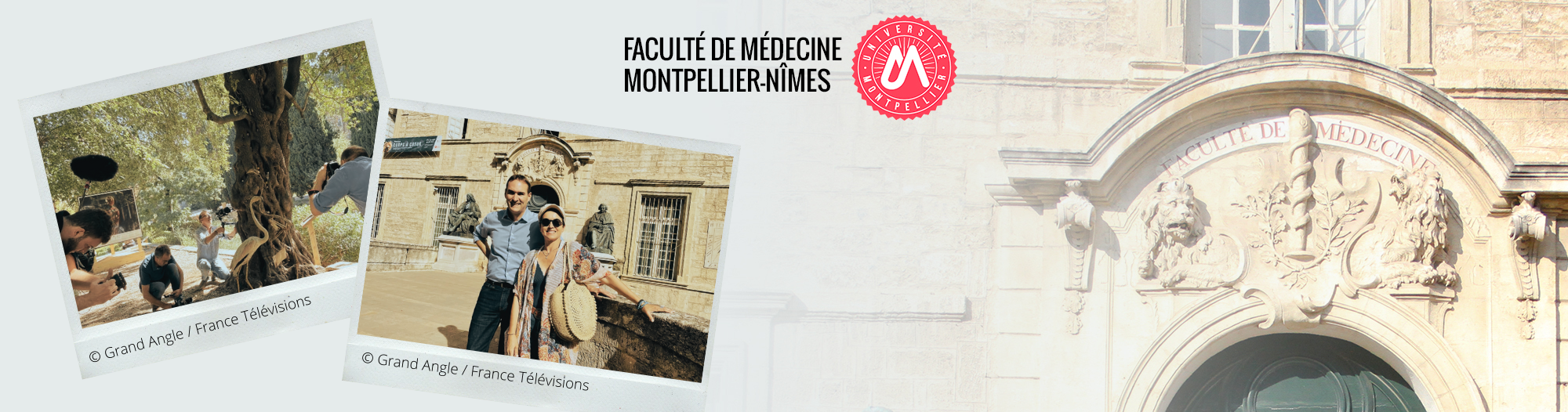
On January 30, 2022, France 3's Ô la belle vie featured Montpellier's Faculty of Medicine in a special program. Available to watch again, you can discover the history of this prestigious educational institution, which dates back 800 years, and find out the latest news.

Follow Professor Gérald Chanques and Sophie Jovillard as they discover the treasures of our Faculty!

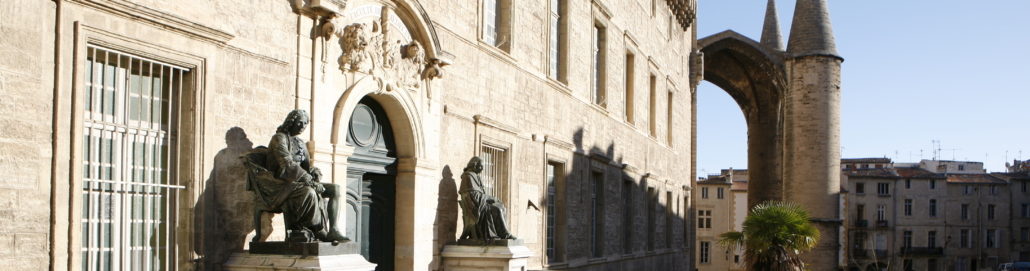
As part of the program Ô la Belle Vie, join Professor Gérald Chanques on a journey to discover the inner workings of the world's oldest medical school still in operation. Rabelais, Rondelet, and the faculty's iconic locations will hold no more secrets for you. Combining art and technological advances, the program will focus on robotics and the work of ceramicist Isabelle Doblas Coutaud, who depicts anatomy through her art. It will also be an opportunity to take a short trip to the Jardin des Plantes with Cédric Matet, creator of the exhibition "L'Humain dans son Jardin" (Humans in their Garden). 


Ô la Belle Vie – Medicine in Montpellier, an art form, produced by Grand Angle Production and France Télévisions.

Presented by Sophie Jovillard. Broadcast on Sunday, January 30, 2022, and available for replay here


The final official event of the Faculty's 800th anniversary celebrations, the Montpellier Academy of Sciences and Letters Symposium will focus on the theme of "Medicine and Humanism." This article provides details of the program for this event, which is open to all upon presentation of a health pass.

Practical information

The conference is free and open to all. Admission is free, subject to availability. It will be held in the Rabelais room, 27 boulevard Sarrail in Montpellier (tram 1-2, Comédie stop).

Conference program

The Montpellier Academy of Sciences and Letters is organizing a two-day symposium on the theme of "Medicine and Humanism," approached from multiple angles: historical, ethical, social, and environmental.

  • Friday, December 3 - morning

    The Faculty of Medicine of Montpellier, a long humanist tradition

    8:00–8:30 a.m.: Welcome 

    8:30 a.m.: Opening

    • 8:30-8:40 a.m.: Fanny DOMBRE-COSTE, First Deputy Mayor of Montpellier
    • 8:40-8:50 a.m.: Bernard BOURGEOIS, Honorary President of the National Conference of Academies
    • 8:50-9:00 a.m.: Philippe AUGE, President of the University of Montpellier
    • 9:00-9:10 a.m.: Michel MONDAIN, Dean of the Faculty of Medicine of Montpellier

    9:10-9:20 a.m.: Presentation of the symposium by Thierry LAVABRE-BERTRAND
    President of the Montpellier Academy of Sciences and Letters

    THEME 1: The Faculty of Medicine of Montpellier, a long humanist tradition
    Moderator: Hilaire GIRON; Engineer, strategy and organization consultant, systems analyst, former President of the Montpellier Academy of Sciences and Letters

     9:20-9:35 a.m.: Testimonial: Humanism and Cancer Medicine
    Henri PUJOL, University of Montpellier, Honorary President of the League Against Cancer

    9:35-10:05 a.m.: The spirit of the Montpellier School of Medicine
    Thierry LAVABRE-BERTRAND, University of Montpellier
    President of the Montpellier Academy of Sciences and Letters

    10:05-10:45 a.m.: The "1220 moment" and the birth of the University of Medicine of Montpellier
    Jacques VERGER, from the Institute, Académie des Inscriptions et Belles Lettres, medievalist

    10:45-11:15 a.m.: Remarkable discoveries in "post-vitalist" medicine in Montpellier: between rationality and serendipity
    Joël BOCKAERT, from the Institute, Academy of Sciences, University of Montpellier

    • 11:15 a.m.–11:40 a.m.: Break

    11:40 a.m.–12:10 p.m.: Montpellier's strengths for teaching the medicine of tomorrow
    Jacques BRINGER, from the Academy of Medicine, Honorary Dean of the Faculty of Medicine of Montpellier,

  • Medicine and Ethics

    THEME 2: Medicine and ethics
    Moderator: Michel VOISIN
    University of Montpellier, Pediatrician
    Former President of the Montpellier Academy of Sciences and Letters

    2:00-2:15 p.m.: Testimony, Humanism, and Medicine: Palliative Care
    Virginie PEROTIN, Physician specializing in palliative care at the Montpellier Cancer Institute.

    2:15-2:45 p.m.: Medicine: what is it all about?
    Olivier JONQUET, University of Montpellier, intensive care specialist
    Former President of the Montpellier Academy of Sciences and Letters

    2:45–3:15 p.m.: Giving birth to the point of losing your mind
    Gemma DURAND, Gynecologist

    3:15–3:55 p.m.: The ethical implications of technological advances.
    Éric FIAT, University of Paris-Est, philosopher

    3:55 p.m.–4:30 p.m.: Break

    4:30–5:10 p.m.: How far can humans go too far?
    Chantal DELSOL, member of the Institute, Academy of Moral and Political Sciences, philosopher

    Friday, December 3—afternoon

  • Saturday, December 4 - morning

    Medicine and Solidarity

    THEME 3: Medicine and Solidarity
    Moderator: François-Bernard Michel,
    Honorary President of the National Academy of Medicine,
    Honorary President of the Academy of Fine Arts

    8:00–8:15 a.m.: Welcome

    8:15-8:30 a.m.: Testimonial:
    Humanism and Medicine: Student Health Precarity, La Maison de Santé étudiante,
    Jean-Bernard DUBOIS and Michel AVEROUS, University of Montpellier,

    8:30-9:10 a.m.: Healthcare, the great upheaval.
    Jean-François MATTEI, from the Academy of Medicine, former Minister of Health, former President of the French Red Cross

    9:10-10:00 a.m.: Reason and emotions in ethical debates,
    Pierre LE COZ, Academy of Medicine, Aix-Marseille University, philosopher,

    10:00-10:25: Break

    10:25-11:05 a.m.: What's special, what's new in humanitarian medicine?
    Rony BRAUMAN, former President of Doctors Without Borders:

    11:05-11:45 a.m.: Is there a contradiction between access to medicines and market forces?
    Christophe DAUBIÉ, former Director of SANOFI-Montpellier,

    11:45 a.m.–12:15 p.m.: Roundtable discussion between speakers

  • Medicine, People, and the Environment

    THEME 4: Medicine, Humans, and the Environment
    Moderator: Jacques MATEU,
    President of the Medicine Section of the Montpellier Academy of Sciences and Letters
    Plastic surgeon

    2:00-2:40 p.m.: From animals to humans: from AIDS to COVID-19,
    Eric DELAPORTE, University of Montpellier, Infectious Disease Specialist

    2:40-3:45 p.m.: Eating while protecting human health and the planet

    • 2:40-3:15 p.m.: The case of meat,
      Pierre FEILLET, Academy of Agriculture, Academy of Technologies:
    • 3:15-3:45 p.m.: The Cretan diet, the Mediterranean diet, and vascular diseases
      Jean-Louis CUQ*, University of Montpellier:

    3:45 p.m. to 4:25 p.m.: Water resources: A global issue? The issue of the century?
    Eric SERVAT, University of Montpellier, UNESCO Chair

    4:25 p.m. to 4:45 p.m.: Break

    4:45-5:25 p.m.: The historical controversy between vitalists and reductionists.
    Edgar MORIN, CNRS, sociologist, philosopher

    5:25 p.m. to 6:15 p.m.: Roundtable discussion between speakers

    6:15-6:30 p.m.: Conclusion, by Thierry Lavabre-Bertrand, President of the Montpellier Academy of Sciences and Letters

    Saturday, December 4—afternoon

As every year, the Faculty hosts exciting and informative lectures by the Montpellier Society for the History of Medicine. Whether you are a culture lover or history buff, these free themed lectures are for you! See the program below.


2021-22 Season Program

  • Friday, October 15, 2021

    6:00 p.m. - Rabelais Lecture Hall (ADV Campus)

    François Bonnel
    The golden age of anatomy in Montpellier with Professor Paul Gilis (1857–1929).
  • 6:00 p.m. - Rabelais Lecture Hall (ADV Campus)

    Michel Billiard
    Birth and development of a new medical specialty: sleep medicine

    Friday, November 5, 2021

  • Friday, December 10, 2021

    6:00 p.m. - Rondelet Lecture Hall (ADV Campus)

    Thierry Lavabre-Bertrand, Gerald Chanques
    A look back at the 800th anniversary of the founding of Montpellier University of Medicine
  • 6:00 p.m. - Rondelet Lecture Hall (ADV Campus)

    Philippe Courtet, Hélène Lorblanchet
    Atger in the 21st century: the benefits of observational skills in the arts for medical students.
    Due to the health situation, the conference has been postponed to a later date.

    CANCELLATION: Friday, January 14, 2022

  • CANCELLATION - Friday, February 11, 2022

    6:00 p.m. - Rondelet Lecture Hall (ADV Campus)

    Nicole Buresi
    Théophraste Renaudot (1586-1653), physician: from Loudun to Paris, after studying at the Faculty of Medicine in Montpellier.
  • 6:00 p.m. - Rondelet Lecture Hall (ADV Campus)

    Caroline Debladis
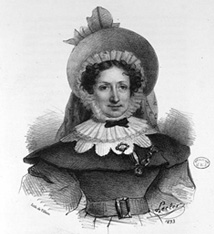
    Agnès McLaren (1837–1913), Montpellier's first female doctor of medicine.

    Friday, March 11, 2022

  • Friday, April 8, 2022

    6:00 p.m. - Ziegelmann Lecture Hall (ADV Campus)

    Nicole Buresi
    Théophraste Renaudot (1586-1653), physician: from Loudun to Paris, after studying at the Faculty of Medicine in Montpellier.
  • 6:00 p.m. - Rabelais Room (Montpellier)

    Champollion Bicentennial Symposium
    Organized by the Montpellier Academy of Sciences and Letters, Rabelais Room
    Friday morning will be devoted to contributions to medicine.
    • 9:20–9:55 a.m.: The Montpellier School of Health and the Egyptian Expedition: focusing on R. Desgenettes and the plague. Thierry Lavabre-Bertrand
    • 9:55-10:35 a.m.: D.-J. Larrey (1766-1842), creator of the modern healthcare system and precursor of the Red Cross. Dominique Larrey,
    • 10:55-11:30 a.m.: The human cost of the Egyptian Campaign: J.-B. Curto, J.-G. René, F. Mireur, F. Vigo-Roussillon. Christian Nique

    Friday, May 13 and Saturday, May 14, 2022

  • Friday, June 10, 2022

    6:00 p.m. - Rabelais Lecture Hall (ADV Campus)

    Daniel Le Blevec
    Raymon Chalmel and his treatise on the plague (14th century)

On the occasion of European Heritage Days 2021, the Historic Building and Botanical Garden of the Faculty of Medicine are opening their doors to the public for guided tours. Due to the current health situation, tours are only available by advance reservation. All the information can be found in this article.

Update on 09/17/21:

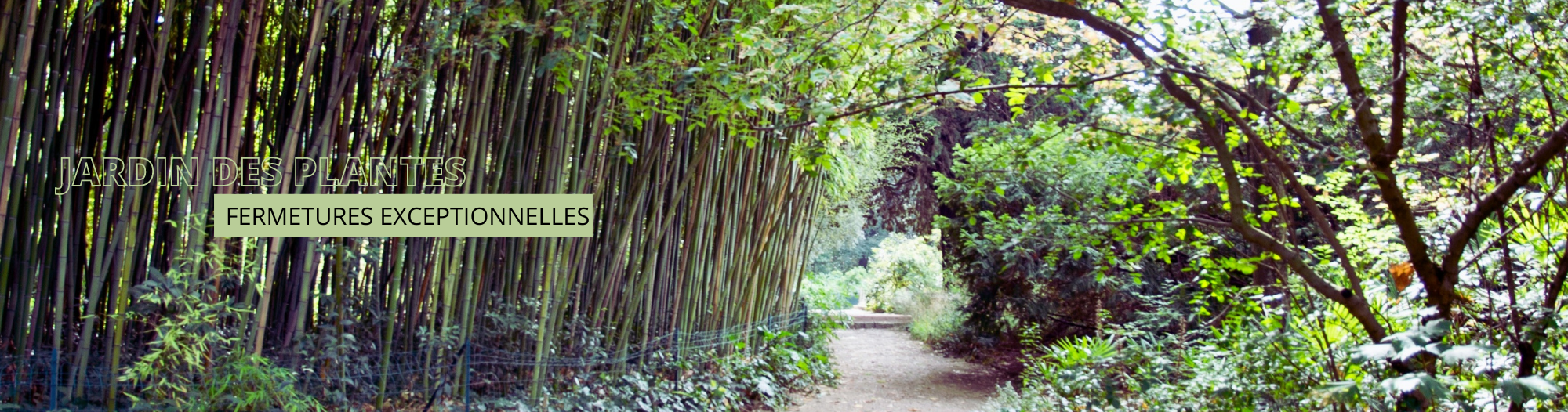
Due to a prefectural decision related to demonstrations planned in the city center, we are unfortunately forced to close the Jardin des Plantes de Montpellier to the public on Saturday, September 18, 2021, in the afternoon.
As a result, visits scheduled for Saturday afternoon are canceled. However, visits scheduled for the morning will go ahead as planned.
We sincerely apologize for the situation and thank you for your understanding.

Saturday, September 18: (Re)discover the Jardin des Plantes!

Start your cultural and heritage weekend with a visit to the Jardin des Plantes! On the agenda: discovering the garden through different themes, guided by our passionate staff. Take the opportunity to rediscover the exhibition "Humans in their Garden" through guided tours by artist and photographer Cédric Matet! Learn more about the exhibition.


Meet at the entrance to Boulevard Henri IV (next to the French Red Cross)
The garden opens at 10 a.m.

  • 10:00 a.m. "The Jardin des Plantes: where medicine meets botany" by Prof. Lavabre-Bertrand
  • 10:15 a.m. "Guided tour of the exhibition by the artist: L'Humain dans Jardin" by photographer Cédric Matet
  • 10:30 a.m. "Bees and humans in 2021" by Jean-François Fauveau and Jean-Pierre Baudon
  • 11:00 a.m. "The Martins Greenhouse and its collection of succulents" By Emmanuel Spicq
  • 11:15 a.m. "Guided tour of the exhibition by the artist: L'Humain dans Jardin" by photographer Cédric Matet
  • 11:30 a.m. "Bees and Humans in 2021" by Jean-François Fauveau and Jean-Pierre Baudon
  • 1:30 p.m. "The plant collections of the Jardin des Plantes" by Didier Morisot
  • 2:00 p.m. "Bees and Humans in 2021" by Jean-François Fauveau and Jean-Pierre Baudon
  • 2:15 p.m. "Guided tour of the exhibition by the artist: L'Humain dans Jardin" by photographer Cédric Matet
  • 2:30 p.m. "Aromatic and spice plants in the Jardin des Plantes" by Prof. John De Vos
  • 3:00 p.m. "The Richer Mountain, at the crossroads of history and ecology" by Denis Nespoulous
  • 3:30 p.m. "Busts and systematic schooling" by Emmanuel Spicq
  • 4:00 p.m. "The plant collections of the Jardin des Plantes" by Didier Morisot
  • 4:30 p.m. "Bees and humans in 2021" by Jean-François Fauveau and Jean-Pierre Baudon
  • 5:00 p.m. "General tour of the garden" by Emmanuel Spicq


Please note that only the Jardin des Plantes will be accessible during guided tours on Saturday, September 18. The historic building will only be accessible on Sunday...

FacMedMtp-BH

Sunday, September 19: Continue your cultural tour with a visit to the historic Faculty!

After enjoying the bucolic paths of the garden, come back and see us on Sunday, September 19 to discover the Faculty of Medicine in its historic building. Two unique tours, guided by the faculty's heritage experts, will be offered:

  • A first tour, devoted to anatomy, will take you to the Amador Room, the former dissection room, and the Tekné Makré Rooms, which house the Corps à Coeur exhibition, entirely dedicated to anatomical specimens preserved by the Faculty (please note that the conservatory is closed and therefore not accessible as part of this tour due to renovation work).
  • A second tour will allow you to discover the faculty's ceremonial rooms, from the Salle des Actes to the Salle du Conseil. Put yourself in the shoes of a candidate (future doctor of medicine), ready to defend their thesis!


As you probably already know, the Jardin des Plantes is a unique place to relax in Montpellier. But did you know that it is also a place of discovery and exchange? The botanical gardeners take this role to heart and organize numerous events throughout the year to help you discover the garden from this perspective. This is particularly true at the moment with "Les visites de l'été"(Summer Tours). Finally, the Jardin des Plantes has an educational role throughout the year, a rapidly growing mission that reconnects with its origins (the teaching of botany) around the objectives and with the help of today's tools. To reinforce this educational aspect, one of them, Denis Nespoulous, has created connected trails to allow you to discover the garden as you've never seen it before!

The origin of the connected trails in the Jardin des Plantes

The trail called "SMART BOTA" was created in 2018 for the introductory MOOC on botany offered by the Tela Botanica association.

This association, founded in 1999 and bringing together a large network of French-speaking botanists, aims to:

  • promote the exchange of information between botanists,
  • facilitate projects using digital tools,
  • produce royalty-free data on flora,
  • raise awareness and provide training in botany.

What are connected trails?

The connected trails are information sheets accessible to all and spread across several routes. They can be accessed via a QR code using a smartphone or tablet. These allow you to discover the riches of the garden at your own pace. The four different routes are displayed at the entrance to the Jardin des Plantes: simply follow the guide, or choose to lose yourself in the paths.

These botanical fact sheets provide a range of information about the plant you are scanning, such as a description, its uses, and its habitat. It's a fun and entertaining way to learn more about the flora around us!

The five connected paths of the garden

For now, there are five connected trails within the Jardin des Plantes. These are likely to evolve over time thanks to your collaboration.

The SMART’BOTA trail

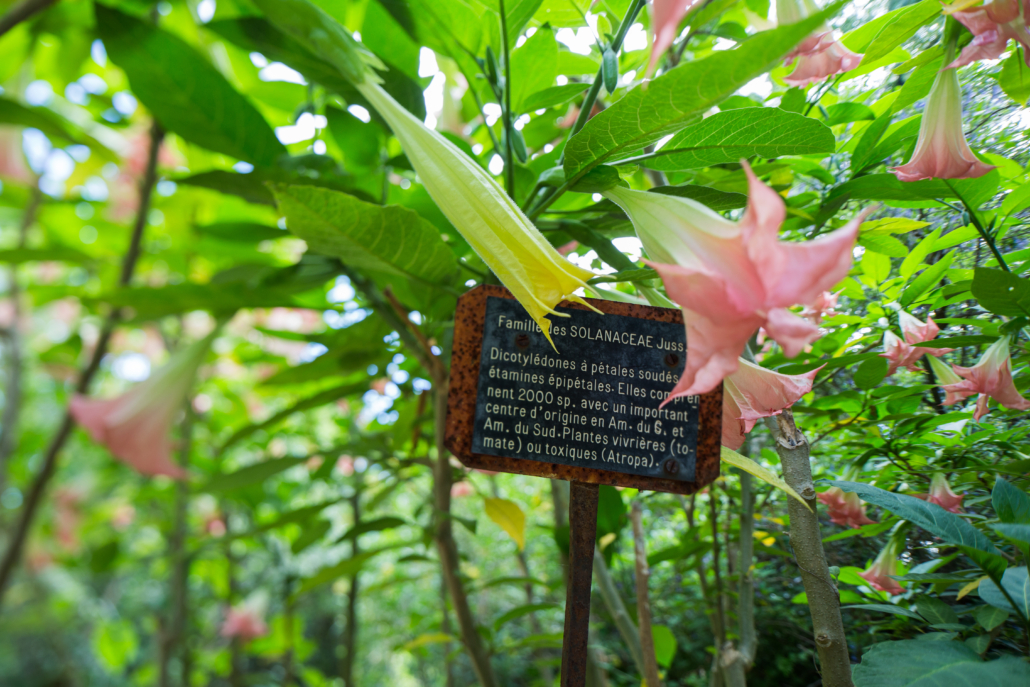
The second connected trail in Montpellier's Jardin des Plantes, and the first educational trail, it was created in 2018 for Tela Botanica's introductory MOOC on botany , for which Denis is the lead instructor. The goal of this trail is to introduce enthusiasts to botany. It features around sixty species and introduces you to the main plant families.

The SMART’PHARMA trail

An extension of the first "SMART'BOTA" trail, this trail was created for students at the Faculty of Pharmacy in Montpellier. Indeed, a multitude of plants can be used for therapeutic and medicinal purposes. This trail allows students students to combine the theoretical aspects of their courses with practical aspects by directly observing the plants in the Garden. This educational trail is also accessible to all. It also features around sixty plant species.

The REMARKABLE TREES trail

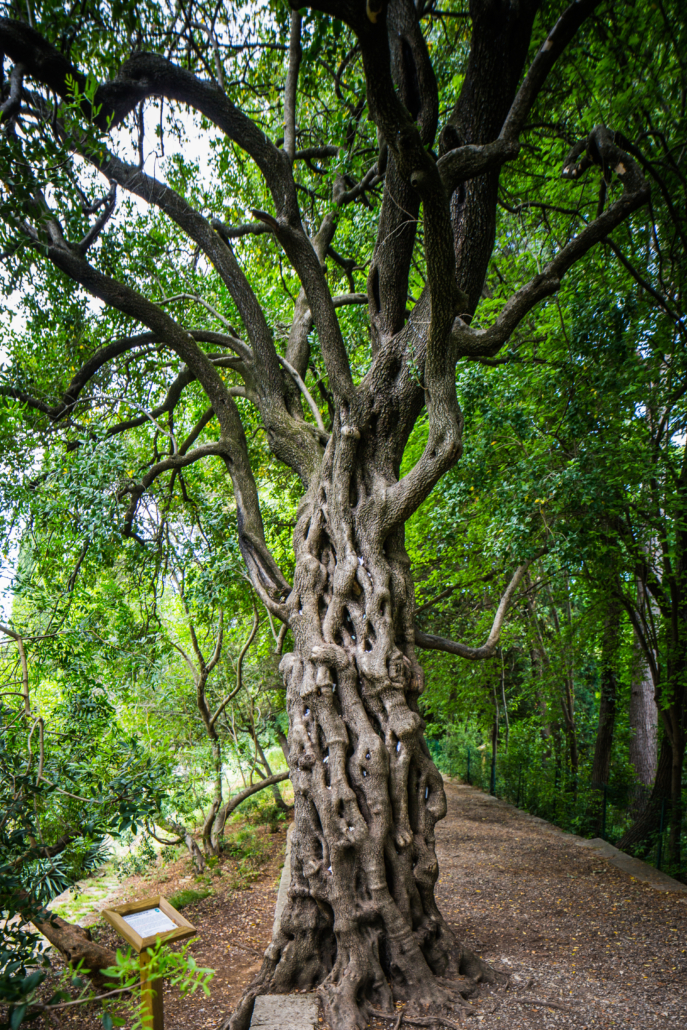
This trail, created in 2014, is the oldest trail in the Jardin des Plantes. It allows you to discover all the secrets of the Jardin des Plantes' tall trees. It is also the only trail that can be explored without your smartphone, as it has reading stations, but feel free to scan the QR codes on the panels to connect to all the secrets of botany! This connected trail features 25 tree species chosen from among the most remarkable and oldest in the garden.

The WILD GRASSES trail

This trail, created for Tela Botanica's MOOC Herbes Folles (Wild Herbs) (second edition planned for this fall!), aims to help you rediscover these plants that are pejoratively referred to as "weeds." They too have their virtues, and beyond their disadvantages, which cannot be denied, they also play an important role in our environment. The wild herbs in the garden invite you to reflect on the issues of biodiversity. This trail will allow you to see these "weeds" in a different light...

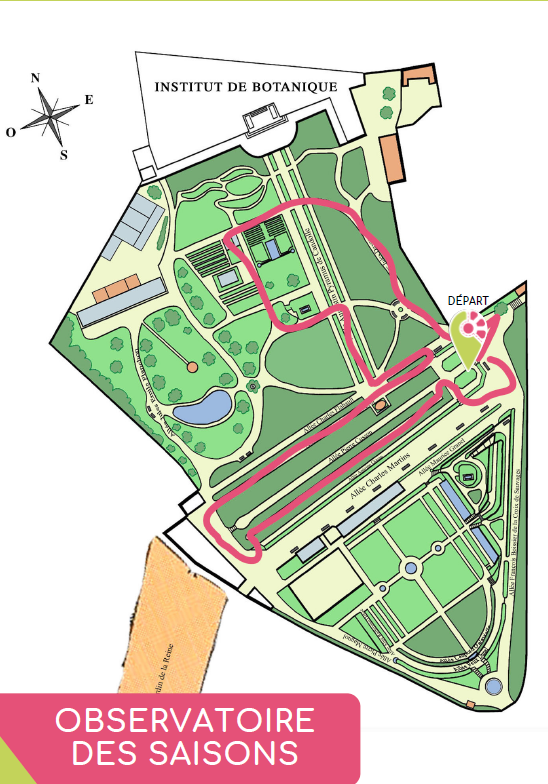
The OBSERVATOIRE DES SAISONS trail

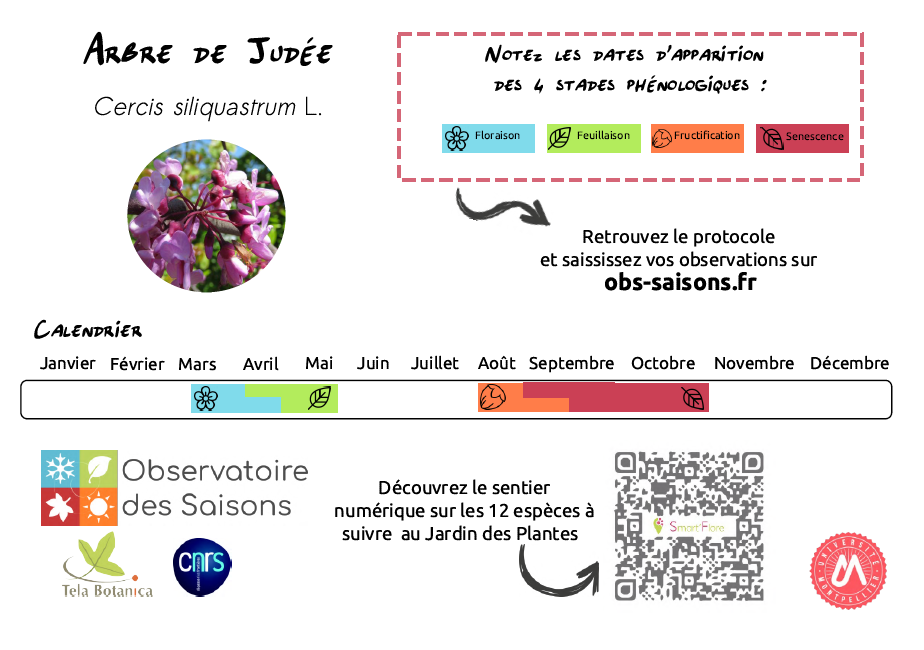
The last trail is somewhat unique in that it is itself connected to a citizen science program. Become a participant in this CNRS program by observing the 12 species that make up the trail. Its goal is also to raise awareness about global warming by introducing us to phenology (the observation of periodic events, in this case involving plants). At the entrance to the Jardin des Plantes, you can ask for a specially designed sheet on which to note your observations. This data will help scientists to better understand and monitor climate change and its issues.


And for those who are curious, discover the app

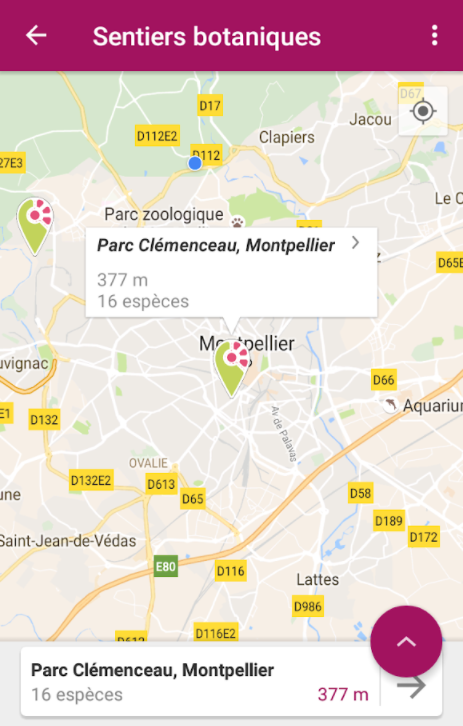
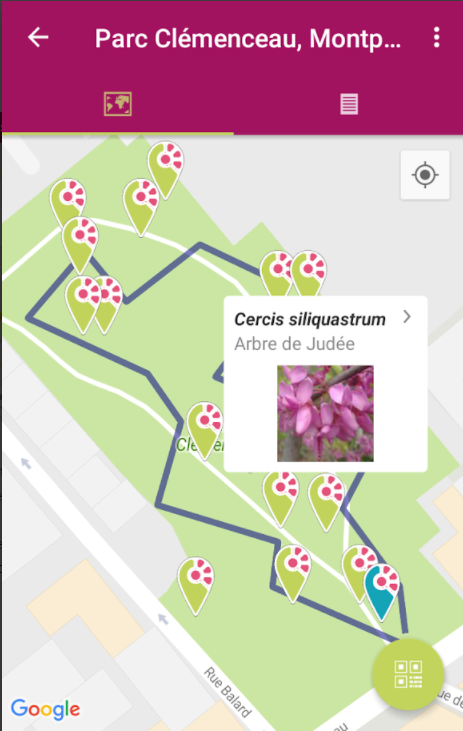
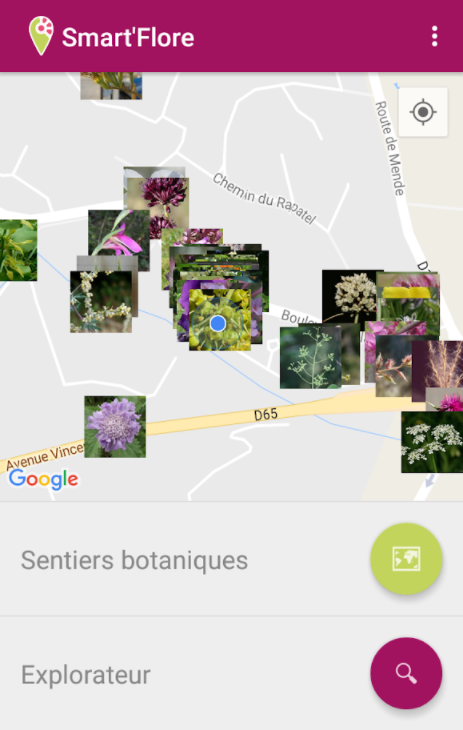
If you would like to discover more about Montpellier's Jardin des Plantes through digital tools, you can download the SMART' FLORE app on all your Android devices. It offers:

  • Trails near you
  • Plants geolocated to within a meter
  • Access to all botanical records created as part of this collaborative project

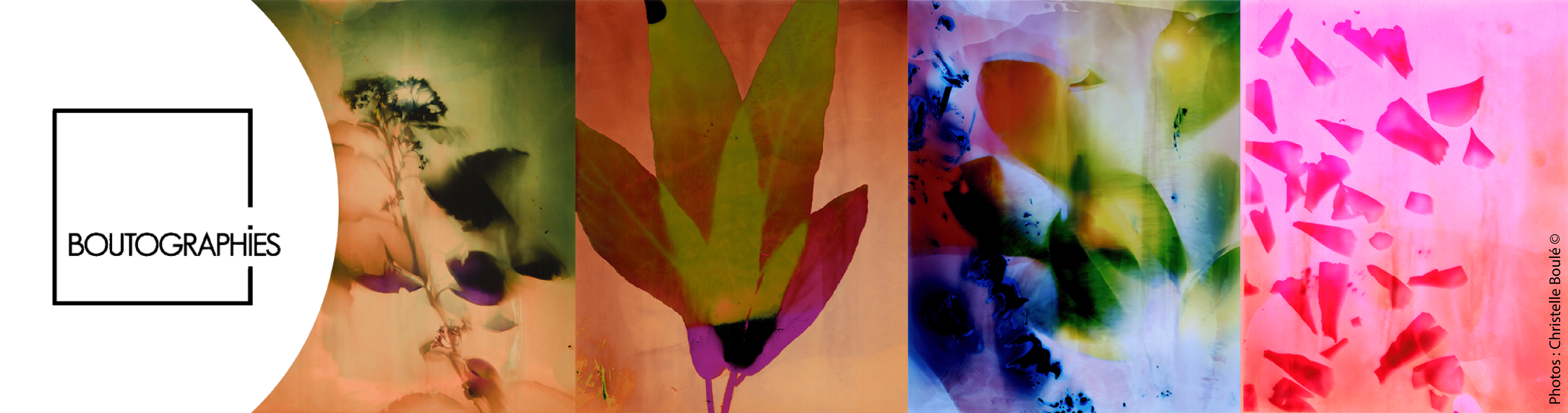
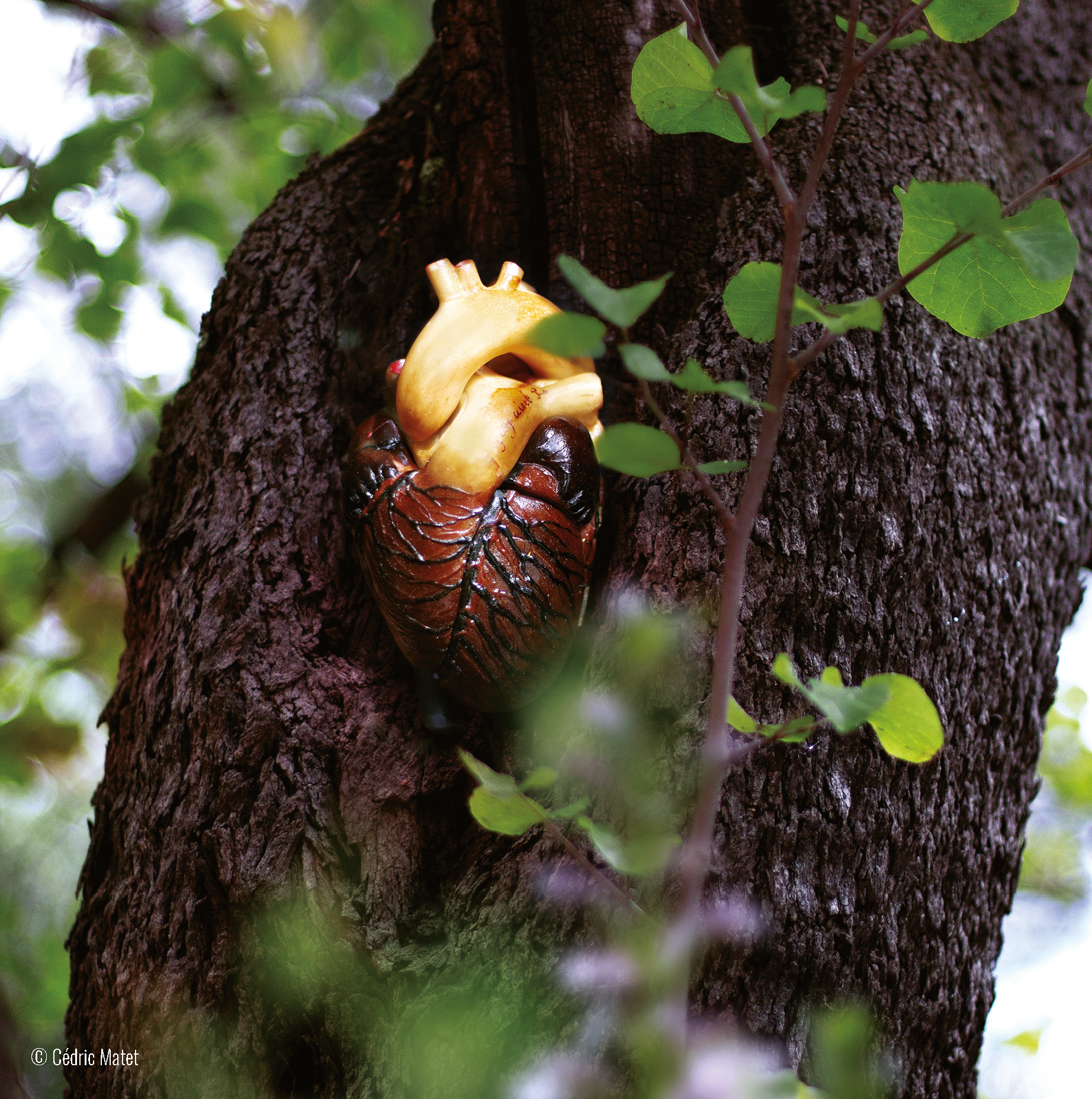
As part of the 800th anniversary celebrations, a photography exhibition will be held from July 10 to October 10. Created by renowned photographer CédricMATET, it will be held at the Jardin des Plantes. In 2020, this photographer also created the exhibition "Derrière les masques" (Behind the Masks), whichfeatures200 portraits of medical staff.

Practical information


"Humans in their gardens"

The title of the exhibition is fundamentally linked to itscontent. For this occasion, the artist chose to work with anatomical specimens from the Faculty's anatomy conservatory. To better understand his project, we interviewed the photographer.


What is your background?

I am originally fromSète. I attended a design school in Montpellier, which is now called ESMA. After that, I enrolled at the Gobelins school of visual arts in Paris. Later, I went back to school to get a master's degree in Urban Planning and Sustainable Development because I'm interested in cities. In the meantime, I worked as an art director and designer for communications agencies.

What interests me is linking art to the city, to plans, to cartography, to people. In my opinion, an artist must be at the heart of their context: urban, political, human.


Can you tell us about the "Behind the Masks" project?

It was GéraldCHANQUES, a professor at the faculty and doctor atSaint EloiHospital, who contacted me and proposed this project. I wanted to convey a vision ofwhat caregivers and their commitments can be. 


How would you describe yourself?

If I had to define myself and my work, I would talk abouttransdisciplinarity. I am a photographer, but I am also a visual artist. I enjoy working with different materials and different trades.


Can you tell us about your new exhibition, "Humans in Their Gardens"?

It's been a long time since I first had the idea of working with the Jardin des Plantes, but I have a real passion for the anatomy museum, which I visited when I was a student. I think it's fabulous to be able to talk about botany through the garden, but also about humans and research on the body. The project was put together by two people, once again with ProfessorCHANQUES.

This project is interesting becauseit takes me out of my comfort zone.I usuallydo portraits, but that's not the case here.
What's more, since all the pieces are classified as heritage items, I have a special relationship with the curator. She is the third subject of this work; I cannot work without her. Usually, I control my model,but here I can't because of its fragility. Every movement has to be made by the curator.
It'sinteresting becausethe piece and the garden exist outside of me. 

There are three of us working on this project: Jane, who does digital art and is a videographer; Luc, who does motion design, among other things; and me, who does imaging and is in charge of the artistic direction for the whole thing. None of us knows what the end result will be.


How did you choose the anatomical parts?

I first sought advice from ProfessorCHANQUES and the curators to find out which pieces were emblematic of the conservatory. I did not choose the pieces based on their aesthetic qualities, since the aim of this exhibition is to tell a story and give meaning.
The only exception to this is a bust we found, whose identity, history, and era are unknown. I found it fragile and touching, so I chose to include it. It's the only piece I chose based on gut feeling.

Unfortunately, there were some pieces thatwe couldn't include because they were too fragile. I was also attracted to other pieces, but they did not represent the human body and therefore took us away from the subject. I will deal with them later for another, more personal project.

Some pieces are also too difficult to move due to their weight. However, this is part of the exhibition's story.
For some pieces that could not be taken out to the Jardin des Plantes, we brought the Jardin to them by taking branches and foliage.


For the past 10 years, the Jardin des Plantes has been organizing summer tours to give the general public a better understanding of our botanical garden. Discover the program for summer 2021.


Tours for young and old alike


Open to all, the summer tours of the Jardin des Plantes cover several themes:
  • The medicinal plant collections of the Jardin des Plantes
  • Richer Mountain, at the crossroads of history and ecology
  • The Martins greenhouse and its collection of succulents
  • Visits to the Permaculture Edible Garden
  • Herbs and sensory squares

Practical information

ADDRESS

Henri IV Boulevard,

34000 Montpellier

  • Free admission

  • No registration required

  • Please arrive 10 minutes before the tour begins.

One hundred years ago, students from the Faculty of Medicine in Montpellier unveiled works of art in the Jardin des Plantes and the faculty's historic building to celebrate its 700th anniversary. To replicate this symbolic gesture on the occasion of the 800th anniversary, an association was created by current students in 2019.

The birth of an association

To carry out this project,the Association Carabine Montpelliéraine (ACM) and the Syndicat des Internes du Languedoc-Roussillon (SIRL) have joined forces to createthe Association pour une Cérémonie Historique des Etudiants en Médecine de Montpellier (ACHEMM). The association has 19 members and is chaired by Allan Guilliey, a fourth-year medical student. Its goal is to bring the project to fruition, from concept to completion, including finding artists to exhibit their work at the new Arnaud de Villeneuve Campus.

An event redesigned in the wake of Covid-19

Originally, this exhibition was to be introduced by a gala organized by ACHEMM students. Numerous European institutions were to be invited at the end of 2020, and the association had the opportunity to speak at the COIMBRA group congress initially scheduled for June 2020. This group, founded in 1985, aims to bring together and promote excellence in European universities, with a view to sustaining high standards of teaching, research, and academic mobility at the international level, while creating special cultural links.
Unfortunately, health restrictions have forced a rethink of the event, so a preview of the exhibition will be held in July 2021 to showcase the students' work.

A colossal task

To carry out this project, the students in the association had to invest a lot of their time and energy. In order to exhibit meaningful works, the students issued a call for projects to local artists. Around twenty artists sent in their work, and the students chose thirteen of them based on those that seemed most artistically suited to the project.

Next, the association members had to approach local authorities to obtain funding to pay the artists. These institutions provided invaluable assistance in bringing this project to fruition.

Finally, a great deal of organizational work was carried out over the course of these two years to promote this exhibition and, through it, the history of the Faculty.

Transmission as a common thread

The theme of this exhibition is transmission. In 2017, the 800-year-old faculty was enriched with a new, state-of-the-art site: the Arnaud de Villeneuve Campus. The works in this exhibition link these two sites, combining classicism and modernity, realism and abstraction to represent both places and, through them, both eras.

The centerpiece of this exhibition, created by Nicolas Daubanes, is a DNA molecule, reminding us that although the Faculty is spread across different sites, all these campuses share the same DNA and are part of its history.

Artists and their works

Visit the exhibition

Guided tours will be offered on Saturday, July 10, and Sunday, July 11, starting at 2 p.m. They will be conducted in accordance with social distancing measures. Registration is required:


The association would like to thank all its partners (DRAC, FRAC, the Hérault department, the Occitanie region, Pumkin, CROUS, the University of Montpellier, Montpellier Métropole, and the City of Montpellier) for their support, as well as Professor Gérald CHANQUES and the Faculty services who worked to ensure the smooth running of this project. 

In 2016 and 2018, Ms. Barjon and Ms. Blanc, daughters of former Dean Gaston Giraud, bequeathed their father's archives to the University of Montpellier. These archives now enable us to offer you an exhibition on the evolution of the Faculty's various buildings and sites since the 700th anniversary commemorated in 1921.


An exhibition divided into several parts

This exhibition, organized by the archives department of the University of Montpellier (Sophie Dikoff, Antoine Redouly, and Gwendoline Perrault) in collaboration with Ms. Barjon and Professor Dedet, and with the participation of Dean Jacques Bringer, Professor Daniel Jarry, and Mr. Serge Caminade, will focus on the evolution of the various buildings and sites that make up the Faculty: the Historic Building, the Institute of Biology, the extensions in Nîmes and on the northern site of Montpellier (the UPM and the Arnaud de Villeneuve campus building) and, finally, the Jardin des Plantes.

Immerse yourself in the archives

Thanks to donations from the family of former Dean Giraud, this exhibition features a wealth of photographs. You can admire photos of the old buildings and see how they have changed over time. The exhibition also showcases other documents that are significant to the development of the buildings, such as architectural plans, handwritten letters, postcards, and more.

A large-scale project

On this occasion, we interviewed Sophie Dikoff, the archivist in charge of this exhibition, to understand how it was put together.

Could you tell us about your job?

My role as archivist at the University of Montpellier is to assist all departments in processing their archives in accordance with current legislation on public archives. This task is carried out in conjunction with the Hérault departmental archives, which exercise scientific and technical control. Archives provide a record of developments, whether architectural, societal, or other.


Where do the archives in this exhibition come from?

Most of these come from donations made by the family of Dean Giraud. The dean kept many documents relating to his various projects as Dean of the Faculty of Medicine in Montpellier, but also in his personal capacity, as he was passionate about the history of medicine and the Faculty of Montpellier. The other archives come from the University's iconographic collection, the University's photo library, and that of the Conference of University Presidents, which were supplemented by photographs taken for the exhibition.


How long did it take you to prepare this exhibition?

The exhibition was originally scheduled to take place in October 2020, but due to health restrictions, we had to postpone it. So I've been working on this project since around the beginning of 2020. The process is very long, as we first have to conduct research to learn about the different aspects of the subject (research in archives, reading, meetings with resource persons), select the most interesting documents, request authorization to use photos in accordance with copyright laws, write texts, and determine a tour route. For the scenography, we called on the services of a professional scenographer, André Dumonnet. For this exhibition, the decision was made to present each building individually and then in chronological order. A panel presents a chronology of all buildings and sites.


An exhibition open to all

The exhibition, which will run from June 18, 2021, at 1:30 p.m. to July 21, 2021, at 6:00 p.m., is free of charge. Visits are free from Wednesday to Friday from 1:30 p.m. to 6 p.m. and on Saturdays from 10 a.m. to 12:30 p.m. Guided tours are available on Saturdays from 1:30 p.m. to 6 p.m.