As discussions about student mental health have resurfaced in the wake of the health crisis and amid reforms to graduate-level education, our faculty teams have developed, in collaboration with students and stakeholders, a one-of-a-kind educational concept. Temporarily named “Interpersonal Skills and Therapeutic Communication,” this empathy-focused curriculum represents a true ethical and educational innovation. To learn more, we spoke with the project leaders: Dr. Amandine Luquiens and Prof. Céline Bourgier, as well as Théo Lacoste, a student member of the steering committee.


The Origins of a Project Centered on Empathy

A need for evaluation arising from the R2C evaluation procedures

In 2018, the proposed reform of the second cycle of medical studies (R2C) was presented to the various academic leaders of the Faculty, prompting a response from Prof. Céline Bourgier. She noted that, following the R2C, student assessment methods would include evaluating students’ interpersonal skills and empathy through the Certificate of Clinical Competence (C3). However, at that time, no course entirely dedicated to developing this skill existed in our curriculum. 

Joined in 2019 by Dr. Amandine Luquiens, a psychiatrist and addiction specialist at Nîmes University Hospital, the two doctors will now team up to lead a project aimed at developing an innovative teaching unit capable of meeting the requirements of the R2C. Their first step is to assess the current level of empathy among medical students.


A striking finding: medical students’ empathy declines as they progress through their studies

Their initial findings are surprising. In fact, through their literature review, the two researchers discovered that medical students tend to experience a decline in empathy throughout their studies. “This decline begins concurrently with hospital rotations. It appears that the gap between the ‘idealization of the healthcare profession’ and the ‘reality of the healthcare profession’ is a triggering factor,” – explains Amandine Luquiens

Another observation: this decline is strongly correlated with the burnout and depression that healthcare students may experience.


A structured educational program to reverse this decline and ensure higher-quality care in the future

These findings have motivated the project leaders to create a new, innovative course unit (CU) with a twofold objective: 

  • To equip students with the tools and skills needed to improve the quality of careby instilling in them a person-centered approach rather than focusing solely on symptoms or medical conditions
  • Preventing psychosocial risks, not only for patients but also for students, future healthcare professionals.

These two complementary elements will therefore be developed jointly by a dedicated committee composed of faculty, students, and users.


An EU designed to foster the development of skills centered on empathy toward oneself and toward patients

Stages in the Development of the EU

Such an EU requires a period of development followed by a pilot phase, which will be implemented within the Faculty in five major stages: 

  • STEP 1

    Establishment of a cross-functional steering committee

    Since this was a course developed collaboratively, the instructors were committed to establishing a steering committee that included students to ensure the course was tailored to their needs as effectively as possible. The committee is also supported by the Faculty’s Academic Council (then chaired by Prof. Denis Morin) and is composed of instructors from diverse backgrounds and specialties to ensure a comprehensive view of the project.

  • Inventory of current resources and expansion of the steering committee

    With the help of the academic administration staff, Amandine Luquiens and Céline Bourgier are identifying the existing course units and courses within the curriculum, focusing on the patient-physician relationship, the development of the care relationship, and interpersonal skills. This allows them to reach out to the instructors responsible for the existing courses and bring them onto the steering committee for the new course unit.

    STEP 2

  • STEP 3

    Revision of existing courses, development of the EU

    The steering committee proposes a new structure for the existing courses over a five-year period. This involves reorganizing them into a more logical sequence, with a more gradual implementation that aligns with students’ entry into hospital internships. In parallel with the reorganization of existing courses, new courses are proposed to complement the curriculum, such as the therapeutic communication module, divided into three progressive levels, into which the pre-existing theater workshop will be integrated.

  • Inclusion of the EU in the curriculum of a pilot cohort

    The DFGSM2 class of 2021–22 is the pilot class and marks the launch of all EU courses over the five-year program. In addition, a few modules are offered to DFGSM3 students to test the courses (Step 6) 

    STEP 4

  • STEP 5

    A longitudinal study of a cohort of students to evaluate teaching

    To measure the impact of teaching on students, three cohorts are regularly assessed based on criteria related to empathy, as well as well-being and the concept of the therapeutic relationship. The DFGSM2 21-22 cohort will be compared to the DFGSM3 21-22 cohort, which will have benefited from a reduced course load, and to the DFASM1 21-22 cohort, which will not have been able to take advantage of the various EU modules.


An EU program designed to help students learn about emotional management

As Théo Lacoste, Student Vice Dean for the 2021–2022 academic year, points out, medical students are “perfectionists”: “They are selected because they are the best. And this selection process continues over the years. The need to be—or at least to appear—‘flawless’ at every level—whether professionally or emotionally—persists until it becomes almost a cultural component of our way of thinking.” 

But this is precisely a change in cultural attitudes on this subject that this course unit aims to foster: Amandine Luquiens explains: “We are seeking to foster a cultural shift among students, and indeed, within the Faculty as a whole. The Faculty cares for its students, and students must care for one another. We will thus help them acquire tools that go hand in hand with both protecting themselves and curbing ‘emotional suppression’—a management strategy used for many years by doctors to address the patient-caregiver relationship.”

 PTo achieve this goal, the EU is structured around four main modules, all of which are mandatory: 

  • Introduction to Mindfulness Meditation Mindfulness
  • Sharing Best Practices among peers: this module encourages open communication and helps participants better understand professional communication within a healthcare team
  • Therapeutic Communication : a multi-year module featuring theoretical instruction on announcements, the integration of theater workshops, and simulation workshops.
  • Stigmatization in Healthcare : a module featuring user testimonials in which individuals share their experiences with students regarding situations they have encountered during their care journey


In short: an innovative initiative in more ways than one

Humanism is a core value of the Faculty. It is an integral part of its history, but it also serves as a guiding principle for its future, as evidenced by this innovative program in more ways than one. Indeed, this is an ethical and pedagogical innovation

  • co-created with students, faculty, users, and administrative staff: a true example of cross-functional collaboration among the women and men of our community 
  • who is interested in a genuine social and societal issues facing health students and who intervenes early enough in their academic program to anticipate it and long enough to address it in depth
  • which includes theoretical modules but also, and above all, highly practical modules, centered on a human-centered approach to the patient-caregiver relationship, particularly through simulation workshops
  • Skills developer developer of key skills centered on empathy and interpersonal skills: essential tools for a more humane approach to medicine
  • carrying a message for both students and their future patients


Opportunities for other degree programs

The introduction of this course unit into the medical curriculum inevitably raises questions about the other programs offered by the faculty (midwifery, paramedicine). “Medicine is relatively behind compared to other programs,” admits Dr. Luquiens. “Indeed, there are already course units in the other programs, but not in such a structured, phased manner. The idea is therefore, once this course unit has been refined, to ‘spread’ it to the other programs, with the aim of taking a transdisciplinary approach to these skills.”


For the second year the Agnes McLaren Association is organizing a medical prize worth €4,000! Applications are open to students at the Montpellier-Nîmes Faculty of Medicine who will defend their clinical thesis between September 2021 and March 2023. See below for registration details and the eligibility criteria for your thesis.


This award recognizes a doctoral dissertation in medicine focusing on the health of women and/or children in precarious or vulnerable situations and funds research based on that dissertation

TheAgnes McLaren Association, founded in 2018, works to preserve the memory ofAgnes McLaren, a Scottish woman and the first female doctor to graduate from the Faculty of Medicine in Montpellier in 1878. It is in honor of this physician, who dedicated her life to caring for the most disadvantaged women or those excluded from society, that the association wishes to award a medical prize for the first time.

To mark the Faculty’s 800th anniversary in 2020, the association established the Agnès McLaren Prize in Medicine. Every two years, this prize is awarded for a clinical thesis and a post-thesis project, focusing on the health of women in precarious or vulnerable situations or the health of children exposed to precariousness and/or vulnerable situations. It also funds a project based on this thesis. The Prize, in the amount of €4,000, will be awarded in June 2023 following a preliminary selection by a committee and review by a jury composed of healthcare professionals.

In the first edition, Justine Allouche won an award for her knowledge and expertise in cervical cancer screening.

In 2021, the award was won by Justine Allouche for her work assessing knowledge and practices regarding cervical cancer screening among women in prostitution in the Gard and Hérault departments. Justine was featured in an article in Midi Libre on that occasion!


Eligibility Criteria

To be eligible for this medical award, candidates must meet several eligibility criteria:


  • Open to our students

    Criterion 1: Be a student at the Montpellier-Nîmes School of Medicine

  • Year 2021-22-23

    Criterion 2: Defend your thesis between September 2021 and March 2023

  • Thesis topic

    Criterion 3: Support a dissertation whose topic addresses the health of the most disadvantaged or even marginalized women, or the health of children exposed to precariousness and/or situations of vulnerability

  • Post-doctoral project

    Criterion 4: Thesis leading to an operational project

What are the steps to enter the contest?

The second edition of the McLaren Medical Award will take place in five phases, as follows:

  • by March 15, 2023

  • Pre-selection phase

    Preliminary screening of the theses received by the preliminary screening committee. Five theses were shortlisted.

    April 15, 2023

  • May 15, 2023

    Selection Notice

    Notification of selection sent to the five shortlisted candidates.

  • Final selection phase

    Review of the five theses shortlisted by the jury. Candidates must submit their theses and post-thesis work by January 24, 2021.

    June 2023

  • Sept. 2023

    Award Ceremony

    Presentation of the Agnes McLaren Award at the official ceremony.

Award Rules Pre-Application Package Application Form

We hope many of you will enter this new contest! So get writing, and good luck on your theses!


The Montpellier Health Tutoring Association is bringing back its High School Students’ Week, from February 21 to 25, 2022! This week is dedicated to all high school students, their parents, and teachers, with the aim of addressing any questions they may have about the REES (Reform of Admission to Health Studies), better known as the PASS-LAS program.


An event hosted on Zoom, so that as many people as possible can participate

This week, designed for all high school students (10th, 11th, and 12th graders) as well as their parents and teachers, will feature various sessions dedicated to explaining the REES program, thePASS/LAS tracks, and the upper-level years. The sessions will take place on Zoom from February 21 to 25, 2022, except for those on the morning of Wednesday, February 23, which will be held at the Arnaud de Villeneuve Campus of the Faculty of Medicine (641 Avenue du Doyen Gaston Giraud, 34090 Montpellier).

Attendance at this event is completely free, but requires prior registration using the form below:

A program packed with lectures, tutorials, and Q&A sessions

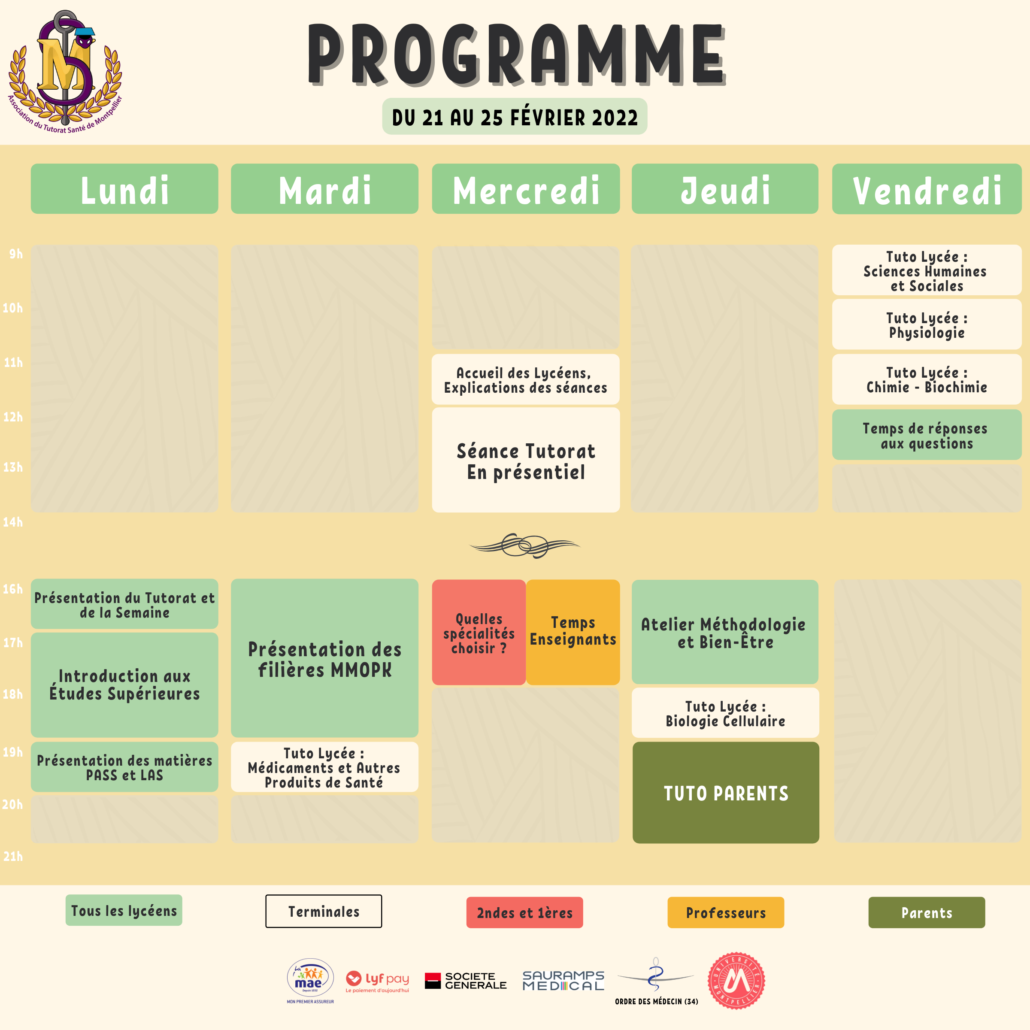
See below for the full schedule for the week:

  • Monday, February 21 – 4:00 p.m.: The first session will be dedicated to introducing the Tutoring Program and the ATSM association. The role of the Tutoring Program within the reform and the free services provided by the ATSM will be explained in detail to reassure students about the academic and psychological support available to them throughout the year. By the end of the week, high school students will be familiar with the new system established under the Health Studies Admission Reform and the respective operations of the PASS and LAS programs. The various subjects covered during the year will also be detailed.
  • Wednesday, February 23 – 2:00 p.m.: A session has been scheduled for 10th and 11th graders to help them choose their elective courses for their senior year.
  • Wednesday, February 23 – 2:00 p.m. and Thursday, February 24 – 7:00 p.m.: Two sessions will be held specifically for parents and teachers to involve them in the Health Studies Introductory Reform and explain how it works, as well as the tutoring program.
  •  Thursday, February 24 – 4:00 p.m.: The tutors will lead a study skills workshop to help students get a good grasp of the year ahead and plan accordingly, while also including a short wellness session.
  •  New this year:The ATSM is organizing an in-person morning session at the university for high school seniors who wish to observe a tutoring session for students in the medical and health sciences track. They will first be welcomed at the ADV campus and then taken to attend a session in a lecture hall.
  • Students in their senior year will have the opportunity to attend five Tuto Lycée sessions, which will cover some of the course material they will encounter during the first semester of the PASS/LAS program.
  • The week will finally conclude with a discussion session, during which the tutors will be available to everyone to review the week and answer any remaining questions.

Here you will find the presentation and video recording of the information session on the second semester of the PASS program, admissions to MMOP programs, and continuing education.


Meeting on January 17, 2022

Below you will find the presentation and video from the meeting held on January 17, 2022


In September 2020, the Ministry of Solidarity and Health published a report titled “The First 1,000 Days.” This report served as a working document for second-year midwifery students at our faculty.

A report as a cornerstone

This report, commissioned by Olivier Véran, Minister of Solidarity and Health, is the result of work by several researchers specializing in early childhood: child psychiatrists, psychoanalysts, educators, doctors, and others. It highlights the importance of a child’s first 1,000 days of life.

Since reports of this kind can be lengthy and difficult for families or professionals in the field to understand, the task assigned to the second-year students in the Maieutics program was to simplify the information contained in this report. To this end, their project involved crafting clear, accessible messages and presenting them on a poster for wide distribution.

Studies that are increasingly relevant to current events

Studies in midwifery are closely tied to current events. In fact, as soon as a new law regarding children or parenting goes into effect, midwives must adapt.

For these reasons, students in the Maïeutique program take courses in the humanities and social sciences as part of their curriculum. These courses help them understand current events in this field and explore the diverse cultures and family situations that our future healthcare professionals may encounter. The goal is to enable them to adapt to each patient’s needs and provide the best possible care.

Another goal of this course is to help them realize that they can play an active role in society, particularly by making the information they have available to as many people as possible—which is precisely the aim of the project they have been entrusted with.


The Science Outreach Project

The assignment given to the students was to translate scientific knowledge into clear messages for a socially and culturally diverse audience, while taking into account the many different forms of family. The course instructor, Kristina t’Felt, who holds a Ph.D. in sociology, divided the class into four groups. Each group was assigned a different topic:

  • Group 1

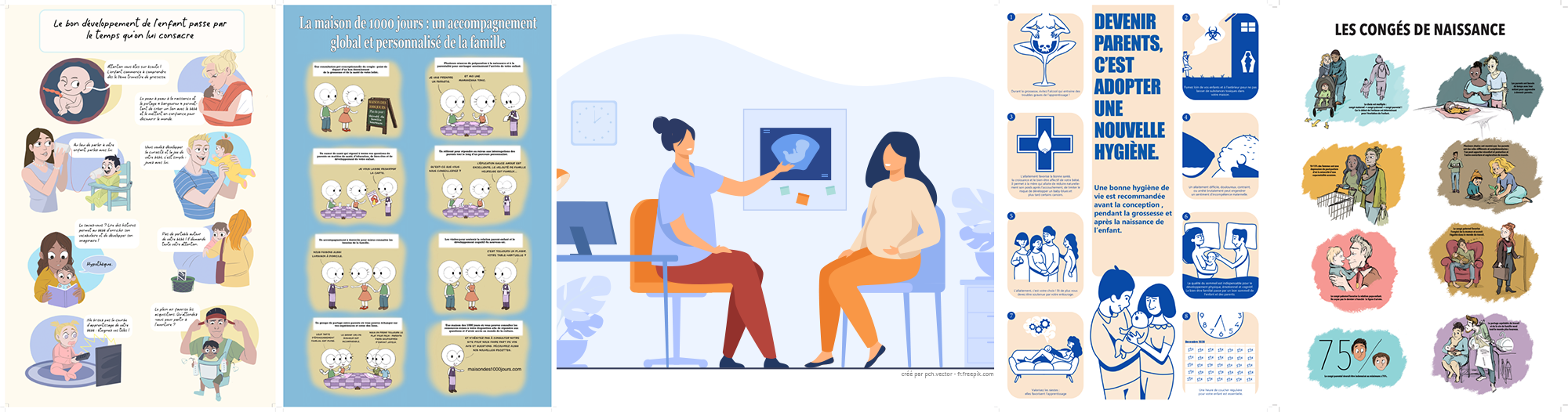
     Interactions between children and parents (Part I A of the report).

  • Group 2

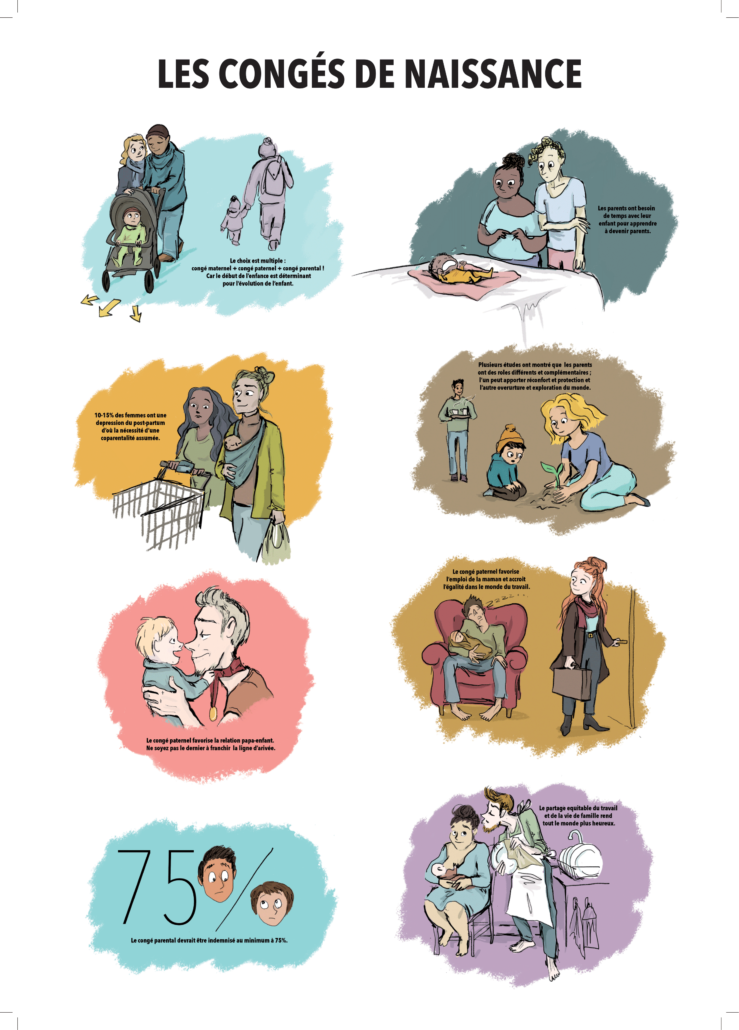
    Lifestyle and Child Development (Part I B of the Report)

  • Group 3

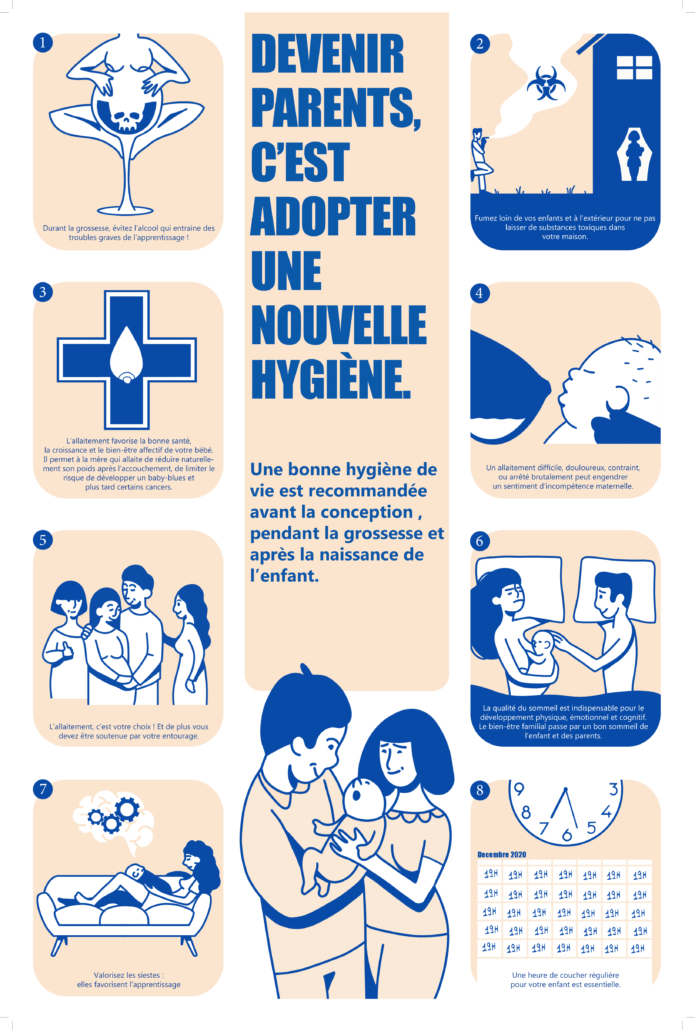
    The “1,000-Day Journey”: Personalized Parent-Child Support (Part II of the Report)

  • Group 4

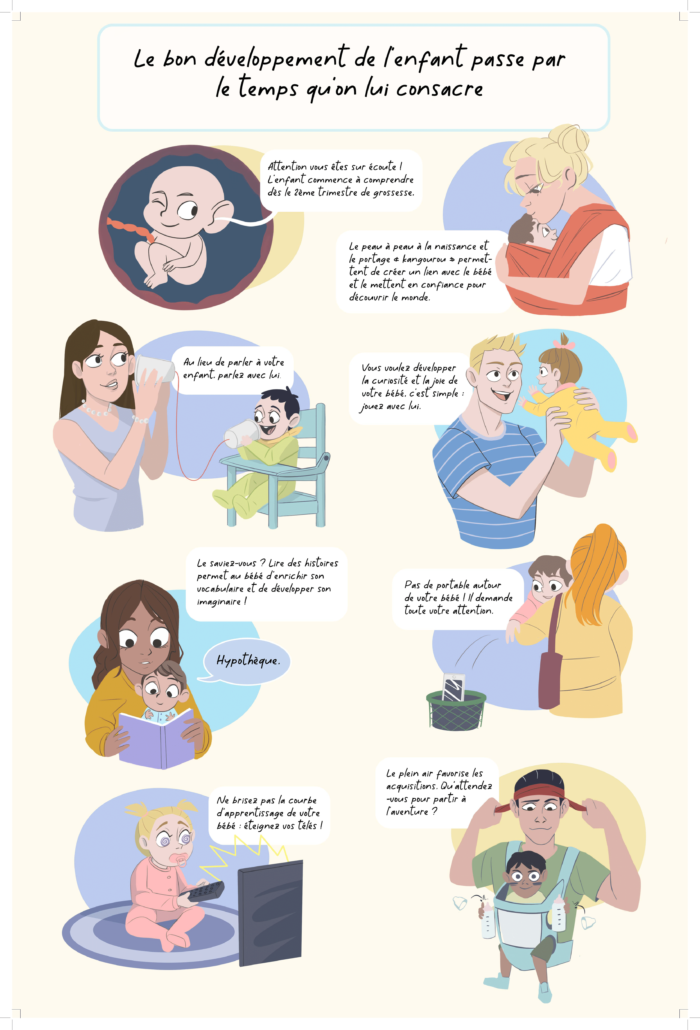
    Maternity leave (Part IV A of the report)

Graphic design

As part of this project, four posters were created in partnership with students from the Montpellier Private Institute of Higher Education in Applied Arts (IPESAA). These posters will be distributed by students in the Maieutics program. Here they are:


Image credits: 

Parent-Child Interactions – Illustration: Blandin CHAUVET – IPESAA School, Concept Art Illustration Department

Maternity Leave – Illustration: Yona TANGHE – IPESAA School, Illustration and Concept Art Department

The 1,000-Day Journey – Illustration: Raphaël SUKY – IPESAA School, Illustration and Concept Art Department

Lifestyle – Illustration: Julien LAWRENCE – IPESAA School, Illustration and Concept Art Department

A long-term initiative

Given its success among students and its educational value, this project will be repeated for third-year Maieutics students in Nîmes.

The enrollment capacities for the MMOP program and the associated track groups for students enrolled in the PASS and LAS programs for the 2021–22 academic year were approved during the meetings of the Commission for Academic Programs and University Life (CFVU) on September 30 and October 18, 2021. You can find them in the article below.

You can find detailed information about the PASS onthis page.

Detailed information about LAS programs can be found onthis page.

MMOP Capacity

For students enrolled in the 2021–22 academic year, the enrollment capacities for the MMOP program are outlined in the document below.


Course groups

For students enrolled in the 2021–22 academic year, the composition of the MMOP track groups is outlined in the document below.

The admission requirements (MAD) for the MMOP program for students enrolled in the PASS and LAS programs for the 2021–22 academic year were approved during the meeting of the Commission for Education and University Life (CFVU) on October 14, 2021. Read more in the article below.


CFVU Resolution of October 14, 2021

You can find detailed information about the PASS on this page.

Detailed information about LAS programs can be found on this page.


Students at the School of Gerontology, don’t wait to register for CIPEG. This annual conference on gerontology and geriatrics brings together healthcare professionals working in this field. 


Announcement of the upcoming CIPEG


The next CIPEG will take place on May 18 and 19, 2022. The School of Gerontology will be represented there by Professor Claude Jeandel, Myriam Taroudjit, and Marie-Laure Portalez.

Current students and alumni of the Master’s program in Gerontology, please contact Myriam TAROUDJIT to register.

Welcome to our new students! The orientation meeting for PASS students for the 2021–22 academic year will take place on Monday, September 6, 2021. Find all the details about this meeting based on your assigned campus in the article below.


Back-to-School Meeting for PASS Students (2021–22): Monday, September 6, 2021, starting at 9:00 a.m.

The PASS orientation and information session will take place on Monday, September 6, 2021, from 9:00 a.m. to 12:30 p.m.
The purpose of this orientation session is to inform you about the structure of the PASS program and to introduce you to the various staff members who may be involved during your academic year.


The meeting will take place at your work location

PLEASE NOTE: Due to capacity limitations, site-specific information, and the distribution of your student ID cards, you must attend the orientation meeting for the campus where you are enrolled:

  • ADV (Arnaud de Villeneuve) location: 641 Avenue du Doyen Gaston Giraud, 34093 Montpellier Cedex 5
  • Flahault Campus (School of Pharmacy): 15 Avenue Charles Flahault, 34093 Montpellier Cedex 5
  • Nîmes location: 186 Chemin du Carreau de Lanes, 30900 Nîmes

As a reminder, masks must be worn and hands must be sanitized with hand sanitizer upon entering the premises.

Dear students, please find below the admission results for the MMOPKE program from the second round of exams for PASS students enrolled for the 2020–21 academic year.

Following the exams for the second group and the entry into effect of the joint ministerial decree from the Ministers of Health and Higher Education authorizing the University of Montpellier to transfer unfilled spots from LAS to PASS—which we received today—the admissions committee was able to meet to determine the primary and supplementary admission lists for each of the MMOP programs in your PASS track group.


PASS Results

Click the button below to download the results of the PASS candidates admitted to the second round of exams:

Understanding the Results

To fully understand the acronyms and analyze your results, see the help section below:

If the result shows "ADAC," it means you have been admitted before the selection process; "LC" stands for "supplementary list." However, for the Medicine and Midwifery programs, if the result shows "LC" even though you are admitted to Medicine or Midwifery when you check the ranking list (ADMP), this is due to the existence of two training sites. Since allocation is based on merit, you must therefore list these programs in your prioritized choices in accordance with the procedure specified in the attached document.

On the list: ADMP = admitted prior to program selection in the medical or midwifery program, regardless of the training location: Nîmes or Montpellier. 

Two steps to follow: 

  • STEP 1: PRIORITIZING OPTIONS

    To help you prioritize your choices, the program selection application will be open from Friday, July 23, 2021, at 2:00 p.m. until Monday, July 26, 2021, at 9:00 a.m.
    • Specific features for Medicine and Midwifery:

    Given the very tight deadlines, for each of these programs, you will select either the Montpellier or Nîmes campus after thesecondround of examsdirectly within the program selection app, prioritizing the campus that interests you most if you are admitted or placed on the waiting list for at least one of these two programs. 

  • STEP 2: CONFIRM OR DECLINE THE OFFER OF ADMISSION

    If you are admitted to an MMOP program, you must either accept or decline the offer .

    Once Stage 1 is complete and the program selection application has closed, you will receive an email inviting you to review the results of your potential admission and to complete a questionnaire as soon as possible so that you can accept or decline your potential admission to an MMOP program.

    IMPORTANT: YOU MUST CONFIRM YOUR ADMISSION OR YOU WILL LOSE YOUR PLACE!!