The period from November to December 2021 will feature three types of elections: university-wide elections to select staff and student representatives for the central councils of the University of Montpellier EPE (Experimental Public Institution), and faculty-level elections to select student representatives for the Faculty Management Council and the Faculty Academic Council. In this article, you will find the schedule for these elections and the various procedures for candidacy and voting.


Election Schedule

  • November 23–24, 2021

    Election of staff and student representatives to the central councils of the University of Montpellier (EPE)

    • Staff members (teachers and administrative staff) will vote in person at the polling station on November 23, 2021
    • Users (students) will vote electronically on November 23 and 24, 2021
  • Election of student representatives to the UFR "Management" Council

    • Online voting on November 30 and December 1, 2021

    November 30 and December 1, 2021

  • December 1, 2021

    Election of Student Representatives to the Faculty of Medicine’s Academic Council

    • In-person voting at polling stations on December 1, 2021


Information regarding the UM EPE election – November 23–24, 2021

Download all documents related to this election below:


Information Regarding the Election for the Management Board – November 30 and December 1, 2021

Download all documents related to this election below:


Information Regarding the Election for the Educational Council – December 1, 2021

Download all documents related to this election below:

On Tuesday, November 16, the Féminin Pluriel Montpellier Méditerranée collective, in partnership with the Faculty of Medicine, the CIDFF, AG2R la Mondiale, and the Agnes McLaren Association, is hosting a screening of an awareness-raising film on this topic to mark November, which is dedicated to the fight against violence against women. The screening will be followed by a discussion in the Faculty’s anatomy lecture hall. See the program for this themed evening below.


A documentary film, produced collaboratively

More than just an awareness-raising film, this film—produced with the support of the Collectif Féminin Pluriel Montpellier Méditerranée—is a documentary. Indeed, it tells the stories of six women who have experienced domestic violence. As active participants in the film’s production, guided by two female directors, these six women not only shared their stories but also helped shape the film’s concept. The film will be screened on November 16 at 6:30 p.m. in the Faculty of Medicine’s auditorium.

Designed primarily as an informational resource for teenage girls, the film is also intended for a wider audience, as domestic violence is an issue that affects people from all social and cultural backgrounds and all genders.


A screening followed by a discussion, with the filmmakers in attendance

The screening of the documentary will be followed by an open discussion and a chance to exchange views on the topic of domestic violence. Beyond physical violence, what other forms of domestic violence exist? How can such violence be identified? How can we intervene, alert others, and help victims? How can victims rebuild their lives? These are just some of the topics that will be addressed during the discussion.


A free event, open to everyone, with registration required

To make it accessible to as many people as possible, this screening is open to everyone.

Due to the current health situation, you must present a health pass and register for the event in advance (click the button below).

Download the Press Release Download the Press Kit


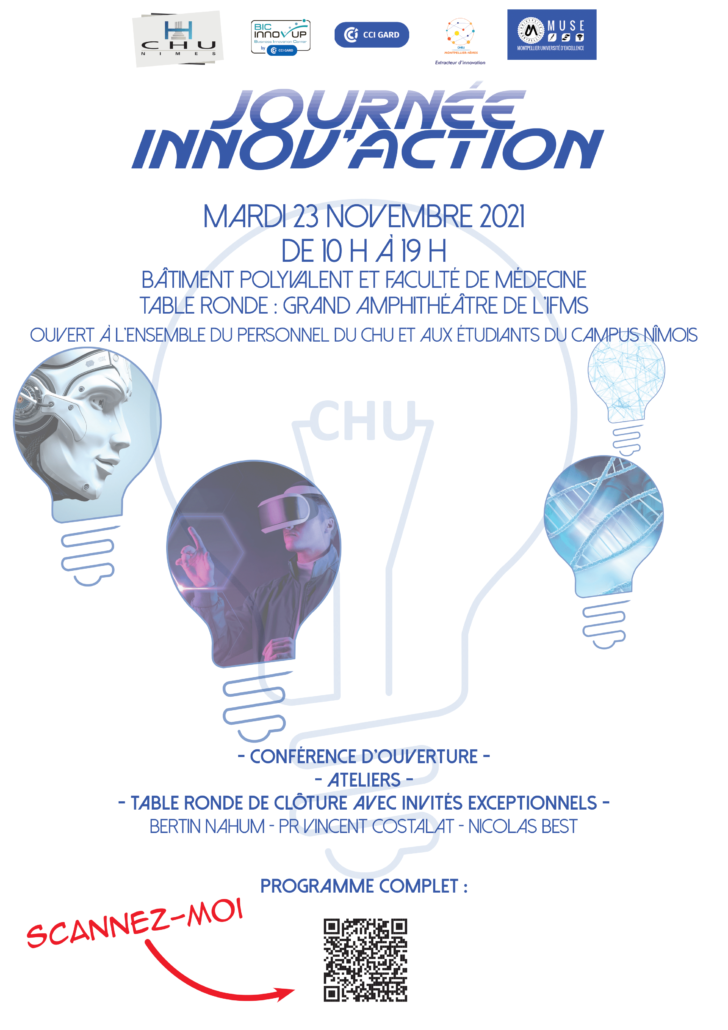
The Nîmes University Hospital, in partnership with MUSE, is organizing Innov’Action Day! Open to all staff members at the hospital, as well as our students in Nîmes, this event will provide an opportunity to learn about the health innovation sector. Structured around several workshops, participants will be able to learn the basics of starting a business! Check out the day’s program in this article!

What's on

  • 10:00–11:00 a.m.

    Opening Lecture - Salle d’Honneur, Multipurpose Building (CHU)

    • Introduction by the CEO, the CME President, and the event partners
    • Presentation of the innovation support program at Nîmes University Hospital, in collaboration with the Montpellier-Nîmes Innovation Accelerator
    • Innov’action Award: Announcement of the 2021 Winners and Launch of the 2022 Award
  • Workshops - Morning Sessions

    • See below for the workshop schedule and locations
    • All workshops are held at Nîmes University Hospital, with the exception of Workshop 7, which takes place at the university

    11 a.m.–1 p.m.

  • 2:30–4:30 p.m.

    Workshops - afternoon sessions

    • See below for the workshop schedule and locations
    • All workshops are held at Nîmes University Hospital, with the exception of Workshop 7, which takes place at the university
  • From Innovative Idea to Market Launch: Keys to Success, Based on Two Success Stories

    featuring: Bertin Nahum, CEO of Quantum Surgical; Prof. Vincent Costalat, Professor of Public Health at Montpellier University Hospital and co-founder of Sim&Cure; and Nicolas Best, Director General of Nîmes University Hospital

    5:30–7:00 p.m.


Detailed workshop schedule

  • Workshop 1 - No innovation is too small: Why and how should I protect my ideas or inventions?

    (Moderators: Armelle LEONARD – Intellectual Property Engineer, Regimbeau Law Firm; Valérie GIBERT-CORREAS – Head of the Commercialization and Partnerships Unit, Nîmes University Hospital / Speaker: Prof. Pierre CORBEAU – Department of Immunology, Nîmes University Hospital)

    • 11:00–11:45 a.m.: Head of Human Resources
    • 3:30–4:15 p.m.: Multimedia Room
  • Workshop 2 - My Small Business: How Can I Get Support for My Business Startup Project?

    (Moderators: Antoine HOUSSIN – Director of BIC Innov’up and Head of Industry, Industry Services, and Innovation at the Gard Chamber of Commerce and Industry (CCI), Claire RAVENEAUX – Business Advisor, Gard Chamber of Commerce and Industry (CCI) / Speaker: Dr. Stéphanie HUBERLANT – Department of Gynecology, Obstetrics, and Reproductive Medicine, Nîmes University Hospital)

    • 12:00–12:45 p.m.: Salle d’Honneur
    • 2:30–3:15 p.m.: Salle d’Honneur
  • Workshop 3 - Getting Started on My Innovative Project or Business Venture Without the Headaches: Simple and Effective Tools and Methods Do Exist!

    (Facilitators: Rajaa NOUALI – FabLab Coordinator, Nîmes; Gaspard LEPINE – Partnerships Manager, ISite MUSE; Christophe BONNEL – Innovation Facilitator, Nîmes University Hospital)
    * Workshop 3 will focus primarily on building a business canvas. For this reason, it will be limited to a maximum of 12 participants.

    • 11:00–11:45 a.m.: DRM Auditorium
    • 2:30–3:15 p.m.: DRM Auditorium
  • Workshop 4 - Engaging Talented Young People: Schools and Universities—A Wealth of Resources for Developing My Project!

    (Moderators: Marine ROYER – Lecturer in the Master’s Program in Design and Social Innovation, University of Nîmes; Pierre COUTURIER – Lecturer and Head of the Mechatronics Platform, IMT Mines Alès / Panelists: Christophe REYNAUD – ENT Department, Nîmes University Hospital)

    • 11:00–11:45 a.m.: Multimedia Room
    • 12:00–12:45 p.m.: Multimedia Room
  • Workshop 5 - Finding and Building a Relationship with the Right Company: The Keys to Smart Collaboration for Bringing an Innovative Project to Life

    (Moderators: Virginie COSTE – Partnership and Commercialization Development Officer in Biohealth, iSite MUSE; Tarek RAHMANI – Commercialization Officer, Nîmes University Hospital / Speaker: Prof. Stéphane DROUPY – Department of Urology, Nîmes University Hospital)

    • 12:00–12:45 p.m.: Grand DEFI
    • 2:30–3:15 p.m.: Grand DEFI
  • Workshop 6 - The 10 Mistakes That Can Derail the Launch of Your E-Health App

    (Moderators: Antoine HOUSSIN – Director of BIC Innov’Up and Head of Industry, Industry Services and Innovation at the Gard Chamber of Commerce and Industry (CCI), Thierry CHEVALLIER – Head of the Institute for the Evaluation of Medical Devices (IDIL), Nîmes University Hospital / Panelists: Florent VIANNAY – Innovation Project Manager, BIC Innov’Up, Willy FAGART – Physical Therapist, Center for the Evaluation of Medical Devices and Disabilities (CEDMH), Nîmes University Hospital)

    • 11:00–11:45 a.m.: Hall of Honor
    • 3:30–4:15 p.m.: Salle d’Honneur
  • Workshop 7 - Studying and Starting a Business: It’s Possible to Succeed at Both! A Guide to Entrepreneurship for Students

    (Moderators: Catherine PEYROUX – Director of PEPITE-LR, Amine MOKRI – Entrepreneurship Program Manager, ISite MUSE / Panelists: Christophe BONNEL – Innovation Facilitator, Nîmes University Hospital, Dr. Valentin FAVIER – ENT Department, Montpellier University Hospital)

    • 12:00–12:45 p.m.: School of Medicine
    • 3:30–4:15 p.m.: School of Medicine


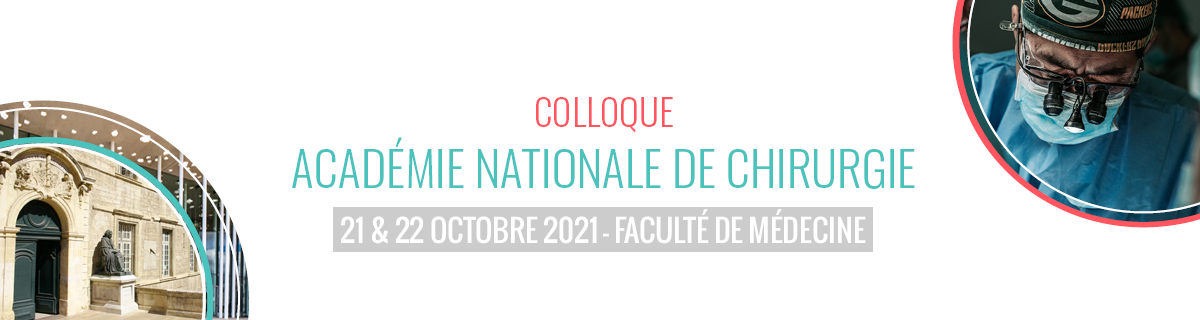
As part of the 800th anniversary celebrations of the Faculty of Medicine, in partnership withthe National Academy of Surgery, we will host the Academy of Surgery’s annual conference at our Arnaud de Villeneuve campus.


A symposium organized to mark the 800th anniversary of the School of Medicine.

Members of the National Academy of Surgery will gather to discuss the role of robotics and AI in 21st-century surgery and to explore the future of surgical training. A tribute will be paid to François de Lapeyronie, one of the founding fathers of modern surgery and founder of the Royal Academy of Surgery.

Open to all healthcare professionals (free registration required), this event will feature members of the National Academy of Surgery.

Conference Program, October 21, 2021, at the Historic Building

  • 4:00 p.m.

    Home

    The meeting will be held in the anatomy lecture hall of the historic building of the School of Medicine.

  • Introduction

    Henry Coudane, Michel Chammas

    Dean Michel Mondain, Montpellier-Nîmes School of Medicine

    4:20 p.m.

  • 4:30 p.m.

    History

    • History of the Montpellier School of Medicine – Thierry Lavabre-Bertrand (Montpellier)
    • Gui de Chauliac – Henri Judet (Paris)
    • François Gigot de Lapeyronie – Hubert Johanet (Paris)
    • The Three Faculties: Paris, Montpellier, Strasbourg –Jean Marie Le Minor (Strasbourg)
    • The History of Anatomy Lecture Halls – Philippe Marre (Paris)
    • A History of Surgical Education in Montpellier – Michel Chammas, Thierry Lavabre Bertrand, Etienne Cuénant (Montpellier)
    • Georges Marchal: A 20th-Century Surgeon from Montpellier – Joël Marchal (Montpellier)


Conference program, October 22, 2021, at the Arnaud de Villeneuve Campus

  • 8:00 a.m.

    Home

    The conference will take place at the Arnaud de Villeneuve Campus, in the Rondelet Auditorium.

  • Surgical Robotics: Current Status and Future Prospects

    Moderators: Philippe Rouanet (ICM), Leonor Benaim (IGR), Rodolphe Thuret (Montpellier)

    • Conclusions of the report on “Robotization in Surgery: Current Status” – Xavier Martin, Jean-Claude Couffinhal
    • Surgical Robotics: What Does the Future Hold?
      • The researcher's perspective: Philippe Poignet (LIRMM)
      • The CEO's Perspective: Bertin Nahum, Quantum Surgical (Montpellier)
      • The Surgeon's Perspective: Jacques Hubert (Nancy)
    • Discussion

    8:30 a.m.

  • 10:00 a.m. – 10:30 a.m.

    Pause

    Break, visit the exhibitors

  • Surgical Education: Simulation, Benefits, and Methods. What Underpins Its Application in Surgery.

    Moderators: Jean-Michel Fabre (Montpellier), Renaud Garrel (Montpellier)

    • How can simulation add value? What are the benefits of simulation? In which fields should it be used? – Daniel Chevallier (Nice)
    • Tools for simulation-based learning: benefits, limitations, and costs
      • Medium- and high-fidelity simulators.
        • In laparoscopy and endoscopy. Astrid Herrero (Montpellier)
        • In arthroscopy. François Sirveaux (Nancy)
      • SimLife: Jean Pierre Faure (Poitiers)
      • Simulation and Training in Microsurgery. Sybille Facca (Strasbourg), Michel Chammas (Montpellier)
      • Funding, academic solutions. Michel Chammas
    • School of Surgery. A simulation program as part of the training of young surgeons. – Laura Beyer Berjot (Marseille), Regis Souche (Montpellier)

    10:30 a.m.

  • 12:30 PM – 2:00 PM

    Lunch break

    Tour of the Anatomy and Simulation-Based Learning booths

  • Surgical Education: Assessments and Other Approaches

    Moderators: Michel Prudhomme (Nîmes), Francis Navarro (Montpellier)

    • Is simulation the only way to train a surgeon? – Patrick Baque (Nice)
    • Teaching Anatomy to Support Simulation-Based Learning – Fabrice Duparc (Rouen)
    • Surgical simulation program.
      • How Should a Surgeon's Training Be Evaluated? – Louis Sibert (Rouen)
      • Montpellier’s Experience in Implementing an Educational Program: Results One Year Later. Astrid Herrero (Montpellier)
    • Simulation-based learning: technical skills, interpersonal skills, stress management, burnout prevention – Laurent Obert (Besançon) 15’

    2:00 p.m.

  • 4:00 p.m.

    End of the day

    Henry Coudane, Hubert Johanet, Michel Chammas

As it does every year, the Faculty is hosting the fascinating and informative lectures organized by the Montpellier Society for the History of Medicine. Whether you’re a culture buff or a history enthusiast, these free, themed lectures are just for you! See the program below.


2021–22 Season Schedule

  • Friday, October 15, 2021

    6:00 p.m. - Rabelais Lecture Hall (ADV Campus)

    François Bonnel
    The Golden Age of Anatomy in Montpellier with Professor Paul Gilis (1857–1929).
  • 6:00 p.m. - Rabelais Lecture Hall (ADV Campus)

    Michel Billiard
    The Emergence and Development of a New Medical Specialty: Sleep Medicine

    Friday, November 5, 2021

  • Friday, December 10, 2021

    6:00 p.m. - Rondelet Lecture Hall (ADV Campus)

    Thierry Lavabre-Bertrand, Gérald Chanques
    A Look Back at the 800th Anniversary of the Founding of the University of Medicine in Montpellier
  • 6:00 p.m. - Rondelet Lecture Hall (ADV Campus)

    Philippe Courtet, Hélène Lorblanchet
    Atger in the 21st Century: The Benefits of Observational Skills in the Arts for Medical Students.
    Due to the current health situation, the conference has been postponed to a later date.

    CANCELLED: Friday, January 14, 2022

  • CANCELLATION - Friday, February 11, 2022

    6:00 p.m. - Rondelet Lecture Hall (ADV Campus)

    Nicole Buresi
    Théophraste Renaudot (1586–1653), physician: from Loudun to Paris, after studying at the Faculty of Medicine in Montpellier.
  • 6:00 p.m. - Rondelet Lecture Hall (ADV Campus)

    Caroline Debladis
    Agnès McLaren (1837–1913), the first woman to earn a medical degree in Montpellier.

    Friday, March 11, 2022

  • Friday, April 8, 2022

    6:00 p.m. - Ziegelmann Lecture Hall (ADV Campus)

    Nicole Buresi
    Théophraste Renaudot (1586–1653), physician: from Loudun to Paris, after studying at the Faculty of Medicine in Montpellier.
  • 6:00 p.m. - Rabelais Hall (Montpellier)

    Champollion Bicentennial Symposium
    Organized by the Montpellier Academy of Sciences and Letters, Rabelais Room
    Friday morning is devoted to contributions from the field of medicine
    • 9:20–9:55 a.m.: The Montpellier School of Public Health and the Egyptian Expedition: Focusing on R. Desgenettes and the Plague. Thierry Lavabre-Bertrand
    • 9:55–10:35 a.m.: D.-J. Larrey (1766–1842), founder of the modern healthcare system and pioneer of the Red Cross. Dominique Larrey,
    • 10:55–11:30 a.m.: The Human Cost of the Egyptian Campaign: J.-B. Curto, J.-G. René, F. Mireur, F. Vigo-Roussillon. Christian Nique

    Friday, May 13, and Saturday, May 14, 2022

  • Friday, June 10, 2022

    6:00 p.m. - Rabelais Lecture Hall (ADV Campus)

    Daniel Le Blevec
    Raymond Chalmel and his treatise on the plague (14th century)

You probably already know this: the Jardin des Plantes is a unique place in Montpellier to relax. But did you know it’s also a place for discovery and learning? The gardeners and botanists take this role to heart and organize numerous events throughout the year to help you experience it from this perspective. This is particularly true right now with“Summer Tours.”Finally, the Jardin des Plantes serves an educational purpose year-round—a mission that is gaining momentum, reconnecting with its roots (the teaching of botany) while embracing modern objectives and utilizing today’s tools. To reinforce this educational aspect, one of them, Denis Nespoulous, has created connected trails to let you discover the garden as you’ve never seen it before!

The origins of the interconnected paths at the Jardin des Plantes

The trail known as “SMART BOTA” was created in 2018 for the Tela Botanica association’s introductory MOOC on botany.

This association, founded in 1999 and comprising a broad network of French-speaking botanists, aims to:

  • to promote the exchange of information among botanists,
  • facilitate projects using digital tools,
  • produce copyright-free data on flora,
  • raise awareness and provide training in botany.

What exactly are connected trails?

The connected trails consist of information sheets available to everyone and distributed along several routes. They can be accessed via a QR code using a smartphone or tablet. These sheets allow you to explore the garden’s treasures at your own pace. The four different routes are displayed at the entrance to the Jardin des Plantes: simply follow the guide, or, if you prefer, wander freely through the paths.

These botanical fact sheets provide a variety of information about the plant you scan, such as a description, its uses, and its habitat. It’s a fun and engaging way to learn more about the flora around us!

The garden's five interconnected paths

For now, there are five connected trails within the Jardin des Plantes. These may change over time thanks to your input.

The SMART’BOTA Trail

The second connected trail at the Jardin des Plantes in Montpellier, and the first educational trail, it was created in 2018 for Tela Botanica’s introductory MOOC on botany of which Denis serves as the lead. The course aims to introduce enthusiasts to botany. It features around sixty species and introduces you to the main plant families.

The SMART’PHARMA Trail

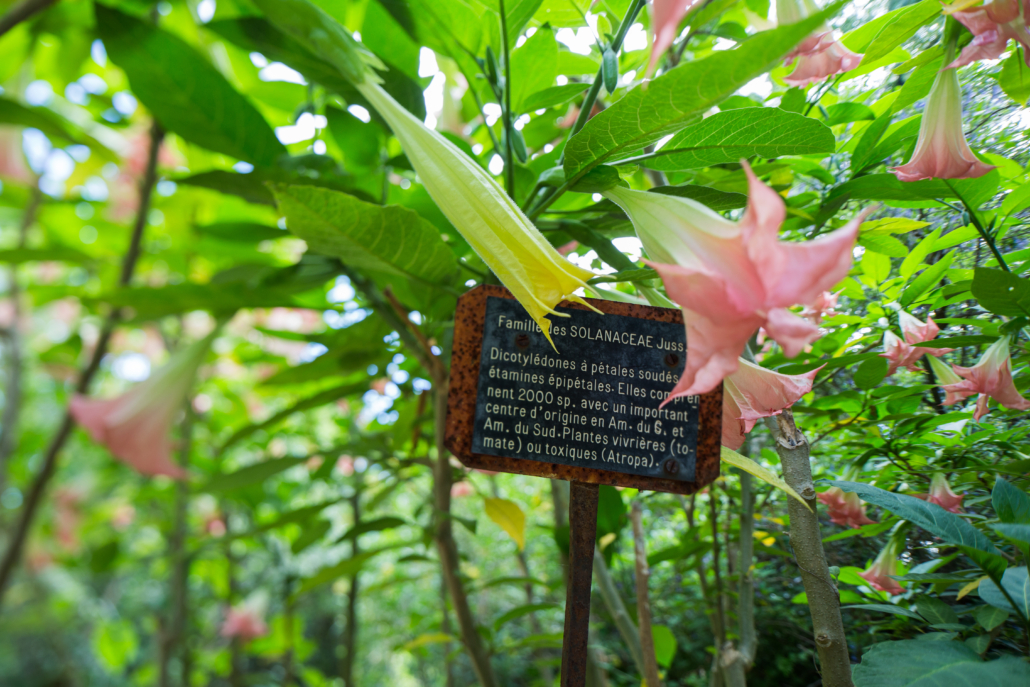
Extension of the first "SMART’BOTA" trail; this trail was created for students at the Faculty of Pharmacy in Montpellier. Indeed, a multitude of plants can be used for therapeutic and medicinal purposes. This trail allows students students to combine the theoretical aspects of their courses with practical ones by directly observing the plants within the Garden. This educational trail is also open to the public. It features approximately sixty plant species.

The Remarkable Trees Trail

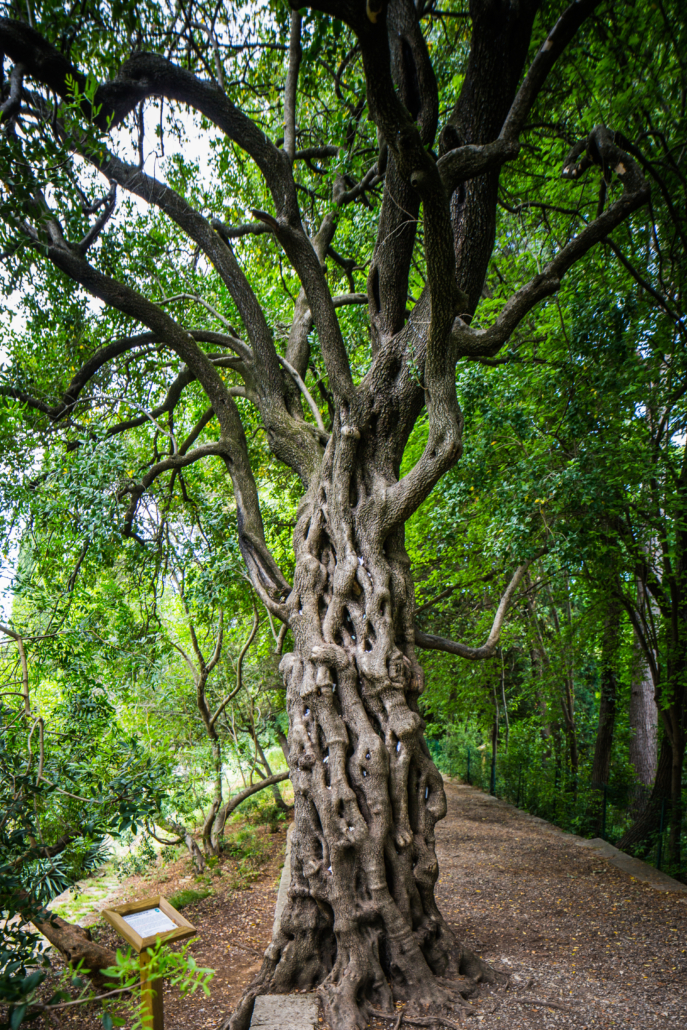
This trail, created in 2014, is the oldest trail in the Jardin des Plantes. It allows you to discover all the secrets of the Jardin des Plantes’s giant trees. It is also the only trail that can be explored without your smartphone, as it features reading panels, but feel free to scan the QR codes embedded in the panels to unlock all the secrets of botany! This interactive trail features 25 tree species selected from among the most remarkable and oldest in the garden.

The HERBES FOLLES Trail

This trail, created for Tela Botanica’s “Herbes Folles” MOOC (the second edition is scheduled for this fall!), aims to help you rediscover these plants that are pejoratively referred to as “weeds.” They, too, have their virtues, and beyond their drawbacks—which we won’t deny—they also play an important role in our environment. The wild herbs of the garden invite you to reflect on issues of biodiversity. This tour will allow you to see these “weeds” in a new light…

The " Observatory of the Seasons" Trail

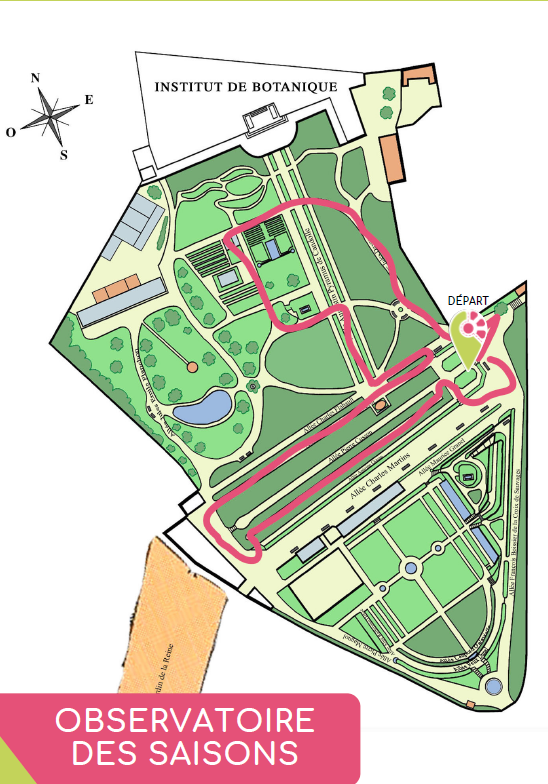
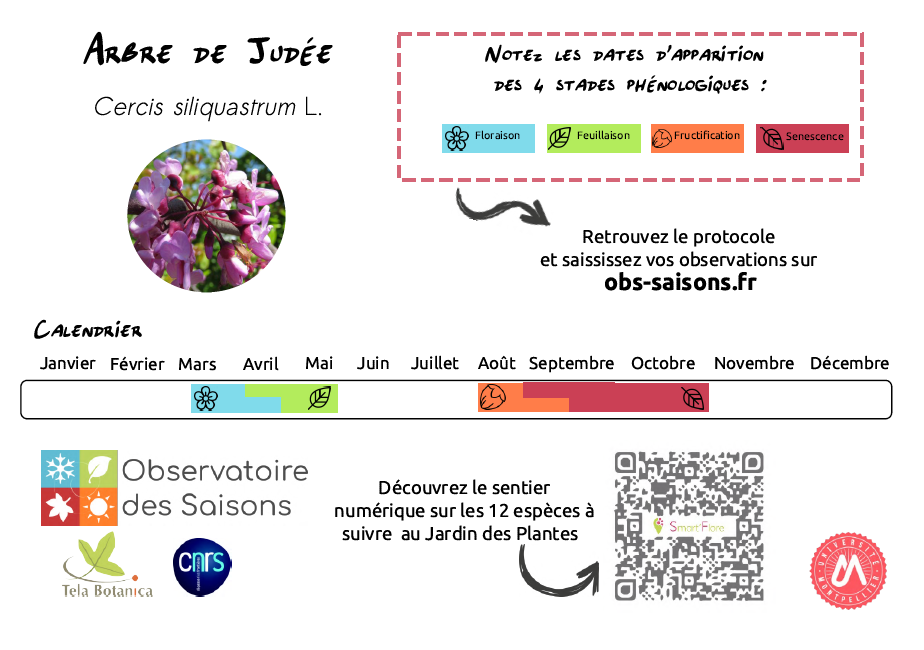
The last trail is somewhat unique, as it is part of a citizen science. Get involved in this CNRS program by observing the 12 species along the trail. Its goal is also to raise awareness about global warming by introducing us to phenology (the observation of periodic events, in this case involving plants). At the entrance to the Jardin des Plantes, you can request a specially designed form to record your observations. This data will help scientists better understand and monitor climate change and its associated challenges.


And for those who are curious, check out the app

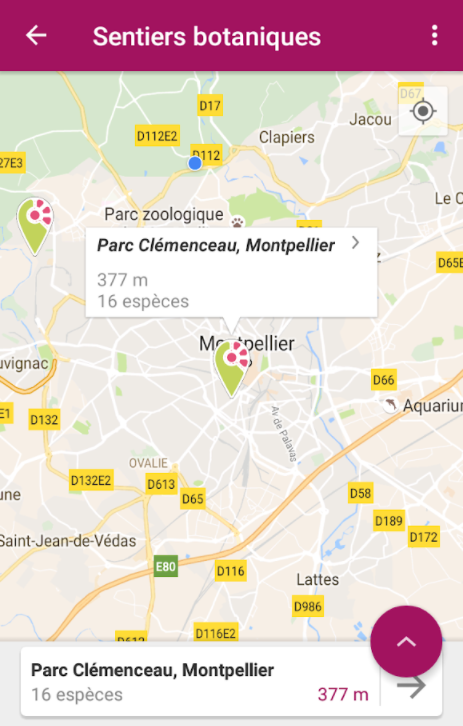
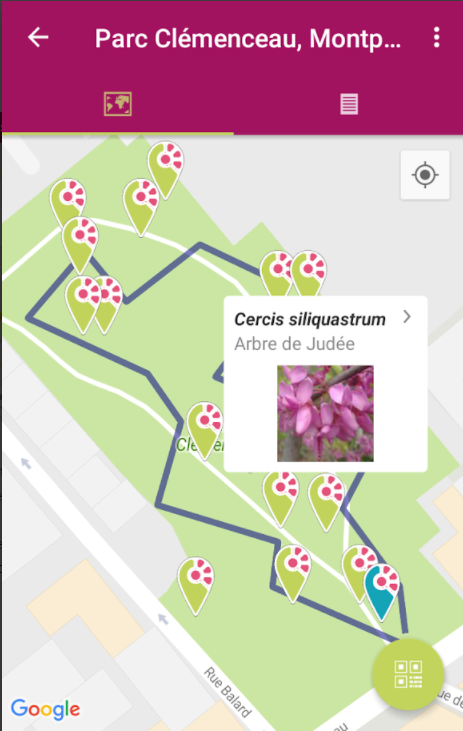
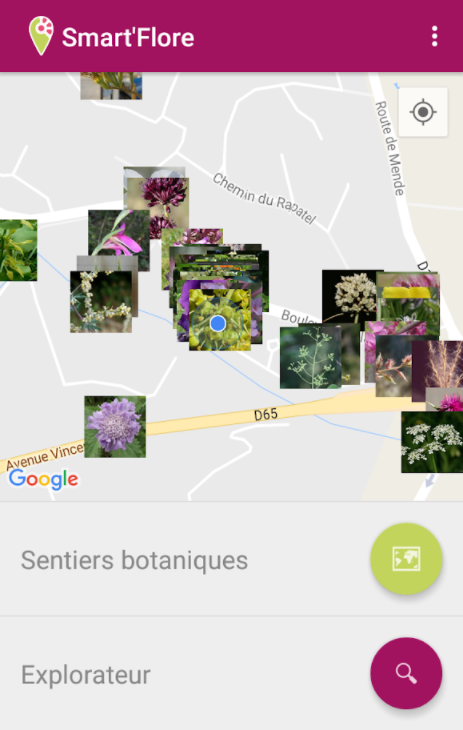
If you’d like to explore Montpellier’s Jardin des Plantes further using digital tools, you can download the SMART’ FLORE app on all your Android devices. The app offers:

  • Trails near you
  • Plants tracked to the nearest meter
  • Access to all the botanical profiles created as part of this collaborative project

As part of the 800th anniversary celebrations, a photography exhibition will be held from July 10 to October 10. Curated by renowned photographer CédricMATET, it will be held at the Jardin des Plantes. In 2020, this photographer also curated the exhibition “Behind the Masks,” whichfeatures200 portraits of medical personnel.

Practical Information


“People in Their Gardens”

The title of the exhibition is intrinsically linked to itscontent. In fact, for this occasion, the artist chose to work with anatomical specimens from the Faculty’s anatomy museum. To better understand his project, we interviewed the photographer.


What is your background?

I’m originally fromSète. I attended a design school in Montpellier that is now called ESMA. After that, I enrolled at the Gobelins School of Visual Arts in Paris. Later, I went back to school to earn a master’s degree in Urban Planning and Sustainable Development because I’m interested in cities. In the meantime, I’ve been working in art direction and design at various communications agencies.

What interests me is connecting art to the city, to maps, to cartography, and to people. In my view, an artist must be rooted in their context: urban, political, and human.


Can you tell us about the "Behind the Masks" project?

It was GéraldCHANQUES, a professor at the faculty and a doctor atSaint EloiHospital, who contacted me and proposed this project. I wanted to convey a vision ofwhat healthcare providers and their commitments can be. 


How would you describe yourself?

If I had to describe myself and my work, I would talk abouttransdisciplinarity. Indeed, I am a photographer, but I am also a visual artist; I enjoy working with various materials and collaborating with people from different fields.


Can you tell us about your new exhibition, “Man in His Garden”?

It’s been a long time since I first thought of focusing on the Jardin des Plantes, but I’ve always had a real passion for the anatomy museum I visited when I was a student. Being able to discuss botany through the garden, but also the human body and research on it—I think that’s fabulous. The project was developed by the two of us, once again with ProfessorCHANQUES.

This project is interesting becauseit pushes me out of my comfort zone;I usuallytake portraits, but that’s not the case here.
Moreover, since all the rooms are designated as heritage sites, I have a special relationship with the curator. She is the third subject of this project; I can’t work without her. Usually, I direct my model,but here I can’t because of the room’s fragility; every movement must be guided by the curator.
It’sinteresting becausethe room and the garden exist independently of me. 

There are three of us working on this project: Jane, who does digital art and is a videographer; Luc, who does motion design, among other things; and me, who works with visuals and handles the artistic direction for the whole project. None of us knows what the final result will be.


How did you choose the anatomical parts?

I first sought advice from ProfessorCHANQUES and the curators to find out which pieces are emblematic of the conservatory. I didn’t choose the pieces based on their aesthetic appeal, since the goal of this exhibition is to tell a story and convey meaning.
The only exception to this is a bust we found, whose identity, history, or era is unknown to anyone. I found it fragile and touching, so I decided to include it. It’s the only piece I chose based on a gut feeling.

Unfortunately, there were some pieceswe couldn’t include because they were too fragile. I was also drawn to other pieces, but they didn’t depict the human body and therefore strayed from the subject. I’ll address those later in another, more personal project.

Some pieces are also too heavy to move. However, this is part of the exhibition’s story.
For certain pieces that we couldn’t bring out to the Jardin des Plantes, we brought the Jardin to them by bringing branches and foliage.


In 2016 and 2018, Ms. Barjon and Ms. Blanc, daughters of former Dean Gaston Giraud, bequeathed their father’s archives to the University of Montpellier. Thanks to these archives, we are now able to present an exhibition on the evolution of the Faculty’s various buildings and sites since its 700th anniversary, commemorated in 1921.


An exhibition divided into several sections

This exhibition, organized by the University of Montpellier Archives Department (Sophie Dikoff, Antoine Redouly, and Gwendoline Perrault) in collaboration with Ms. Barjon and Professor Dedet, and with the special participation of Dean Jacques Bringer, Professor Daniel Jarry, and Mr. Serge Caminade, will focus on the evolution of the various buildings and sites that make up the Faculty: the Historic Building, the Institute of Biology, the extensions in Nîmes and on the northern site of Montpellier (the UPM and the Arnaud de Villeneuve campus building), and finally the Botanical Garden.

Dive into the archives

Thanks to donations from the family of former Dean Giraud, this exhibition features a wealth of photographs. You can view photos of the old buildings and see how their architecture has evolved over time. The exhibition also showcases other documents that shed light on the buildings’ development, such as architectural plans, handwritten letters, and postcards…

A large-scale project

To mark the occasion, we spoke with Sophie Dikoff, the archivist in charge of this exhibition, to learn how it was put together.

Could you tell us about your job?

My role as an archivist at the University of Montpellier is to assist all departments in managing their archives in accordance with current legislation governing public archives. This work is carried out in collaboration with the Hérault Departmental Archives, which provides scientific and technical oversight. Archives serve to document changes—whether architectural, societal, or otherwise…


Where do the archival materials in this exhibition come from?

Most of these items come from donations made by Dean Giraud’s family. Indeed, the dean kept many documents related to his various projects, both in his capacity as dean of the Montpellier Faculty of Medicine and in his personal capacity, as someone with a passion for the history of medicine and the Montpellier Faculty. The remaining archives come from the University’s iconographic collection, the University’s photo library, and that of the Conference of University Presidents, which have been supplemented by photographs taken for the exhibition.


How long did it take you to prepare this exhibition?

The exhibition was originally scheduled to take place in October 2020, but due to health restrictions, we had to postpone it. So I’ve been working on this project since around the beginning of 2020. The process is very long, as it first requires conducting research to understand the various aspects of the subject (searching archives, reading, meeting with subject matter experts), selecting the most interesting documents, obtaining permissions to use photos in accordance with copyright laws, writing texts, and determining a visitor route. For the exhibition design, we hired a professional scenographer, André Dumonnet. For this exhibition, the approach was to organize the presentation by building and then in chronological order. A panel displays a timeline covering all buildings and sites.


An exhibition open to everyone

The exhibition, which will run from June 18, 2021, at 1:30 p.m. to July 21, 2021, at 6:00 p.m., is free of charge. Self-guided tours will be available Wednesday through Friday from 1:30 p.m. to 6:00 p.m. and Saturdays from 10:00 a.m. to 12:30 p.m., with guided tours available Saturdays from 1:30 p.m. to 6:00 p.m.